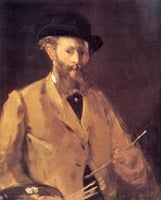
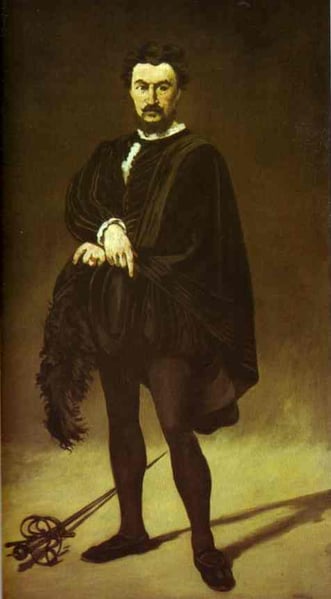
The Tragedian Actor
Dettagli
Analisi esperta di The Tragedian Actor di Edouard Manet
Stile: Realism · Genere: portrait
Expert Analysis: The Tragedian Actor (Portrait of Rouvière as Hamlet) by Édouard Manet
Style & Period Context:
Painted in 1866, this work sits squarely within Manet’s Realist phase, yet it also anticipates the bold flatness and psychological intensity that would define his later Impressionist-influenced portraits. The subject is the actor Philibert Rouvière, captured in his role as Hamlet—a fitting choice for Manet, who often blurred the line between theatrical performance and modern life.
What Makes It Significant:
-
Rejection of Academic Idealism
Unlike traditional history painting or formal portraiture, Manet presents the actor not as a timeless hero but as a contemporary performer in costume. The stark, almost harsh lighting and the shallow depth of field push the figure forward, eliminating the atmospheric backdrop that academic painters would have used to elevate the scene. This flatness is a hallmark of Manet’s Realism, asserting that even a tragic stage figure belongs to the material, unidealized world. -
Psychological Modernity
Rouvière’s expression is ambiguous—caught mid-gesture, neither fully tragic nor wholly composed. Manet captures the actor’s dual existence: the man behind the mask and the character he embodies. This tension between role and reality speaks directly to the modern condition, a theme Realism embraced by focusing on the individual’s experience rather than mythological or allegorical narratives. -
Bold Painterly Technique
Manet’s brushwork is loose and economical, with visible strokes delineating the costume’s black velvet and the metallic sheen of the dagger. The background is nearly empty, a dark void that forces the viewer to confront the actor’s solitary presence. This technique was controversial at the time—critics accused Manet of “unfinished” execution—but it now stands as a radical step toward modernist painting, where the process itself becomes part of the subject. -
Realism as Social Commentary
By choosing a stage actor—a figure often associated with artificial emotion and public spectacle—Manet comments on the performance inherent in modern identity. The painting asks: in a rapidly changing 19th-century Paris, how much of each person’s life is a role? This questioning of authenticity is central to the Realist project, which sought to strip away idealized conventions and reveal the truth, however uncomfortable.
Conclusion:
The Tragedian Actor is significant because it encapsulates Manet’s ability to merge theatrical subject matter with a brutally honest, anti-academic style. It stands as a bridge between the social observation of Realism and the formal innovations of Impressionism, and it remains a powerful meditation on the performative nature of human existence.
Visivamente simili
20 opere con composizione e palette affini
Portrait of Infante Don Carlos
Diego Velazquez
Philip IV of Spain
Diego Velazquez
Portrait of a Gentleman Dressed in Black, in Front of a Pillar
Anthony van Dyck
Diego De Mexia, Marquess Of Leganes
Anthony van Dyck
Portrait of the Count Duke of Olivares
Diego Velazquez
Portrait of Philip II
Titian
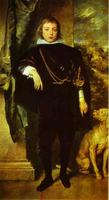
Prince Rupert von der Pfalz
Anthony van Dyck
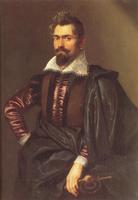
Portrait of Gaspard Schoppins
Peter Paul Rubens
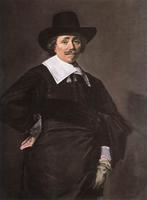
Portrait of a Standing Man
Frans Hals
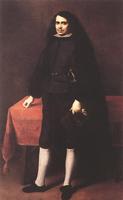
Portrait of a gentleman in a ruff collar
Bartolome Esteban Murillo
Arthur Goodwin, M.P. (oil on canvas)
Anthony van Dyck
Portrait of Adriaen Stevens
Anthony van Dyck
Full Length Portrait of a Standing Man
Rembrandt
Portrait d'homme en habit noir
Pieter van Mol
John Cotton
Daniel Mytens the Elder
Philip II of Spain
Titian
Portrait of Marcello Durazzo
Anthony van Dyck
Nicolaes van der Borght, Merchant of Antwerp
Anthony van Dyck
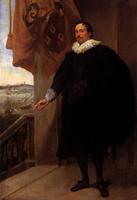
Portrait of Nicolaes van der Borght
Anthony van Dyck
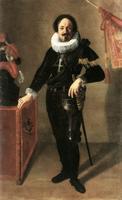
Portrait of a Condottiero
Artemisia Gentileschi