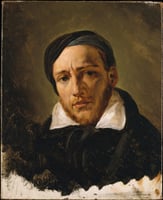
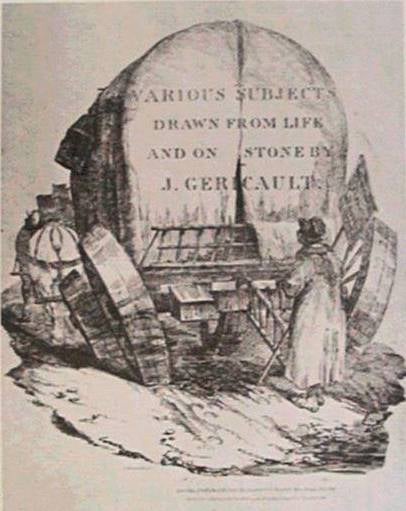
Expert analysis of Théodore Géricault’s A hitched wagon
Style: Romanticism · Genre: genre painting
Expert Analysis of "A Hitched Wagon" by Théodore Géricault
As a work of Romanticism in the genre painting tradition, Théodore Géricault’s A Hitched Wagon occupies a distinctive place within the artist’s oeuvre and the broader Romantic movement. While Géricault is most celebrated for his monumental, heroic-historical compositions—notably The Raft of the Medusa—this quieter, everyday subject reveals a crucial facet of Romanticism: the elevation of ordinary life to a realm of dramatic intensity and emotional authenticity.
Significance within Romanticism
Romanticism rejected Neoclassical ideals of idealized perfection and universal harmony, instead embracing the raw, the transient, and the individual. In A Hitched Wagon, Géricault channels this ethos by focusing on a humble, prosaic moment—a wagon stopped or prepared for travel. The painting’s significance lies in how it transforms a mundane scene into a vehicle for Romantic expression. The wagon, typically a symbol of labor and transport, becomes a stage for observing the interplay of light, texture, and atmosphere. The artist’s vigorous brushwork and attention to the weather-beaten surfaces of wood and harness convey a sense of wear and resilience—qualities Romanticism prized as markers of authentic human experience.
Genre Painting as a Romantic Tool
Genre painting—scenes of everyday life—was often a vehicle for Romantic artists to explore the sublime within the commonplace. Here, Géricault avoids sentimentalizing or trivializing the subject. Instead, he invests the hitched wagon with a palpable weight and presence. The diagonal thrust of the wagon’s shafts, the tautness of the harness, and the grounding of the wheels in the earth suggest both stillness and pent-up energy—a tension that resonates with the Romantic fascination with nature’s forces and human toil. The absence of any dramatic narrative or monumental figure emphasizes that significance can be found in the unassuming, a key Romantic departure from academic hierarchy.
Artistic Legacy
Within Géricault’s own practice, A Hitched Wagon demonstrates his relentless study of movement, light, and the physical world—traits that would influence later Realist and Impressionist painters. The painting’s rough, almost sketch-like handling prefigures the looser style of mid-19th-century artists who sought to capture fleeting moments. In this way, Géricault’s genre scene is not a minor anecdote but a bold statement: the Romantic eye can find grandeur in a hitched wagon, precisely because it is a relic of real, unglamorous existence. This work affirms that Romanticism’s true subject is not only heroes in crisis but also the silent, enduring poetry of everyday things.
Visually similar
20 works with related composition and palette
Roofoverval Op Een Wagen
Hendrick Avercamp
The Merry Adventures of Robin Hood 11
Howard Pyle
Roundup
Devin Leonardi
7. Migration
Francis Davis Millet
Country Road with Halt of a Convoy
Jan Brueghel the Elder
The forced stop
Alexandre Antigna
The Market Wagon
Ralph Hedley
Attack on the Supply Train
Frederic Remington
Guildford Gypsies
Walter Battiss
Retour de l'esclavage
Theophile Steinlen
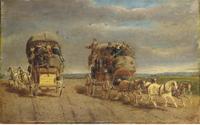
London to York coaches passing
Charles Cooper Henderson
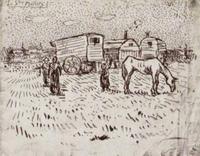
Gypsies at Saintes-Maries
Vincent van Gogh
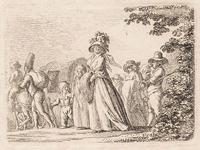
Belgische Armenwanderung
Daniel Chodowiecki
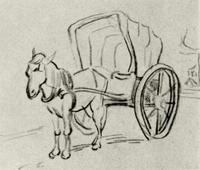
Carriage
Vincent van Gogh
The Donkey Cart, Eastwood
Gerard Sekoto
Zigeunerfamilie Am Planwagen
Otto Mueller
Kermisgasten
Hendrik Jacobus Scholten
The Carrier Preparing to Set Out
George Morland
Zigeunerin Mit Kind Am Planwagen
Otto Mueller
The Carrier's Resting Place
William Collins