Expert analysis of Théodore Géricault’s Gray horse rack
Style: Romanticism · Genre: animal painting
Expert Art Historical Analysis: "Gray Horse Rack" by Théodore Géricault
Context within Romanticism:
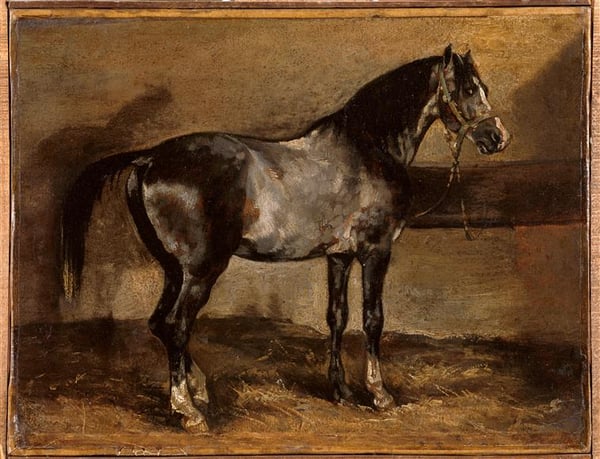
As a pivotal work of the Romantic movement, this animal painting embodies the period's rebellion against Neoclassical restraint. Romanticism prized raw emotion, dynamic energy, and the sublime power of nature—qualities that Géricault channels through the horse. The "gray horse" is not a static, idealized creature; instead, it captures the animal's primal vitality and physical strain, aligning with Romanticism's fascination with untamed forces.
Significance within the Animal Painting Genre:
Unlike earlier animal paintings that often served as allegory or rural decoration, Géricault elevates the horse to a subject of profound psychological and physiological study. His meticulous rendering of musculature, tense posture, and the "rack" (a frame used for breaking or restraining horses) introduces a narrative of struggle and containment. This prefigures later Romantic painters like Delacroix, who used animals to express heroic or tragic passion.
Break from Tradition:
Géricault's work is significant for its rejection of idealized forms in favor of urgent, visceral realism. The horse's wide eye, flared nostrils, and strained neck convey a moment of high tension, inviting the viewer into an empathetic encounter with the animal's experience. This focus on momentary stress and individual suffering—rather than balanced composition or moral lesson—marks a decisive shift toward modern sensibilities.
Legacy:
"Gray Horse Rack" exemplifies how Romantic painters used animal subjects to explore themes of power, confinement, and the sublime. Géricault’s ability to merge scientific observation with emotional intensity makes this piece a cornerstone of the movement, influencing later generations of artists who sought to capture life's raw, fleeting dramas.
Museum / Gallery
Visually similar
20 works with related composition and palette
'Guy Mannering', A Race Horse
James Ward
Negotiator, a Bay Horse in a Landscape
John Frederick Herring Sr.
Brown Horse in the Stalls
Théodore Géricault
A Clydesdale Stallion
John Frederick Herring Sr.
A Horse frightened by Lightning
Théodore Géricault
A Chestnut Stallion in the Grounds of Powis Castle
James Ward
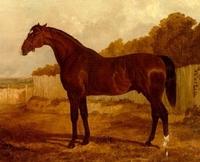
Painting of Blacklock
John Frederick Herring Sr.
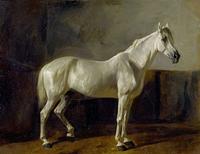
Standing White Horse
Rudolf Koller
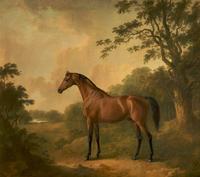
A Bay Hunter Named 'Sir Oliver'
John Boultbee
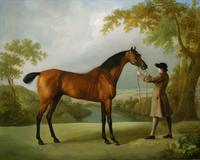
Tristram Shandy, a Bay Racehorse Held by a Groom, in An Extensive Landscape
George Stubbs
The English Horse of M. Duval
Gustave Courbet
Messenger Horse
George Stubbs
Manuella
John Frederick Herring Sr.
Marske Horse
George Stubbs
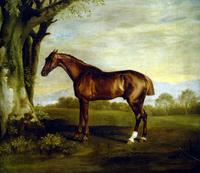
A Chestnut Racehorse
George Stubbs
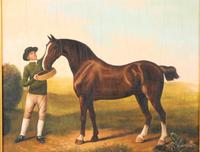
Groom Feeding a Bay Hunter in a Landscape
George Stubbs
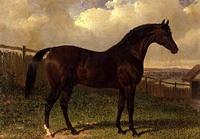
'Emilius', a Bay Racehorse in a Paddock
John Frederick Herring Sr.
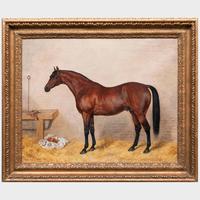
Horse
Frank Paton
Spanish horse in a stable
Théodore Géricault
A Suffolk Carthorse
James Ward