Analisi esperta di Horse frightened by lightning di Théodore Géricault
Stile: Romanticism · Genere: animal painting
Expert Analysis: "Horse Frightened by Lightning" by Théodore Géricault (Romanticism, Animal Painting)
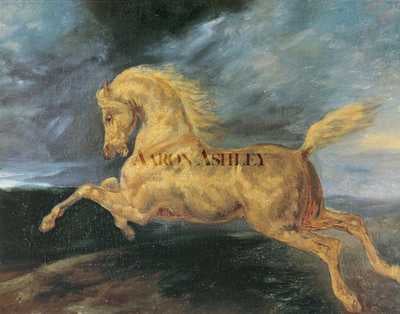
Théodore Géricault’s Horse Frightened by Lightning stands as a quintessential example of Romanticism’s obsession with raw emotion, nature’s sublime power, and the dramatic depiction of animal psychology. Painted during a period when Géricault was deeply engaged with equine anatomy and the expressive potential of horses—subjects he studied intensively in life and at the abattoir—this work transcends mere animal portraiture to become a visceral study of terror and instinct.
Significance within Romanticism:
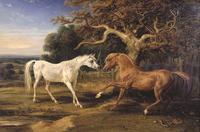
The painting exemplifies the Romantic fascination with the sublime—the overwhelming, often terrifying force of nature. The lightning bolt, a sudden and uncontrollable element, triggers an instantaneous, primal reaction in the horse. Géricault captures the very split-second of fright: the rearing pose, flared nostrils, rolling eyes, and tensed muscles communicate a state of pure panic. This focus on extreme emotional states, rather than idealized calm, aligns directly with Romanticism’s rejection of Neoclassical restraint. The horse becomes a symbol of human vulnerability before the untamed forces of the natural world.
Stylistic and Technical Achievement:
Géricault’s brushwork is vigorous and expressive, using thick impasto and dramatic chiaroscuro—the stark contrast between the dark, stormy sky and the luminous white of the horse’s body—to heighten the sense of drama. The composition is dynamic and off-center, thrusting the horse into a precarious diagonal that suggests imminent movement. His deep understanding of equine anatomy (honed through dissection and life drawing) gives the animal a convincing, almost muscular presence, while the treatment of the mane and tail as wild, flowing forms amplifies the chaos.
Legacy and Influence:
As a genre piece, Horse Frightened by Lightning elevates animal painting from mere decorative or narrative function to a vehicle for profound emotional and philosophical exploration. Géricault’s work directly influenced later Romantic and Realist painters—most notably Eugène Delacroix, who also studied horses in motion, and even the animaliers of the 19th century. The painting also prefigures the psychological depth that later artists would bring to animal subjects, emphasizing the shared sentience and instinctual life of creatures.
In sum, this work is significant not only as a masterful demonstration of Romantic ideals—drama, nature’s power, and emotional intensity—but also as a pioneering example of the animal as a reflecting mirror for human emotion, a theme that would resonate throughout the 19th century.
Museum / Gallery
Visivamente simili
20 opere con composizione e palette affini
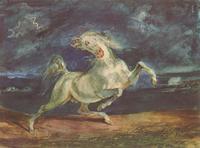
Horse Frightened by a Storm
Eugene Delacroix
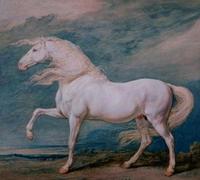
Adonis, a White Stallion
James Ward

Horses Frightened by the Storm
Carle Vernet
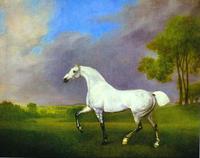
A Grey Horse
George Stubbs
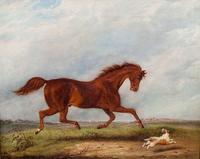
Chestnut Horse Running with a Jack Russell Terrier in an Extensive Landscape
Martin Theodore Ward
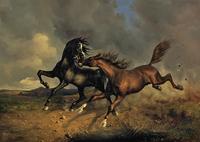
Horses in a Storm
Rudolf Koller
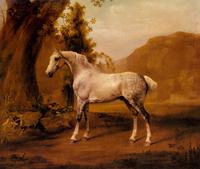
A Grey Stallion In A Landscape
George Stubbs
Horses
Basuki Abdullah
Fighting Horses
James Ward
A horse
Giorgio de Chirico
Study of a Dapple Grey
Théodore Géricault
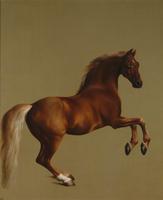
Whistlejacket
George Stubbs
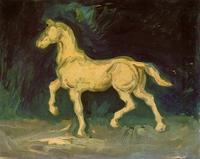
Plaster Statuette of a Horse
Vincent van Gogh
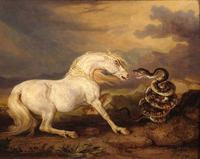
The Moment
James Ward
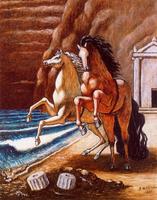
The horses of Apollo
Giorgio de Chirico
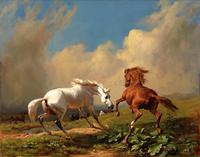
Frightened Horses Before a Storm
Rudolf Koller
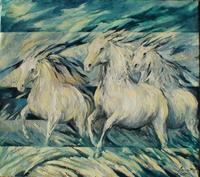
Horses white/turquoise
Małgorzata Serwatka
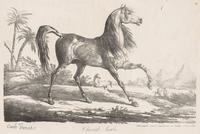
Cheval Arabe
Carle Vernet
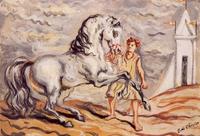
Runaway horse with stableboy and pavilion
Giorgio de Chirico
L'Amour de Cheval
James Ward