
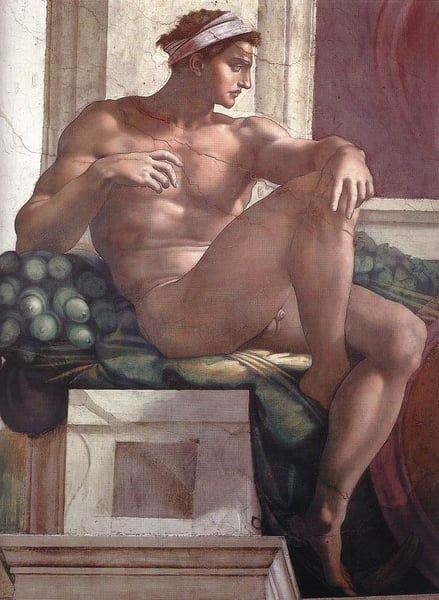
Analisi esperta di Ignudo di Michelangelo
Stile: High Renaissance · Genere: nude painting (nu)
Expert Analysis of Michelangelo's Ignudo
Artwork: "Ignudo"
Artist: Michelangelo
Style: High Renaissance
Genre: Nude painting (nu)
Significance within the High Renaissance
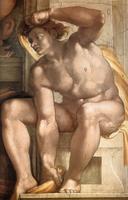
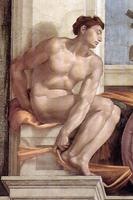
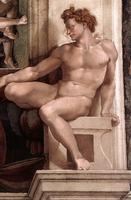
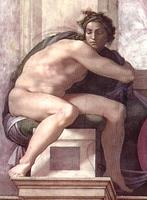
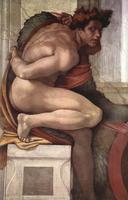
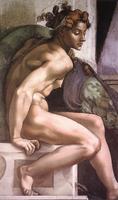
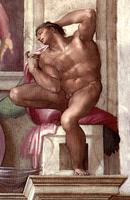
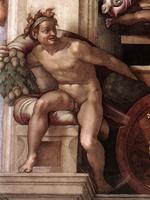
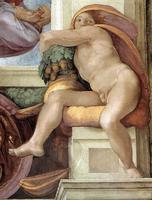
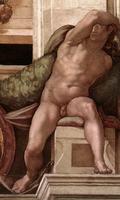
Michelangelo’s Ignudo (plural Ignudi) is a defining example of the High Renaissance's obsession with idealized human form, anatomical precision, and classical harmony. The term "ignudo" refers specifically to the nude male figures that Michelangelo painted on the Sistine Chapel ceiling (c. 1508–1512), seated on simulated architectural pedestals that frame the central biblical scenes. These figures are not narrative subjects but symbolic and compositional devices that elevate the ceiling’s overall unity.
Mastery of Anatomy and Contrapposto
The Ignudi showcase Michelangelo’s unparalleled knowledge of human musculature and bone structure. Each figure is rendered in a dynamic, twisted pose (often a variant of contrapposto), emphasizing tension between movement and poise. The bodies are idealized—muscular, balanced, and heroic—reflecting the High Renaissance belief that the human form was the pinnacle of divine creation. The subtle rendering of skin tones, light, and shadow gives the nudes a sculptural, three-dimensional quality that blurs the line between painting and relief sculpture.
Compositional and Thematic Role
Beyond their physical beauty, the Ignudi serve a crucial structural function. They anchor the complex grid of the ceiling, dividing the central narrative panels (such as The Creation of Adam) from the surrounding prophets and sibyls. Their seated, watchful poses create a rhythmic visual rhythm, drawing the viewer’s eye across the vast space. Thematically, they embody the ideal of virtù—human excellence and potential—while also echoing the classical gymnos (nudity) of ancient Greek and Roman sculpture, a nod to Renaissance humanism.
Legacy and Influence
The Ignudi set a new standard for the nude in Western art. Their combination of naturalism, idealization, and expressive anatomy influenced generations of artists, from Raphael to the Mannerists. In the genre of nude painting (nu), Michelangelo’s Ignudi represent the High Renaissance’s ultimate synthesis of Christian iconography with pagan classical ideals, demonstrating that the nude could be both a vehicle for spiritual contemplation and a celebration of earthly beauty.
Conclusion
Michelangelo’s Ignudo is not merely a decorative figure but a cornerstone of High Renaissance art. It exemplifies the period’s core achievements: the mastery of human anatomy, the integration of classical ideals, and the elevation of painting to a medium capable of profound intellectual and emotional expression. As a nude study, it remains an enduring testament to the power of the human form in art.
Museum / Gallery
Visivamente simili
20 opere con composizione e palette affini
Ignudo
Michelangelo
Ignudo
Michelangelo
Ignudo
Michelangelo
Ignudo
Michelangelo
Ignudo
Michelangelo
Ignudo
Michelangelo
Ignudo
Michelangelo
Ignudo
Michelangelo
Ignudo
Michelangelo
Ignudo
Michelangelo
Ignudo
Michelangelo
Ignudo
Michelangelo
Sistine Chapel Ceiling: God Dividing Land and Water
Michelangelo
Sistine Chapel Ceiling: Creation of the Sun and Moon
Michelangelo
Sistine Chapel Ceiling: God Dividing Land and Water
Michelangelo
Ignudo
Michelangelo
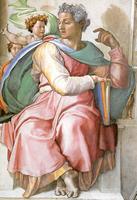
Prophet Isaiah (Sistine Chapel ceiling)
Michelangelo
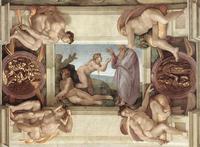
Sistine Chapel Ceiling: Creation of Eve
Michelangelo
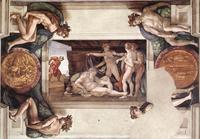
Sistine Chapel Ceiling: Drunkenness of Noah
Michelangelo
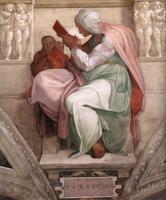
Sistine Chapel Ceiling: The Persian Sibyl
Michelangelo