Analisi esperta di The Strolling Players di Francisco Goya
Stile: Romanticism · Genere: genre painting
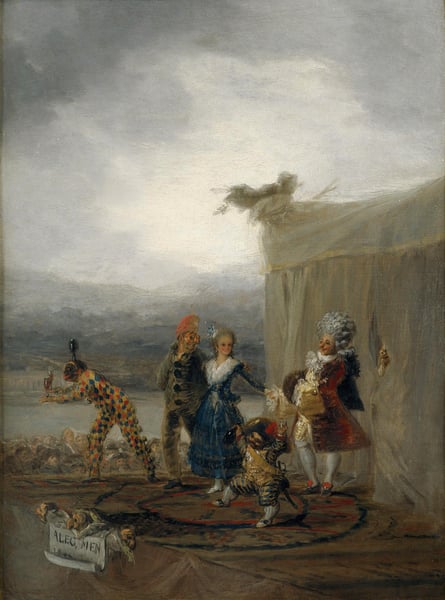
Francisco Goya’s The Strolling Players is a masterful example of Romantic genre painting, notable for its unflinching social commentary and its move away from the idealized subjects of the 18th century. Painted during a period when Goya was increasingly disillusioned with Spanish society, the work captures a troupe of traveling performers—marginal figures who exist on the fringes of polite culture.
Significant within the Romantic movement, the painting emphasizes raw human emotion and the fleeting, often harsh nature of life. Goya’s treatment of light and shadow, with a dramatic chiaroscuro that isolates the performers against a dark, undefined background, heightens the sense of vulnerability and transient theatricality. Unlike the polished, decorative genre scenes of the Rococo, Goya employs a loose, expressive brushwork that prefigures modernism, and his figures are psychologically charged—grim, weary, or defiant.
As a genre painting, The Strolling Players elevates the everyday struggles of common people to the level of high art, a hallmark of Romanticism’s interest in the individual and the outsider. Goya’s critical eye spares no sentiment: the performers are neither romanticized nor pitied, but observed with a piercing realism that anticipates his later, darker works. This piece thus stands as a crucial link between the Enlightenment’s rationalism and Romanticism’s embrace of the subjective, the grotesque, and the socially truthful.
Museum / Gallery
Visivamente simili
20 opere con composizione e palette affini
Blind Man's Buff
Francisco Goya
Dance of the Majos at the Banks of Manzanares
Francisco Goya
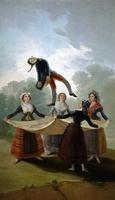
The Straw Manikin
Francisco Goya
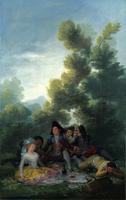
The Picnic
Francisco Goya
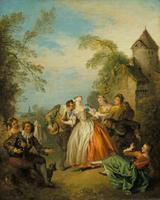
Blind Man's Buff (Le colin-maillard)
Jean-Baptiste Pater
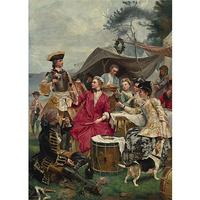
Welcome
Gustave Jean Jacquet
Return from Fishing
Pierre Duval Le Camus
Several Neapolitan mutoparlant gestures
Saverio della Gatta
A warm welcome
Gustave Jacquet
El Marqués De Arco Hermoso Y Su Familia
Antonio Cabral Bejarano
The Straw Manikin (Goya)
Gregorio Undurraga
A Picnic at a Country Town
Luis Paret y Alcazar
Autumn, or The Grape Harvest
Francisco Goya
A dance in the country
Giovanni Domenico Tiepolo
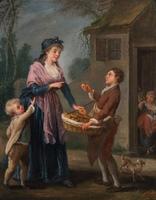
The Bread Seller
Jean-Baptiste Charpentier the Elder
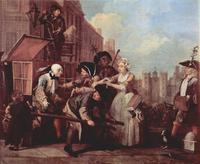
The arrest for theft
William Hogarth
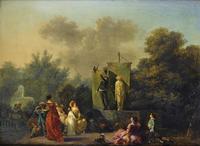
Parade with Pierrot Scapin and Arlequin
Nicolas Antoine Taunay
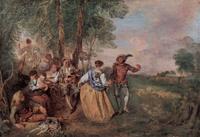
The Shepherds
Antoine Watteau
L'arrestation
Francois Watteau
Minuet
Giovanni Domenico Tiepolo