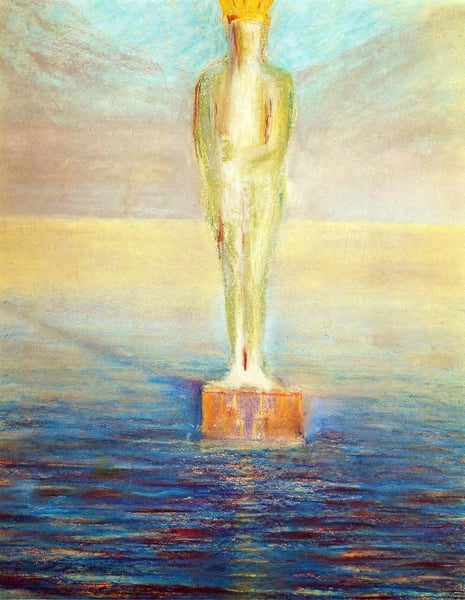
Analyse experte de Rex III de Mikalojus Konstantinas Ciurlionis
Style : Symbolism · Genre : symbolic painting
Analysis of "Rex III" by Mikalojus Konstantinas Ciurlionis
Style and Context (Symbolism)
As a work of Symbolism, Rex III belongs to a late‑19th‑ and early‑20th‑century movement that rejected literal representation in favor of evoking ideas, emotions, and mystical truths through metaphor and suggestion. The symbolic painting genre here is not merely decorative but functions as a visual language for the intangible—spirituality, cosmic order, and the subconscious.
Significance within the Style/Period
Ciurlionis is a pivotal figure in Symbolism, especially within Eastern European and Lithuanian art. His background as a composer uniquely informed his visual work: Rex III would have been conceived with a musical sense of rhythm, harmony, and cyclical form. The “Rex” (“King”) title suggests an allegorical or archetypal figure, likely representing a transcendent, impersonal power—perhaps the order of the universe or the creative force itself.
What makes Rex III especially significant is how it exemplifies the Symbolist quest to merge the arts. Ciurlionis’s paintings often employ a flattened, hieratic composition, a muted palette, and a visionary, almost meditative atmosphere—all hallmarks of the style’s rejection of naturalism. By using symbolic motifs (e.g., thrones, crowns, celestial architecture) without anchoring them in a specific narrative, the work invites viewers into a private, symbolic dialogue about existence, time, and the sublime.
Legacy
In the broader Symbolist canon, Ciurlionis stands out for his synthesis of painting and music, and Rex III is a key example of how symbolism can transcend national boundaries while retaining a deeply personal, mystical worldview. The painting is less a depiction than an incantation—a visual score meant to be “read” with the same intuitive attention one brings to a symphony.
Visuellement similaire
20 œuvres à la composition et à la palette proches
Sunrise
Kateryna Lysovenko
Untitled, Standing Figure
Nathan Oliveira
Tensiunea inaltimii
Constantin Blendea
The First Kierkegaard
Enrique Martínez Celaya
Standing young nude
Pablo Picasso
Untitled
Zdzislaw Beksinski
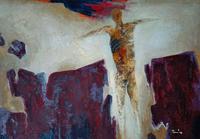
Homage to Bartok
Ervin Tamas
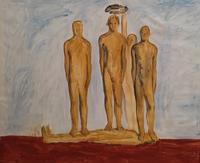
Glory
Kateryna Lysovenko
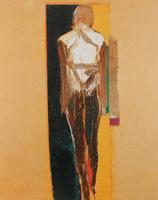
Untitled
Nathan Oliveira
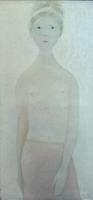
Petit Nu
Jean Paul Lemieux
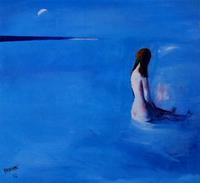
Girl on the Beach
Charles Blackman
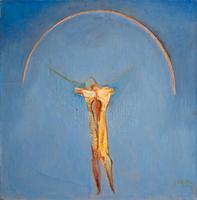
Untitled
Constantin Blendea
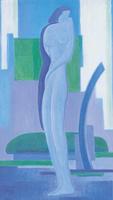
Calling
Janos Mattis-Teutsch
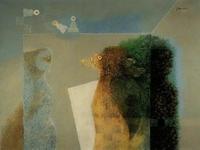
Cruel Game of Chess
Jean David
Nu noir
Jean Fautrier
L'élévation
Leon Spilliaert
I Will Remember Nothing Escapes Me
Paul F. Yount
Man Bathing
Edvard Munch
Earth
Tarsila do Amaral
Woman with child (Mother and son)
Alberto Sughi