
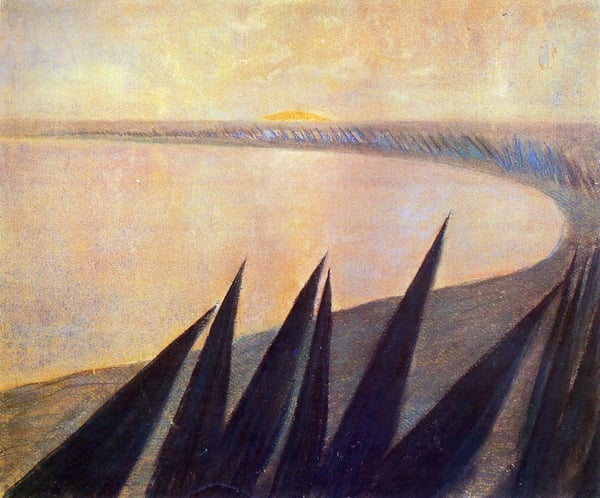
Экспертный разбор работы «Sorrow (I)» художника Mikalojus Konstantinas Ciurlionis
Стиль: Symbolism · Жанр: landscape
Expert Analysis: "Sorrow (I)" by Mikalojus Konstantinas Čiurlionis (Symbolism, Landscape)
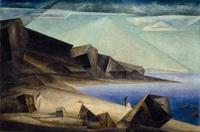
Čiurlionis’s Sorrow (I) stands as a quintessential example of Symbolist landscape painting, where nature becomes a vehicle for profound emotional and metaphysical expression. The work’s significance lies in how it transcends traditional landscape representation to function as a visual elegy—a meditation on loss that feels both personal and universal.
Stylistic Innovations:
- Musicality and Synesthesia: Čiurlionis, also a composer, structures the composition like a musical score. The rhythmic layering of horizontal bands (earth, water, sky) and the fading, staccato treetops echo the ebb and flow of a melancholic melody. This fusion of visual art and music was revolutionary within Symbolism, anticipating later abstract expression.
- Atmospheric Abstraction: Unlike conventional landscapes, Sorrow (I) dematerializes natural forms. A lone, bare tree rises from a dark, reflective body of water, its branches dissolving into a twilight sky. The muted palette of deep blues, purples, and ochres creates a chromatic dirge, prioritizing mood over literal depiction.
Significance within Symbolism & Period:
- Emotional Topography: The painting exemplifies Symbolism’s core goal—to convey inner states through external symbols. The solitary tree (a classic symbol of endurance) and the still water (mirroring sorrow’s stillness) transform the landscape into a psychological portrait. Čiurlionis here achieves what fellow Symbolists like Odilon Redon or Edvard Munch sought: a direct, emotive resonance unmediated by narrative.
- Precursor to Abstraction: While rooted in Symbolism, Sorrow (I) pushes toward non-representational art. The simplified forms, flattened space, and focus on pure color and rhythm align with the early 20th-century turn toward abstraction. Čiurlionis’s work influenced later Lithuanian modernists and, more broadly, the link between Romantic melancholy and abstract spirituality.
Cultural Context:
Produced during a period of national identity formation (Lithuania was under Russian rule), Sorrow (I) also carries subtle political undertones—the landscape as a site of collective mourning. Yet its power remains timeless: Čiurlionis transforms a simple natural scene into a universal emblem of grief, making this work a landmark of Symbolist landscape art.
Визуально похожие
20 работ с близкой композицией и палитрой
Pitas
José Garnelo
Italy–The Mediterranean
William de Leftwich Dodge

Mountain Ranges from Yegen
Dora Carrington

Sorrow (II)
Mikalojus Konstantinas Ciurlionis
Paysage méditerranéen
Andre Dunoyer de Segonzac
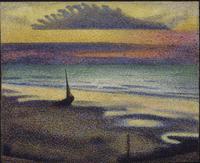
Beach at Heist
Georges Lemmen
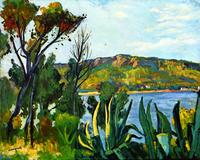
View of Agay
Albert Marquet
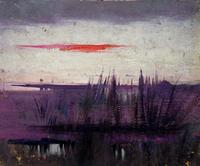
The Sky Simulated by White Flamingoes
Abbott Handerson Thayer

Laguna Veneta
Paolo Salvati
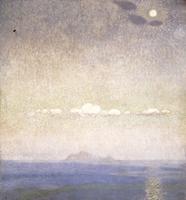
Landscape
Konstantinos Parthenis
Badende Am Waldsee
Otto Mueller
Hudson River
Leon Dabo

La Côte D'amalfi
Oswald Achenbach

Marina, Sunset
Edgar Degas

The Hymn
Mikalojus Konstantinas Ciurlionis
The Moors
Karl Knaths

Nudes in the Dunes
Otto Mueller

Romantic Landscape
Kimon Loghi
Untitled
Nasreen Mohamedi
The High Shore
Lyonel Feininger