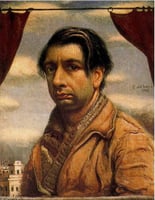
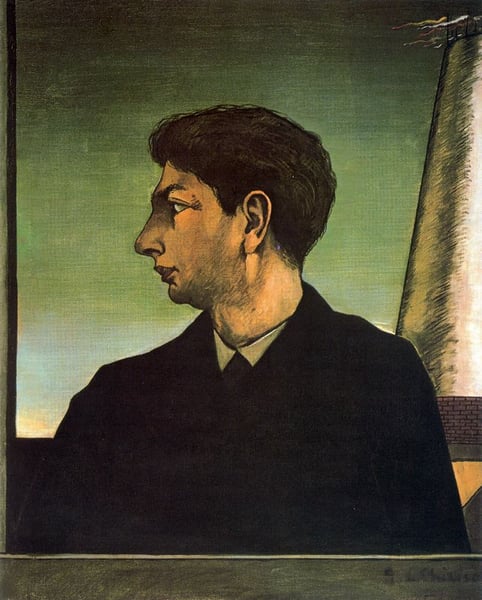
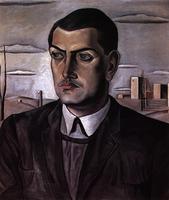
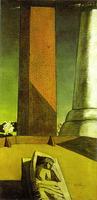
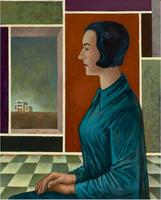
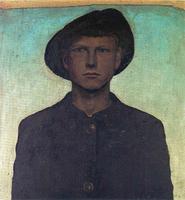
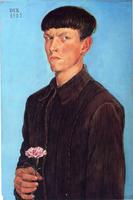
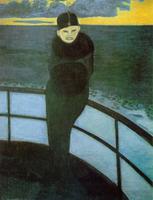
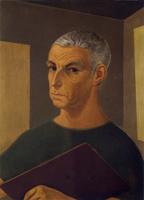
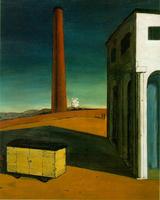
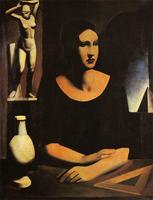
This artwork, Self Portrait by Giorgio de Chirico, is a significant example of the Metaphysical art movement, particularly in how it redefines the traditional genre of self-portraiture. As a self-portrait, the work inherently invites introspection, but de Chirico subverts the typical expectation of direct psychological revelation. Instead, he applies the hallmarks of Metaphysical art—such as ambiguous spatial settings, unnatural lighting, and a sense of eerie stillness—to his own likeness. This fusion transforms the portrait from a simple record of appearance into a philosophical object, where the artist’s identity becomes part of a larger, enigmatic tableau. The significance lies in this departure: de Chirico’s self-portrait does not aim for realistic or emotional expression but rather uses the genre as a vehicle to explore the uncanny and the irrational, which were central concerns of Metaphysical painting. By placing himself within this dreamlike, disquieting context, he asserts that even the artist’s own image can be alienated and mysterious, challenging conventional notions of self and representation in early 20th-century art.