Analisi esperta di Jesus di Vladimir Borovikovsky
Stile: Rococo · Genere: religious painting
Expert Analysis of "Jesus" by Vladimir Borovikovsky
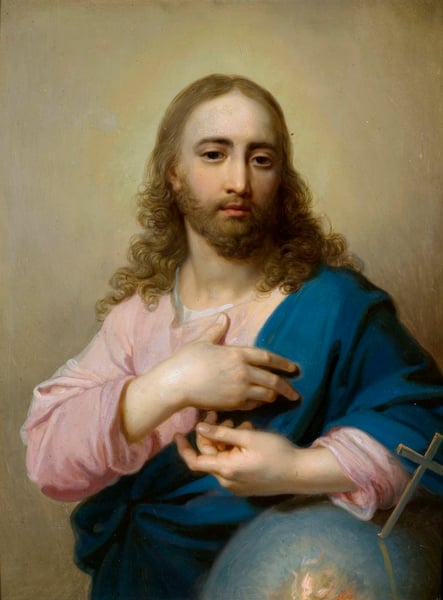
This religious painting by the Russian master Vladimir Borovikovsky stands as a notable fusion of Rococo sensibility with sacred subject matter—a pairing that was unconventional for its time. Executed in the late 18th or early 19th century, the work reveals how Borovikovsky, best known for his aristocratic portraits, applied the graceful, intimate elegance of Rococo to a figure of profound spiritual weight.
Stylistic Significance within Rococo
The painting exemplifies Rococo’s shift toward tenderness and emotional accessibility. Instead of the dramatic intensity or monumental severity often found in Baroque religious art, Borovikovsky’s Christ is rendered with soft, diffused light, delicate brushwork, and a warm, pastel-toned palette. The figure’s gentle expression and composed posture invite quiet contemplation rather than awe. This humanization of the divine aligns with Rococo’s preference for intimacy and sentiment—a move away from the formal hierarchy of earlier church painting.
Genre and Context
As a religious painting in the Rococo tradition, “Jesus” occupies a rare intersection. Rococo flourished primarily in secular decorative arts, palace interiors, and mythological scenes; religious commissions were less common. Borovikovsky’s work thus demonstrates how Rococo motifs could be adapted for devotional purposes without sacrificing either piety or stylistic coherence. The result is a Christ who appears approachable, almost private—designed not for a grand cathedral altarpiece but for personal meditation or a domestic chapel.
Significance of the Artist’s Approach
Borovikovsky’s decision to treat a sacred figure with Rococo’s characteristic delicacy marks a departure from the heavier, more rigid Orthodox iconography prevalent in Russian art of the period. By softening facial features, minimizing stark halos, and emphasizing a humanized gaze, he bridges Western Rococo aesthetics with Eastern Orthodox tradition. This synthesis underscores the artist’s role in introducing European stylistic innovations into Russian religious painting, making the work significant both as a product of its era and as a cultural crosscurrent.
In summary, “Jesus” is significant for its unexpected reconciliation of Rococo grace with religious solemnity. It challenges the notion that Rococo was solely frivolous, revealing instead a capacity for refined, heartfelt spirituality that remains rare in the history of sacred art.
Visivamente simili
20 opere con composizione e palette affini
Sacred heart of Jesus
Tarsila do Amaral
Salvator Mundi
Anton Raphael Mengs
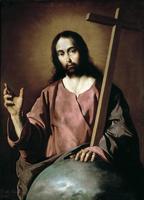
Christ Blessing
Francisco de Zurbaran
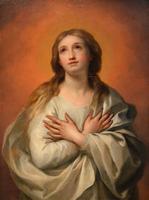
The Immaculate Conception
Anton Raphael Mengs
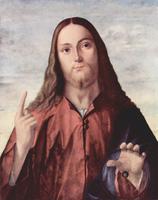
Salvator Mundi
Vittore Carpaccio
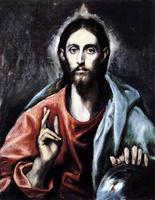
Christ blessing (The Saviour of the World)
El Greco
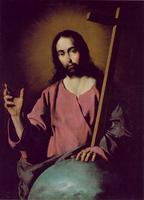
The Savior Blessing
Francisco de Zurbaran
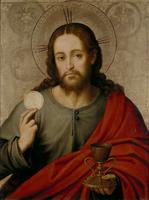
El Salvador
Vicente Juan Masip
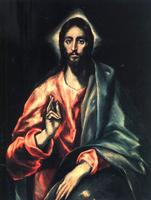
Christ as Saviour
El Greco
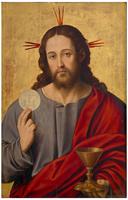
El Salvador Con La Eucaristía
Vicente Juan Masip
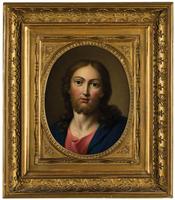
Volto di Cristo
Benedetto Luti
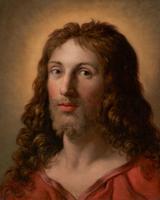
Christ Head
Anton Graff
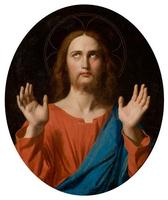
Christ
Jean Auguste Dominique Ingres
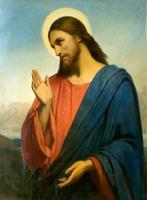
Christ Weeping over Jerusalem
Ary Scheffer
Christ the Redeemer
Andrea del Sarto
El Buen Pastor
Vicente Juan Masip
Salvator Mundi
Bartholomeus Spranger
The Redeemer
Giovanni Bellini
What do you seek?
Franz Ittenbach
Jesus Christ
Vladimir Makovsky