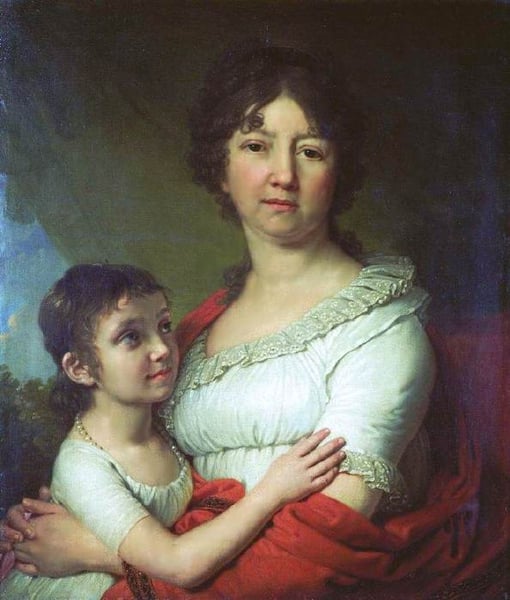
Labzin Anna Evdokimovna
Expert analysis of Vladimir Borovikovsky’s Labzin Anna Evdokimovna
Style: Rococo · Genre: portrait
Expert Analysis: "Labzin Anna Evdokimovna" by Vladimir Borovikovsky
Vladimir Borovikovsky’s portrait of Anna Evdokimovna Labzin is a refined example of Russian Rococo portraiture, a style known for its grace, delicate color, and intimate charm. While Borovikovsky worked at a time when Neoclassicism was rising, he remained one of the foremost practitioners of the Rococo sensibility in Russia, adapting its elegance to the genre of the formal portrait.
Significance within Style and Period
This work is significant for several reasons:
-
Rococo’s Russian Adaptation: Borovikovsky imported the lightness and decorative sophistication of Western Rococo—soft pastel tones, gentle curves, and an air of refined intimacy—into the Russian aristocratic portrait. Unlike the grand, ceremonial Baroque portraits of the previous era, here the sitter is presented with a natural, unpretentious grace, characteristic of Rococo’s shift toward private, sentimental charm.
-
Mastery of Psychological Nuance: Borovikovsky was celebrated for capturing the inner life of his sitters without sacrificing aesthetic polish. In this portrait, the sitter’s gentle expression and relaxed posture suggest a cultivated sensibility—a hallmark of the sentimentalist undercurrent within late Rococo. The work bridges the decorative playfulness of the style with an emerging interest in personality and emotional depth.
-
Contribution to Russian Portraiture: Borovikovsky helped elevate Russian portraiture to the level of its European contemporaries. His portraits, including this one, are prized for their subtle tonal harmonies and the way they integrate the sitter into a softly idealized natural setting—a Rococo device that simultaneously flatters and humanizes.
In sum, Labzin Anna Evdokimovna exemplifies how Borovikovsky fused Rococo’s ornamental elegance with a distinctly Russian sensibility for intimate, psychologically resonant portraiture, securing his place as a pivotal figure in the golden age of Russian painting.
Visually similar
20 works with related composition and palette
Varvara Andreyevna Tomilova
Vladimir Borovikovsky
Madame Philippe Panon Desbassayns de Richemont (Jeanne Eglé Mourgue, 1778-1855) and Her Son, Eugène (1800-1859)
Marie-Guillemine Benoist
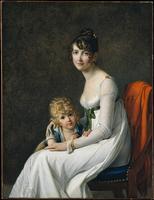
Madame Philippe Panon Desbassayns de Richemont (Jeanne Eglé Mourgue, 1778–1855) and Her Son, Eugène (1800–1859)
Marie-Guillemine Benoist
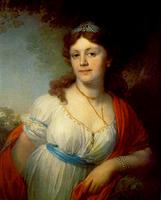
Portrait of E Temkina
Vladimir Borovikovsky
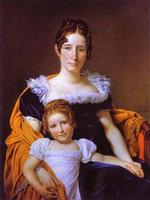
Portrait of the Countess Vilain XIIII and Her Daughter
Jacques-Louis David
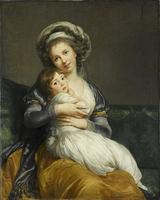
Mrs Vigee-Lebrun and her daughter, Jeanne-Lucie-Louise
Louise Elisabeth Vigee Le Brun
Portrait of Daria Semyonovna Baratoff
Vladimir Borovikovsky
Portrait of M.I.Lopukhina
Vladimir Borovikovsky
Double portrait of a mother with her little son
François-Joseph Navez
Portrait of Catherine Vasilevny Torsukovoy
Vladimir Borovikovsky
Portrait of A. I. Molchanova with Daughter
Orest Kiprensky
Lydia Elizabeth Hoare, Lady Acland, with Her Two Sons, Thomas, Later 11th Bt, and Arthur
Thomas Lawrence
Portrait of Countess A. S. Protasova
Dmitry Levitzky
Portrait of an unknown with a child
Vladimir Borovikovsky
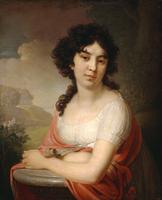
Princess Lopukhina
Vladimir Borovikovsky
Misses Mary and Emily McEuen
Thomas Sully
Portrait of Martha Arbeneva
Vladimir Borovikovsky
Mrs. Thomas Leiper and Her Daughter, Helen Hamilton Leiper
Charles Willson Peale
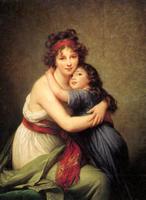
Madame Vigee Lebrun and her daughter, Jeanne Lucie Louise
Louise Elisabeth Vigee Le Brun
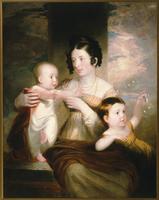
Portrait of Mrs. Morse and Two Children
Samuel Morse