Animal studies
Analisi esperta di Animal studies di Hieronymus Bosch
Stile: Northern Renaissance · Genere: sketch and study
Expert Analysis: Animal Studies by Hieronymus Bosch
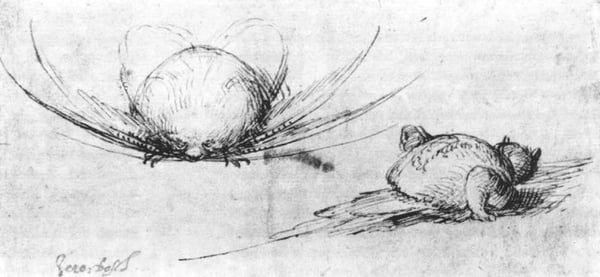
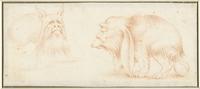
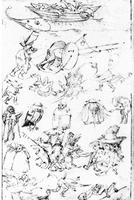
Hieronymus Bosch’s Animal Studies stands as a rare and revealing window into the creative laboratory of one of the Northern Renaissance’s most enigmatic masters. While Bosch is best known for his fantastical, hellish panoramas in works like The Garden of Earthly Delights, this sketch—categorized as a “study” within the “sketch and study” genre—offers a foundation for understanding how he built his bestiary.
Significance within the Northern Renaissance Style
During the Northern Renaissance, artists placed high value on empirical observation of nature, often rendering flora and fauna with meticulous detail. Bosch’s Animal Studies is significant because it grounds his wildest imaginings in observable reality. The sketches likely depict common animals of the period—perhaps dogs, birds, or livestock—but even in this preliminary form, one can detect the seed of his later hybrid creatures. By studying the anatomy, texture, and posture of real animals, Bosch equipped himself with the visual vocabulary needed to later twist these forms into the grotesque, allegorical hybrids that populate his masterpieces.
The Role of the Sketch and Study Genre
As a sketch and study, this work is invaluable for art historians: it reveals Bosch’s modus operandi. Unlike finished altarpieces or triptychs, such studies were private, functional tools—not meant for public display. Their survival is rare. Animal Studies thus provides a direct link to Bosch’s working process, showing how he built a repertoire of forms that could be reused and recombined. This elevates the sketch from a mere preparatory exercise to a key document of artistic invention.
What Makes It Significant
- Process over finished product: The loose, searching lines capture the artist’s hand in real time, offering a tactile sense of his decision-making.
- Foundation for fantasy: Without these careful observations of nature, Bosch’s surreal, symbolic creatures would lack their convincing physicality. The study helps explain why his monsters feel so eerily “real.”
- Proto-surrealist influence: By demonstrating how to merge naturalistic observation with imaginative distortion, Bosch’s Animal Studies foreshadows the working methods of later surrealists like Dalí and Ernst, who likewise drew from nature to build dreamscapes.
In sum, Animal Studies is not merely a minor sketch; it is the conceptual bedrock of Bosch’s visionary world. It proves that even the most bizarre art begins with the discipline of careful looking.
Museum / Gallery
Visivamente simili
20 opere con composizione e palette affini
Two Monsters
Hieronymus Bosch
Kafka
Dado
Krigen Mellom Froskene Og Musene 09
Theodor Severin Kittelsen
Study sheet with cats, dragon and other animals
Leonardo da Vinci
Emblem from Cats’ Monita amoris virginei
Adriaen van de Venne
Untitled (Variations around La Poupée)
Hans Bellmer
Illustrations for Mikhail Stelmakh's book "In the Hedgehog's Windmill"
Hryhorii Havrylenko
Study of Monsters
Hieronymus Bosch
Sketchbook
Vincent van Gogh
Untitled
Valeria Trubina
Two monsters
Francesco Melzi
Study for Illustration for 'Poems, 1937–1942' by David Gascoyne
Graham Sutherland
Adam and Eve expelled from Paradise
Marc Chagall
Illustration for Mikhail Stelmakh's book 'In the Hedgehog's Windmill'
Hryhorii Havrylenko
Song of Songs IV
Marc Chagall
Window Towards Insomnia (3)
Vasile Kazar
Illustrations for Mikhail Stelmakh's book "In the Hedgehog's Windmill"
Hryhorii Havrylenko
Adam and Eve expelled from Paradise
Marc Chagall
Studies of Monsters
Hieronymus Bosch
Krigen Mellom Froskene Og Musene 10
Theodor Severin Kittelsen