Экспертный разбор работы «Last Judgment, right wing» художника Hieronymus Bosch
Стиль: Northern Renaissance · Жанр: religious painting
Expert Analysis: "Last Judgment, Right Wing" by Hieronymus Bosch
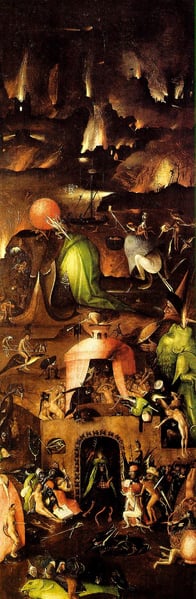
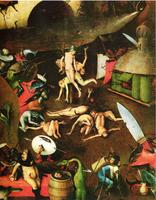
This painting is a quintessential example of Northern Renaissance religious art, but it stands out even within that tradition for the sheer intensity and originality of its moral vision. As the right wing of a triptych, the work traditionally depicts the fate of the damned, and Bosch transforms this conventional subject into a nightmarish, meticulously detailed panorama of sin and punishment.
Significance within the Northern Renaissance and Religious Genre:
-
Extreme Naturalism of the Unnatural: Northern Renaissance painters were renowned for their precise, almost microscopic attention to detail—textures, surfaces, and the physical world. Bosch applies this same obsessive realism to the supernatural. Every demon, hybrid creature, and grotesque torture device is rendered with the same crisp clarity as a still life. This technique makes the fantastical feel disturbingly plausible, grounding a moral allegory in a hyper-real visual language that compels the viewer to confront the consequences of sin with alarming immediacy.
-
Innovative Moral Symbolism: While religious paintings of the period often used standardized iconography (e.g., saints with their attributes, clear divine hierarchies), Bosch creates a deeply personal, symbolic lexicon. The bizarre machinery of torture, the half-human, half-animal demons, and the chaotic, claustrophobic composition are not merely illustrative of scripture. They are a sophisticated, visual sermon on the folly and grotesquerie of human vice, making the Last Judgment not a distant event but an immediate, visceral warning. This symbolic density elevates the work beyond mere illustration into a complex moral puzzle.
-
Psychological Depth and Influence: Bosch’s depiction of Hell moves beyond simple physical torment to a more psychologically troubling vision. The damned are often the objects of absurd, ironic punishments that mirror their earthly sins (a glutton forced to vomit, a miser devoured by a toad). This satirical and deeply imaginative approach was revolutionary for its time and prefigures later surrealist and expressionist explorations of the subconscious. Within the Northern Renaissance, Bosch’s work represents the outer limit of the period’s fascination with the grotesque and the moral consequences of human action, making this panel a landmark of both religious art and the history of the imagination.
Museum / Gallery
Визуально похожие
20 работ с близкой композицией и палитрой
Triptych: The Temptation of St. Anthony
Hieronymus Bosch
The Last Judgement
Hieronymus Bosch
The Triumph of Death
Pieter Bruegel the Elder
The Last Judgement
Lucas Cranach the Elder
Dulle Griet (Mad Meg)
Pieter Bruegel the Elder
The Triumph of Death
Jan Brueghel the Elder
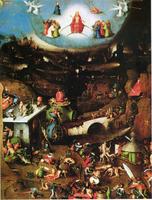
The Last Judgement (detail)
Hieronymus Bosch
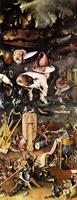
The Garden of Earthly Delights (detail)
Hieronymus Bosch
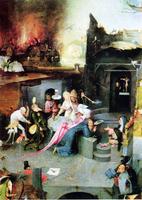
Temptation of St. Anthony (detail)
Hieronymus Bosch
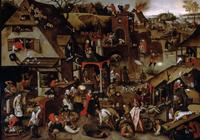
Netherlandish Proverbs (after Peter Brueghel the Elder)
Pieter Brueghel the Younger
The Last Judgement (detail)
Hieronymus Bosch
Hermit Saints Triptych
Hieronymus Bosch
Netherlandish Proverbs
Pieter Bruegel the Elder
Temptation of St. Anthony (detail)
Hieronymus Bosch
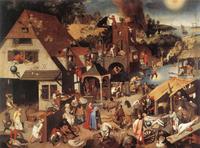
Sprichworte
Pieter Brueghel the Younger
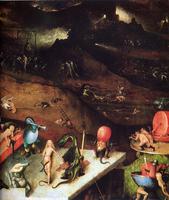
The Last Judgement (detail)
Hieronymus Bosch
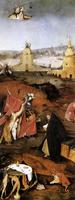
Triptych of Temptation of St Anthony (detail)
Hieronymus Bosch
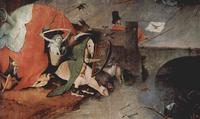
The Temptation of St. Anthony (detail)
Hieronymus Bosch
Hermit Saints Triptych (left panel)
Hieronymus Bosch
Temptation of St. Anthony
Hieronymus Bosch