The Adoration of the Magi
Dettagli
Analisi esperta di The Adoration of the Magi di Hieronymus Bosch
Stile: Northern Renaissance · Genere: religious painting
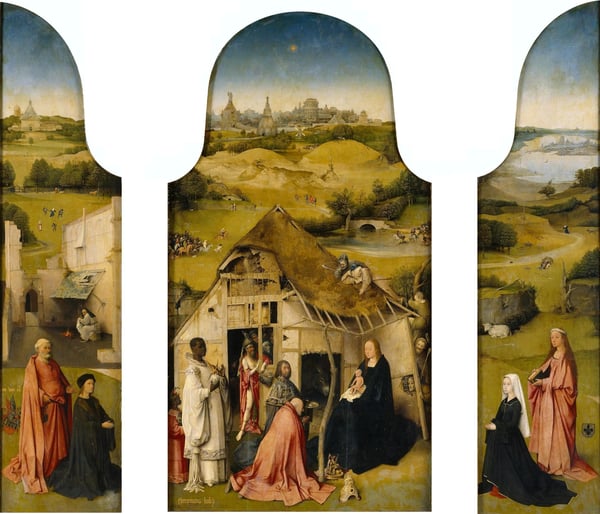
In this Northern Renaissance religious painting, Hieronymus Bosch brings his singular, visionary imagination to the conventional subject of the Magi adoring the Christ Child. While the genre dictates a sacred scene of gift-giving and homage, Bosch’s signature approach transforms the familiar into the fantastical and deeply symbolic.
Significance within the Northern Renaissance style: The Northern Renaissance prized meticulous detail, rich oil glazes, and a fusion of naturalistic observation with symbolic meaning. Bosch adheres to this through the intricate rendering of the Magi’s ornate gifts, fabrics, and the weathered faces of the figures. Yet, he pushes the boundaries by populating the stable with peculiar, often grotesque secondary characters—figures that hover between the mundane and the demonic. This aligns with the Northern tradition of embedding moral and spiritual allegory within everyday realism. For Bosch, the holy event is not a serene, idealized tableau (as in Italian Renaissance treatments) but a crowded, often unsettling confrontation between the divine and a fallen, bizarre world.
Significance within religious painting: Bosch’s “Adoration” reinterprets the Epiphany as a moment of fragile grace amid surrounding chaos. The Magi are typically dignified kings, but here they may appear more like wandering sages or even foreign oddities, their expressions tinged with unease or confusion. This underscores a key Bosch theme: the difficulty of recognizing the sacred in a world teeming with folly and sin. The inclusion of enigmatic symbols—such as the figure peering through the stable wall or the strange creatures lurking in the shadows—invites viewers into a meditative reading of the Nativity as a cosmic event, not a mere historical pageant.
What makes this work truly significant is how Bosch employs Northern Renaissance techniques not just for devotional clarity, but for moral provocation. He transforms a standard religious narrative into a mysterious, psychological landscape, suggesting that even the Adoration of the Magi is shadowed by humanity’s fallen nature—a uniquely Boschian contribution to the period’s religious art.
Museum / Gallery
Visivamente simili
20 opere con composizione e palette affini
The Adoration of the Magi (detail)
Hieronymus Bosch
Hermit Saints Triptych
Hieronymus Bosch
Netherlandish Proverbs
Pieter Bruegel the Elder
The Last Judgement
Hieronymus Bosch
Adoration of the Magi
Pieter Brueghel the Younger
Temptation of St. Anthony
Hieronymus Bosch
The Temptation of St Anthony (detail)
Hieronymus Bosch
Netherlandish Proverbs (after Peter Brueghel the Elder)
Pieter Brueghel the Younger
Sprichworte
Pieter Brueghel the Younger
Landscape with the Rest on the Flight
Joachim Patinir
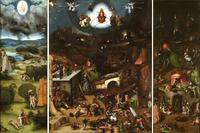
The Last Judgement
Lucas Cranach the Elder
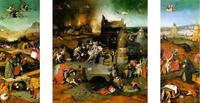
Triptych: The Temptation of St. Anthony
Hieronymus Bosch
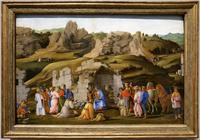
Adoration of the Magi
Filippino Lippi
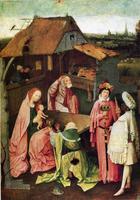
Adoration of the Magi
Hieronymus Bosch
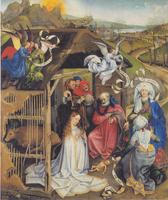
Adoration of Shepherds
Robert Campin
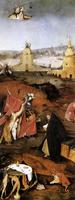
Triptych of Temptation of St Anthony (detail)
Hieronymus Bosch
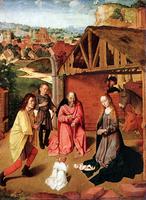
The Nativity
Gerard David
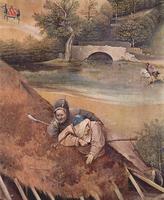
Adoration of the Magi
Hieronymus Bosch
Visitation
Jacques Daret
Allegory of Gluttony and Lust
Hieronymus Bosch