Análisis experto de Alfred Pierre Comte de Falloux de Honore Daumier
Estilo: Realism · Género: sculpture
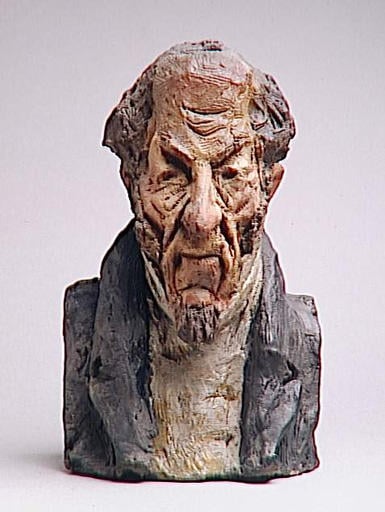
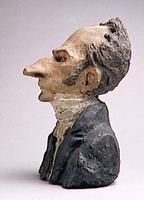
This bust of Alfred Pierre Comte de Falloux by Honoré Daumier is a masterful example of Realist sculpture that transcends mere portraiture to become a biting social and political commentary. Carved with a keen eye for unflinching truth, Daumier eschews idealized beauty in favor of capturing the subject’s character through exaggerated, almost caricatured features—a hallmark of his revolutionary approach to three-dimensional form.
Significance within Realism and Daumier’s Oeuvre:
-
Sculptural Caricature: Daumier, renowned for his lithographic satire, applied the same incisive wit to sculpture. Here, the Comte de Falloux—a conservative politician and architect of the 1850 Falloux Laws that strengthened Catholic control over French education—is rendered with unmistakable physiognomic exaggeration. The prominent nose, heavy-lidded eyes, and taut lips convey not just likeness but a palpable sense of arrogance and clerical conservatism. This blend of realism and caricature was groundbreaking, elevating sculpture from a medium of static commemoration to one of dynamic political critique.
-
Unflinching Realist Technique: In keeping with Realist principles, Daumier focuses on the specific, the imperfect, and the psychologically revealing. The modeling is vigorous and tactile; the clay or plaster surface (often later cast in bronze) carries the marks of the artist’s hands, emphasizing the materiality and immediacy of the work. There is no flattery, no idealization—only a raw, confrontational truthfulness that aligns Daumier with the broader Realist push to depict contemporary life, including its most divisive figures.
-
Historical Context and Legacy: Created during the waning years of the July Monarchy and into the Second Republic, this bust belongs to a series of about thirty-six known sculpted célébrités (celebrities) that Daumier produced as studies for his prints. These works functioned as three-dimensional reference models, yet they stand on their own as powerful psychological portraits. Today, they are recognized as pioneering precursors to the expressive modern sculpture of Rodin, who admired Daumier’s ability to distill personality into form.
In summary, Alfred Pierre Comte de Falloux is significant not only as a technically brilliant Realist bust but also as a weapon of political satire. It demonstrates Daumier’s unique ability to merge the caricaturist’s sharp eye with the sculptor’s physicality, creating a work that is at once a document of its turbulent era and a timeless study of human frailty and power.
Museum / Gallery
Visualmente similares
20 obras con composición y paleta relacionadas
Unknown, Alfred Pierre, Count de Falloux
Honore Daumier
Alexander Simon Pataille, MP
Honore Daumier
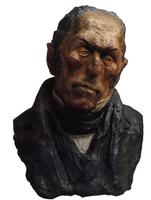
Bust of Francois-Pierre-Guillaume Guizot
Honore Daumier
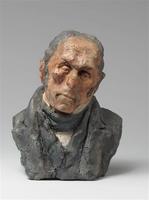
François-Pierre-Guillaume Guizot (1787-1874), Deputy, Minister and Historian
Honore Daumier
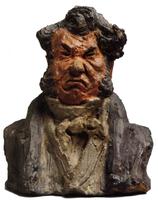
Laurent Cunin, Also Called Cunin-Gridaine, (1787-1859), Deputy and Peer of France
Honore Daumier
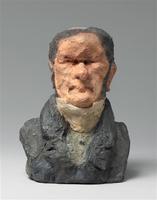
Augustus Ganneron Hippolyte (1792-1847), industrialist and MP
Honore Daumier
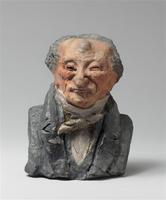
Alexandre-Simon Pataille, Magistrate and Deputy
Honore Daumier
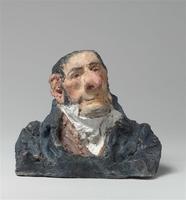
Count Antoine-Maurice-Apollinaire d'Argout (1782-1858), Minister and Peer of France
Honore Daumier
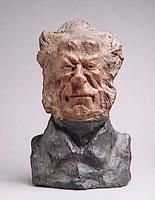
Baron Jacques-Antoine-Adrien Delort (1773-1846), General and Deputy
Honore Daumier
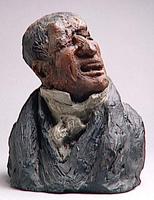
Nicolas Soult, Marshal of France
Honore Daumier
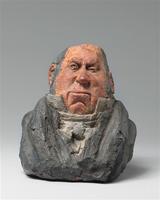
Felix Barthe (1796-1863), Minister of Justice and Deputy
Honore Daumier
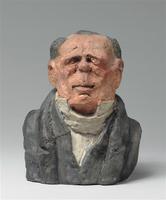
Benjamin Delessert, Industrial and MP
Honore Daumier
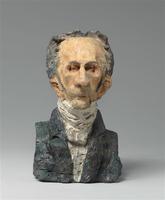
Jacques Lefevre (1773-1856), Banker, Deputy, Regent of the Banque de France
Honore Daumier
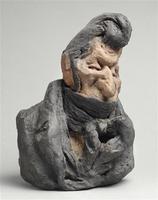
Jean-Auguste Chevandier de Valdrome (1781-1878), Deputy and Peer of France
Honore Daumier
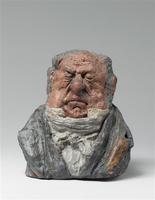
Claude Baillot, MP
Honore Daumier
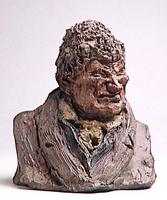
Charles Henri Vernuel, Admiral
Honore Daumier
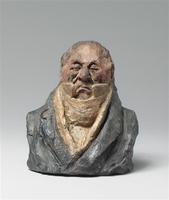
Count Horace François Sebastiani, General and Politician
Honore Daumier
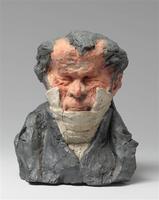
Jean-Ponce-Guillaume Viennet (1777-1868), Deputy, Peer of France and Academician
Honore Daumier
Jacques Lefévre (1777-1856), Banker and Deputy
Honore Daumier
Jean-Marie Harle, Deputy
Honore Daumier