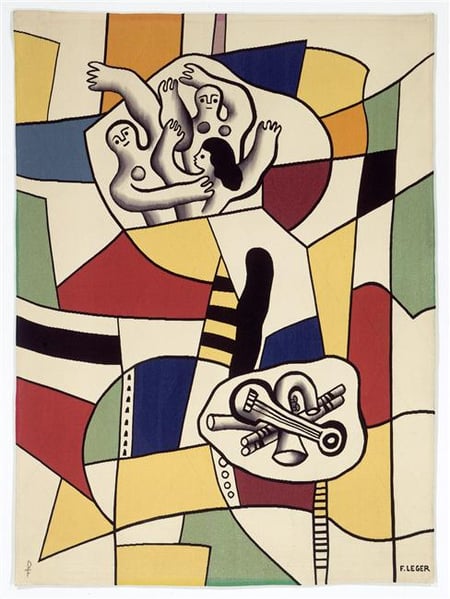
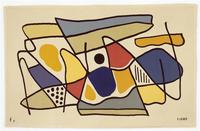
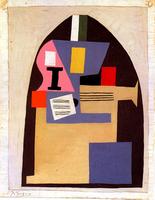
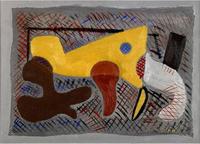
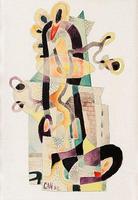
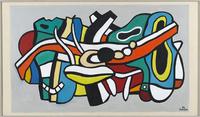
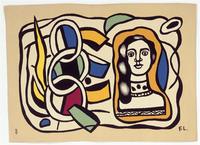
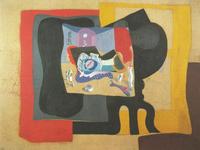
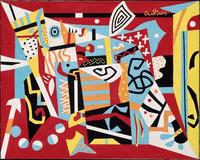
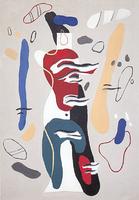
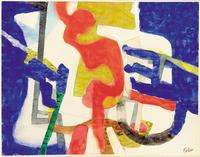
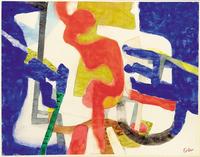
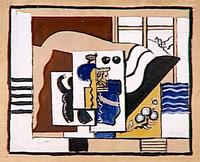
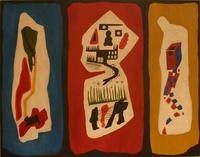
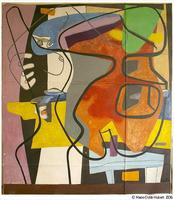
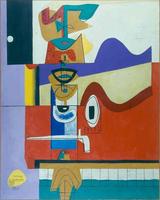
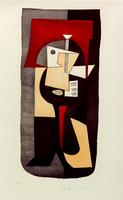
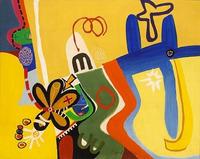
As a Purist genre painting, Fernand Léger's Dance exemplifies the movement's core tenets of clarity, order, and precision while infusing them with dynamic human energy. The work is significant for its synthesis of machine-age geometry with the rhythmic vitality of dance—a subject that allows Léger to translate Purist ideals into a celebration of modern life. By distilling figures into simplified, tubular forms and bold, flat planes of color, he retains the movement's hallmark "architectural" structure (championed by Le Corbusier and Ozenfant) but eschews its typical restraint for a more exuberant, kinetic composition. This merging of mechanical logic with organic motion marks Dance as a key bridge between Purism's cold rationalism and Léger's lifelong fascination with the human figure as a dynamic, industrial-compatible form.