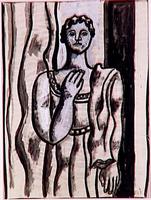
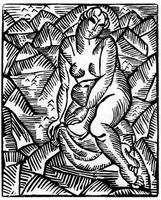
Expert Analysis of "Study for a Portrait" by Fernand Léger
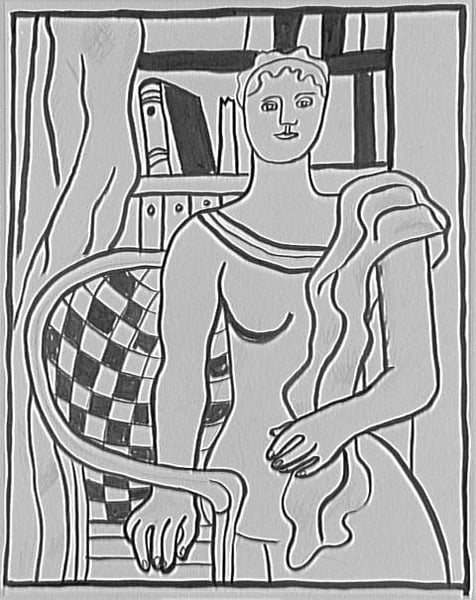
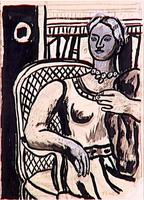
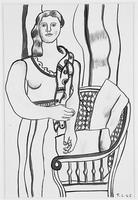
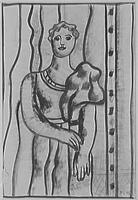
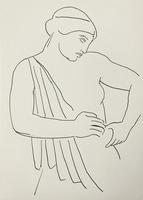
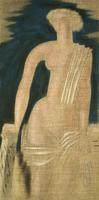
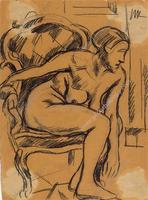
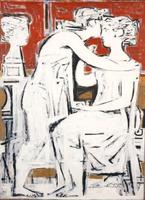
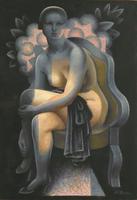
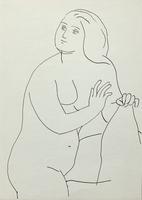
This work is significant as a rare intersection of Fernand Léger’s Cubist-infused mechanical aesthetic with the deliberately simplified, anti-academic language of Naïve Art (Primitivism). While Léger is best known for his bold, tubular forms and machine-age dynamism, Study for a Portrait reveals his engagement with a more raw, intuitive mode of representation. As a sketch and study, the piece documents the artist’s preparatory process—likely for a finished portrait—where he distills form to its most essential, almost childlike outlines.
The significance lies in its departure from Léger’s typical precision. The Naïve style here strips away perspective, modeling, and detail, emphasizing flatness and a direct, unmediated visual expression. This aligns with Primitivism’s fascination with non-Western and folk art, a current that influenced many modernists. For Léger, this study may represent a deliberate exploration of authenticity and simplicity, qualities he prized in his later "mechanical" period but here rendered in a purer, less industrialized manner. As a study, it offers insight into his working method—how he moved between structured Cubist abstraction and the instinctual, almost decorative clarity of Naïve art—making it a key document of his stylistic versatility.