Fernand Leger の The Creation of the prehistoric World state の専門的な分析
スタイル:Cubism · ジャンル:design
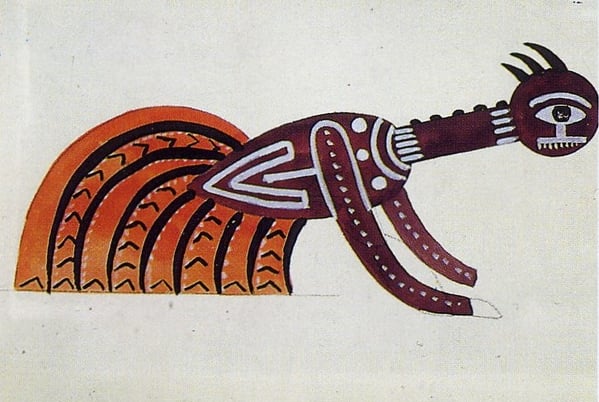
Expert Analysis of "The Creation of the prehistoric World state" by Fernand Léger
Context and Stylistic Significance
Fernand Léger was a leading figure in Cubism, yet he diverged from the muted palettes and fragmented tabletop subjects of Picasso and Braque. Instead, he championed a bold, machine-age Cubism characterized by tubular forms, primary colors, and a sense of dynamic rhythm. "The Creation of the prehistoric World state"—a design work—exemplifies how Léger extended Cubist principles beyond the canvas into the realm of applied art, blurring the boundaries between fine art and functional design.
Artistic Approach
Even within the "design" genre, Léger applies Cubist logic: he reduces prehistoric imagery—perhaps raw, organic shapes or primal figures—into interlocking cylinders, cones, and geometric planes. The composition likely uses sharp contrasts of black outlines against saturated reds, yellows, and blues, a hallmark of his “mechanical” period. The prehistoric theme is reinterpreted not as naturalistic representation but as a conceptual genesis of forms, aligning with Cubism’s drive to depict the world as a constructed, intellectual order.
What Makes It Significant
-
Pioneering Cubist Design: While Cubism was primarily a painting and sculpture movement, Léger’s design work—such as murals, tapestries, and stage sets—demonstrated that Cubist fragmentation could serve architectural and decorative purposes. This piece likely functioned as a preparatory study or a conceptual blueprint for a larger public installation, proving Cubism’s adaptability beyond the easel.
-
Fusion of Modernity and Primitivism: The title juxtaposes “prehistoric” origins with a “world state”—a forward-looking, almost utopian concept. Léger uses Cubist geometry to collapse time, linking humanity’s earliest creative impulses with a futuristic, industrialized vision. This reflects his belief that modern art could both celebrate technological progress and reconnect with elemental human creativity.
-
Influence on 20th-Century Visual Culture: By treating “design” as a legitimate Cubist output, Léger helped pave the way for later movements such as Art Deco, Constructivism, and even graphic design. The work’s bold, simplified shapes and rhythmic repetition anticipated mid-century modernist aesthetics in poster art, furniture, and architecture.
In summary, "The Creation of the prehistoric World state" is not merely a Cubist picture but a manifesto for how the movement could transcend the gallery and reshape the designed environment. It marks Léger’s unique contribution: a Cubism that is at once architectonic, optimistic, and deeply engaged with the material world.
視覚的に類似
構図やパレットが近い作品 20 件
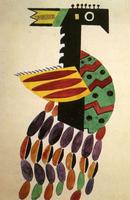
The Creation of the World Bird drawing of Costume
Fernand Leger
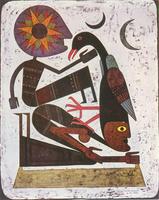
Anagogy
Victor Brauner
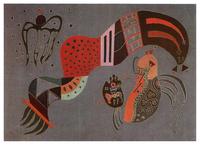
Tempered Elan
Wassily Kandinsky
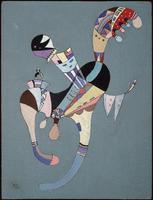
A floating figure
Wassily Kandinsky
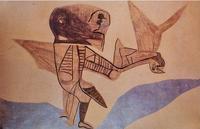
Vajda Lajos Szárnyas Lény Ezüst Talajon 1938
Vajda Lajos
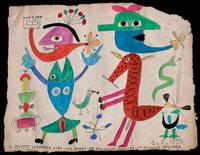
Sans titre (Personnages)
Victor Brauner
La Passivite Comblee
Victor Brauner
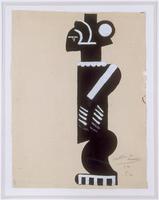
Study for the Creation of the World
Fernand Leger
Winged Creature on Silvery Ground
Vajda Lajos
May That Nuclear War Be Cursed!
Maria Primachenko
Master of Puppets
Mr. Dejo
The Creation of the World Monkey drawing of costume
Fernand Leger
Untitled
Wassily Kandinsky
Vajda Lajos Winged Being on Silver Ground, 1938, Pastel Indian Ink, Tempera and Charcoal on Paper, 63x90cm
Vajda Lajos
The Golddigger
Mr. Dejo
Irschou
Victor Brauner
Bear Walking
Norval Morrisseau
A Fish King Has Caught a Hoopoe and Is Full of Joy
Maria Primachenko
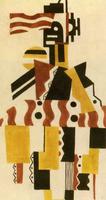
The Creation of the World Great figure drawing of costume
Fernand Leger
Peacock and crocodile
Maria Primachenko