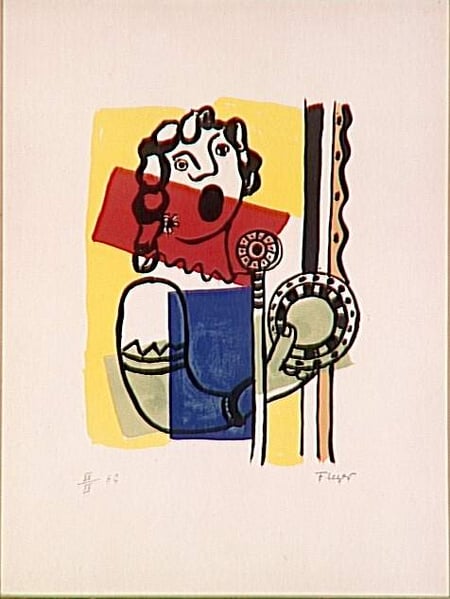
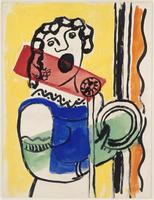
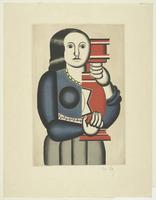
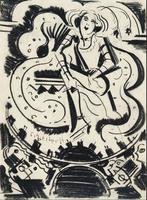
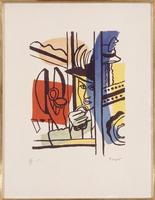
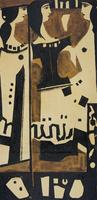
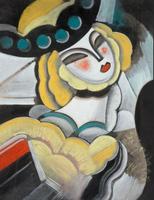
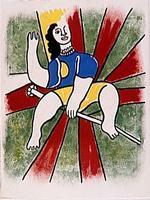
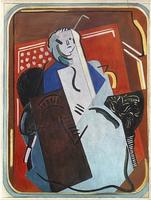
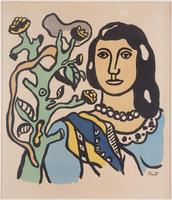
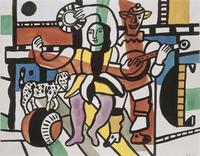
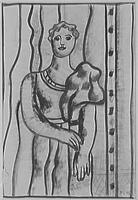
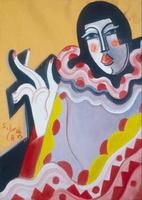
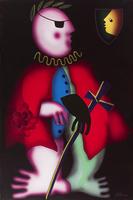
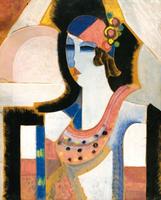
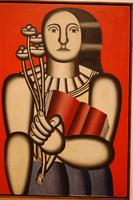
Considering the provided facts, Fernand Léger’s The singer on the radio stands as a striking anomaly within his broader oeuvre—a rare foray into Naïve Art (Primitivism) captured as a sketch and study. The work’s significance lies in this very tension: Léger, celebrated for his mechanized, Cubo‑Futurist visions of modern life, here adopts a deliberately unschooled, direct visual language that echoes the raw immediacy of folk or children’s art. As a study, the piece likely served as an exploratory step, distilling the figure of the radio singer into bold, simplified contours and unmodulated color—hallmarks of the naïve approach. In doing so, it reveals a modernist’s fascination with the expressive power of reduction, paralleling the primitivist currents that ran through early 20th‑century art (e.g., in the work of Rousseau or the Fauves). For Léger, this sketch may have been a way to strip away academic convention and connect with the essence of the performer’s presence, filtered through the disembodied medium of radio. Its significance thus rests in demonstrating that even a radical modernist like Léger could momentarily step outside his signature style to embrace the anti‑illusionistic, “untutored” simplicity that Naïve Art champions—making this drawing a compelling footnote to his career and a testament to the enduring allure of primitivism as a source of renewal.