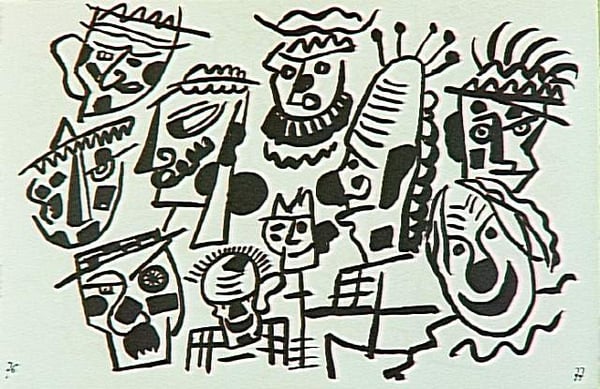
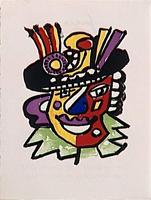
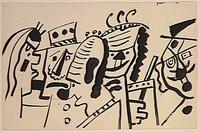
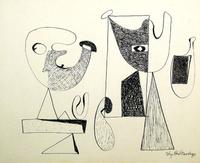
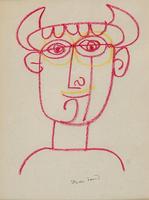
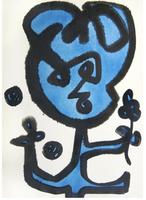
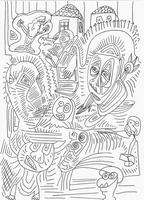
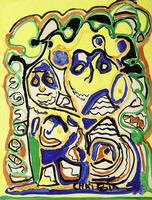
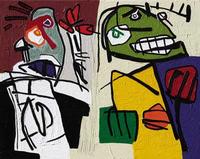
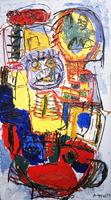
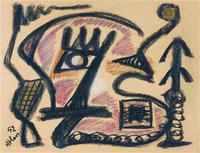
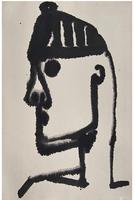
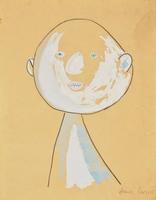
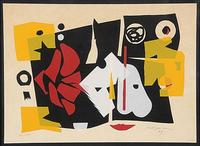
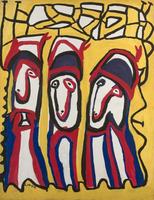
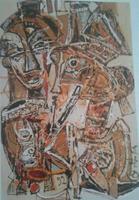
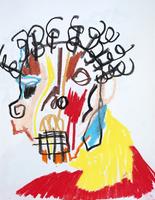
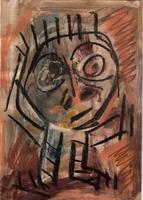
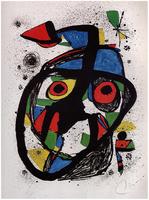
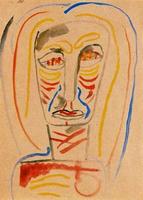
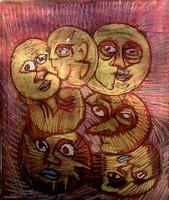
In “The album ‘Circus’,” Fernand Léger adopts the visual language of Naïve Art (Primitivism), a notable departure from his more familiar Cubist and machine-age aesthetics. As a sketch and study, the work captures the raw energy and immediacy of the circus through simplified forms, bold outlines, and a deliberately untutored handling of space and proportion. Its significance lies in Léger’s embrace of primitivism to strip performance down to its elemental rhythms—color, motion, and gesture—freeing the subject from academic refinement. This album format underscores the spontaneous, exploratory nature of the sketches, revealing how Léger sought to distill modern spectacle into its most primal visual components, bridging high modernism with folk-art directness.