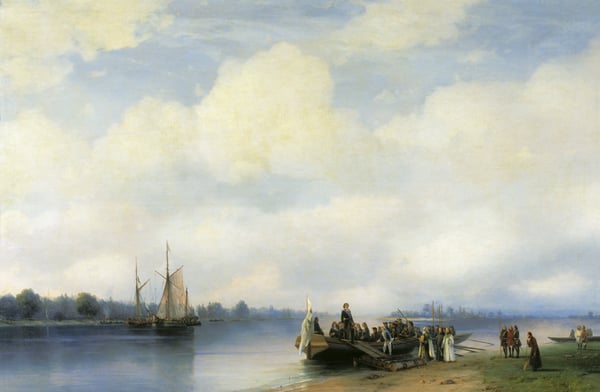
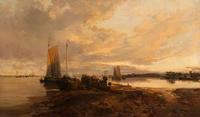
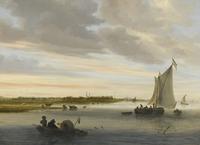
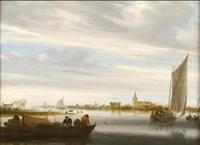
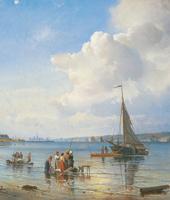
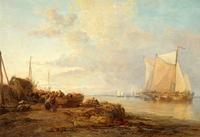
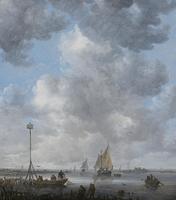
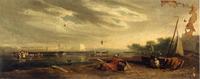
Based on the structured facts provided, the significance of Ivan Aivazovsky’s Arrival of Peter I on the Neva lies in how it synthesizes two defining traits of Romanticism—historical grandeur and the sublime power of nature—within the landscape genre.
As a Romantic landscape, the work does not simply document a location; it transforms the Neva River into a stage for national mythmaking. Aivazovsky, known primarily for his seascapes, here applies his mastery of marine atmosphere to a riverine scene. The arrival of Peter I—a transformative figure in Russian history—is presented not as a dry historical record but as a dramatic, emotive event. The painting’s significance is found in its ability to evoke the awe and promise of Peter’s modernizing vision through the natural world: the play of light on water, the expansive sky, and the solitary figure of the tsar against the vast landscape. This fusion of history and nature is a hallmark of Romanticism, elevating a political arrival into a sublime, almost spiritual encounter that resonates with national identity and the Romantic fascination with the heroic individual confronting the elements.