
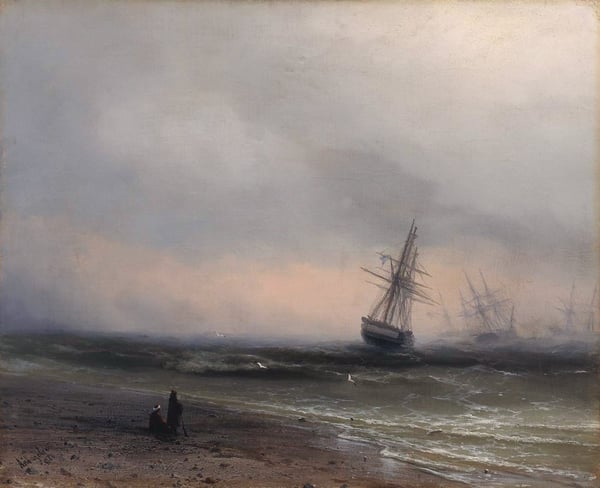
Expertenanalyse zu Ivan Aivazovskys Seascape in Crimea
Stil: Romanticism · Genre: marina
Expert Art Historical Analysis: "Seascape in Crimea" by Ivan Aivazovsky
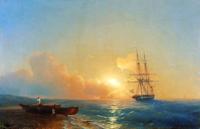
Ivan Aivazovsky’s Seascape in Crimea stands as a quintessential embodiment of the Romantic marina—a genre he elevated to unparalleled heights within 19th-century painting. Produced at the peak of his career, this work exemplifies the Romantic obsession with the sublime power of nature, filtered through Aivazovsky’s own virtuosic handling of light, atmosphere, and liquid motion.
Significance within Romanticism: The Sublime and the Emotional Romanticism prized the overwhelming, often terrifying beauty of natural forces—a concept Aivazovsky made his own. In Seascape in Crimea, the sea is not merely a backdrop but a protagonist, teeming with restless energy. The painting captures a moment of dramatic tension: rolling waves catch shifting light, clouds billow with latent storm, and the distant Crimean coastline appears fragile against the vast, untamed water. This is the Romantic sublime rendered in oil—a landscape that dwarfs the human, eliciting awe, reverence, and even a hint of peril. Aivazovsky’s genius lies in making that danger beautiful, inviting viewers to contemplate their own smallness before nature’s grandeur.
Mastery of the Marina Genre As a dedicated marine painter, Aivazovsky revolutionized the marina by blending precise observational accuracy with profound emotional resonance. Seascape in Crimea demonstrates his legendary ability to depict water’s transparency, reflectivity, and movement. Notice the distinct treatment of the ship’s hull against the deep blue-green swells; the foam is rendered with delicate, almost impressionistic touches that convey both weight and ephemerality. His skies are no less remarkable—often layered with translucent washes that simulate the humidity and shifting winds of the Black Sea region. This technical bravura, combined with a lyrical compositional sense, sets his marinas apart from more static, topographical predecessors.
Crimean Identity and National Significance Beyond its stylistic merits, the painting is important for its geographic specificity. Aivazovsky was born in Feodosia, a Crimean port city, and throughout his life he remained deeply connected to the Black Sea landscape. Seascape in Crimea is thus not a generic sea view but a loving portrait of his homeland—a synthesis of personal memory, local topographical character, and the artist’s lifelong dialogue with the water that defined his identity. For Russians and Ukrainians alike, his Crimean scenes have come to symbolize the region’s dramatic natural beauty, making this work a cultural as well as artistic touchstone.
Legacy: The Sublime Made Tangible In sum, Seascape in Crimea is significant because it crystallizes the core Romantic ideal—the sublime—through the specific lens of the marine genre. Aivazovsky’s ability to make the viewer feel the salt spray and hear the crash of waves, while simultaneously evoking a sense of timeless, cosmic scale, secures this painting’s place as a masterwork of 19th-century maritime art. It is both a technical tour de force and a deeply emotional invitation to stand at the edge of the known world and gaze out into the infinite.
Visuell ähnlich
20 Werke mit ähnlicher Komposition und Farbpalette
Sailing ships
Konstantinos Volanakis
Surf near coast of Crimea
Ivan Aivazovsky
Sea coast
Ivan Aivazovsky
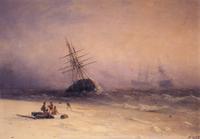
The Shipwreck on Northern sea
Ivan Aivazovsky
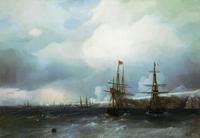
The capture of Sevastopol
Ivan Aivazovsky
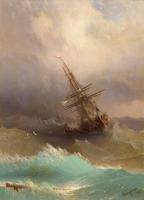
Ship in the Stormy Sea
Ivan Aivazovsky
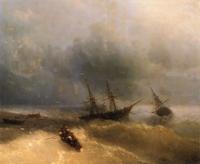
The Shipwreck
Ivan Aivazovsky
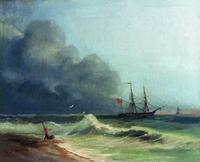
Sea before storm
Ivan Aivazovsky
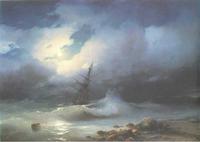
Rough sea at night
Ivan Aivazovsky
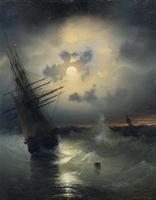
A sailing ship on a high sea by moonlight
Ivan Aivazovsky
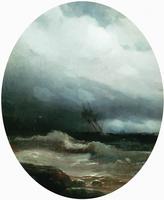
Ship in a storm
Ivan Aivazovsky
Two Ships Anchored off a Beach
Ivan Aivazovsky
Two Ships at Sea
Ivan Aivazovsky
Seascape
Ivan Aivazovsky
Calm Waters
Ivan Aivazovsky
Tempest by Sounion
Ivan Aivazovsky
Ship by the Shore
Ivan Aivazovsky
Ships in the stormy sea
Ivan Aivazovsky
The Shipwreck on Northern sea
Ivan Aivazovsky
Fishermen on the coast of the sea
Ivan Aivazovsky