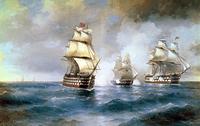
Analysis of "Stormy Sea" by Ivan Aivazovsky
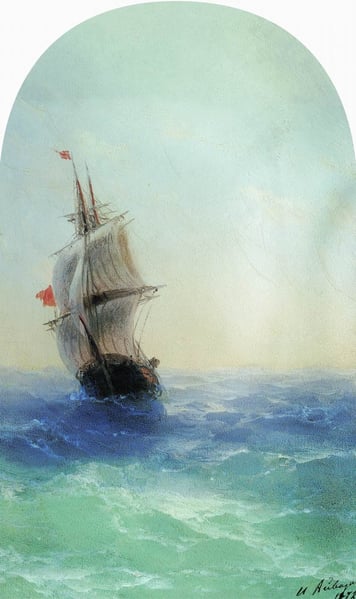
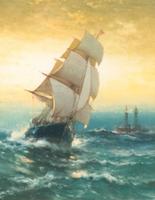
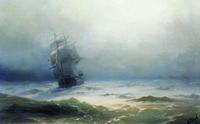
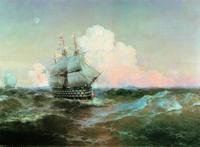
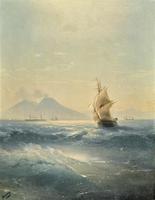
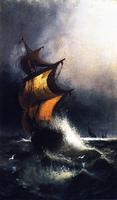
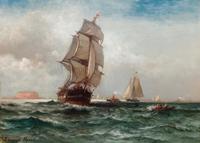
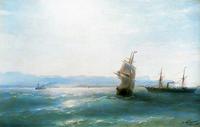
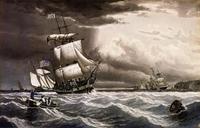
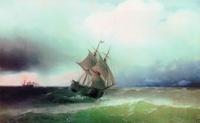
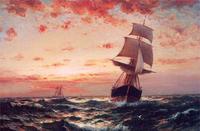
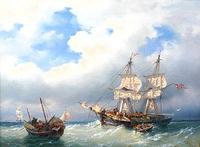
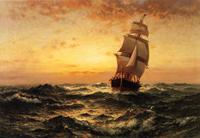
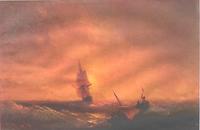
Ivan Aivazovsky’s Stormy Sea stands as a quintessential example of Romanticism’s fascination with the sublime power of nature. As a marina—a genre dedicated to seascapes—the work captures the raw, untamed energy of the ocean, a central theme in Romantic art. Aivazovsky masterfully contrasts the dark, churning waves with bursts of turbulent sky, evoking both danger and awe. The composition draws the viewer into the chaos, emphasizing the insignificance of any human presence against the vast, elemental force of the sea.
The painting’s significance lies in its emotional intensity and technical virtuosity. Aivazovsky was renowned for his ability to render the sea’s ever-changing moods, and here he achieves a dramatic balance between realism and romantic idealization. The interplay of light and shadow—likely a fleeting break in the storm clouds—heightens the sense of impending drama, a hallmark of Romanticism’s focus on nature as a mirror of human emotion. In the context of the marina genre, Stormy Sea elevates the seascape from mere depiction to a profound meditation on the sublime, making it a landmark in Aivazovsky’s career and in 19th-century Romantic painting.