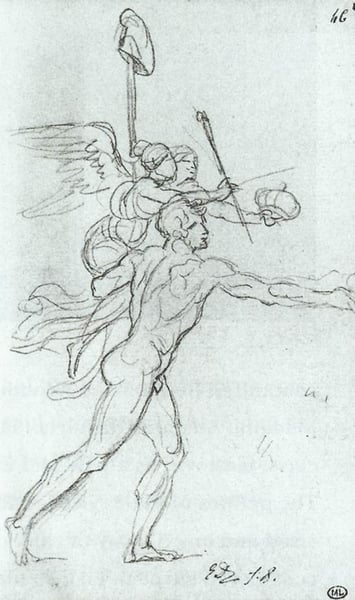
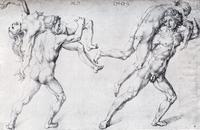
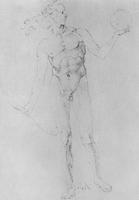
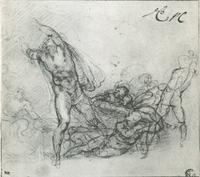
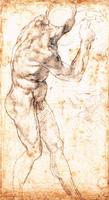
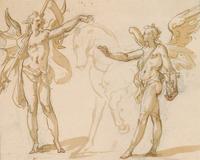
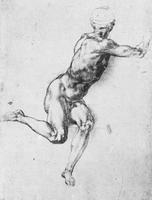
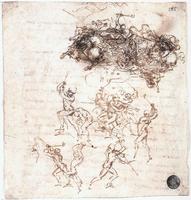
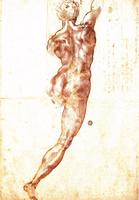
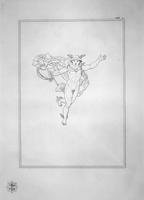
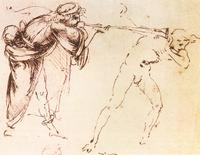
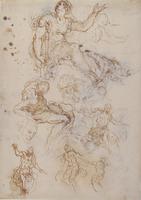
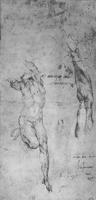
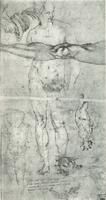
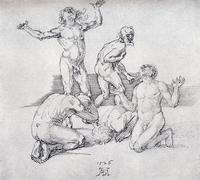
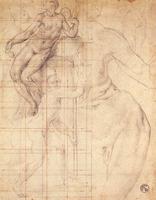
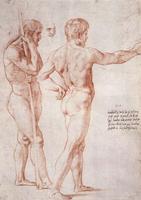
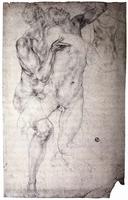
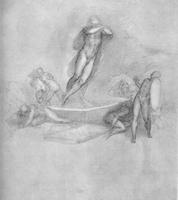
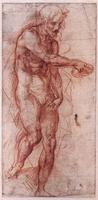
This sketch by Jacques-Louis David, a preparatory study for a larger composition, exemplifies the Neoclassical commitment to clarity, moral allegory, and political engagement. Rendered as a study, the work focuses on the dynamic interplay of figures: the personified French people presenting symbols of sovereignty—the crown and sceptre—to the king. The compositional structure, even in preliminary form, reveals David’s methodical approach to arranging figures in a frieze-like manner, a hallmark of Neoclassical painting inspired by ancient reliefs.
The significance of this piece lies in its fusion of classical idealism with contemporary revolutionary politics. Created during a period of profound upheaval (likely before David fully embraced the Jacobin cause), the allegory negotiates the transfer of power from monarch to nation, suggesting a moment of unification rather than conflict. As a sketch, it offers invaluable insight into David’s artistic process—his emphasis on gesture, line, and narrative clarity before applying the polished finish typical of Neoclassical painting. The work thus stands as a transitional document between the old regime and the new order, showcasing how David used allegory to both celebrate and critique political realities. Its existence as a study underscores the artist’s disciplined preparation and the Neoclassical belief that even preliminary drafts must communicate virtue and moral purpose.