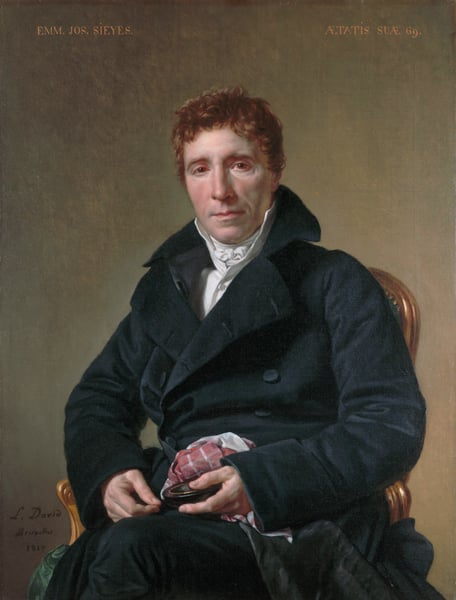
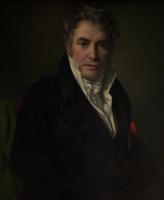
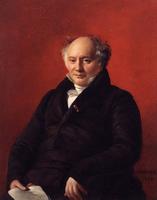
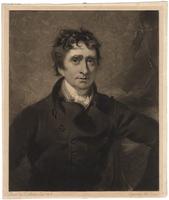
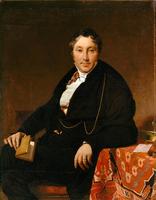
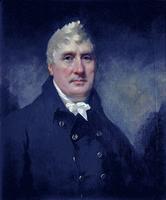
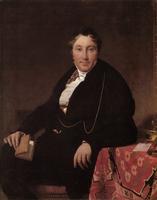
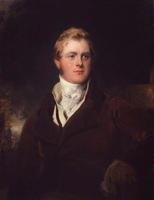
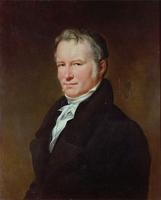
As an expert in Neoclassical art, I can analyze "Emmanuel Joseph Sieyes" by Jacques-Louis David based solely on the supplied facts: its style (Neoclassicism) and genre (portrait).
The significance of this work lies in how David, the foremost painter of Neoclassicism, applies the movement’s core principles to a portrait of a key political figure. In the Neoclassical tradition, portraits were not mere likenesses but vehicles for moral and civic virtue. David’s depiction of Sieyes—a leading theorist of the French Revolution—would emphasize clarity, simplicity, and stoic dignity. The composition likely avoids Baroque flourishes, instead using a restrained palette, strong contours, and a focused, direct gaze to convey intellectual authority and revolutionary resolve.
By choosing to portray Sieyes, David aligns the sitter’s role in shaping modern France with the timeless, heroic ideals of ancient republicanism. The portrait thus becomes a visual manifesto: Sieyes is not just a man, but an embodiment of reason and civic duty—the very qualities Neoclassicism sought to revive. This artwork is significant because it elevates portraiture from personal record to political and moral statement, merging history painting’s gravitas with the intimate genre of the portrait.