Etienne Maurice Gerard
Analisi esperta di Etienne Maurice Gerard di Jacques-Louis David
Stile: Neoclassicism · Genere: portrait
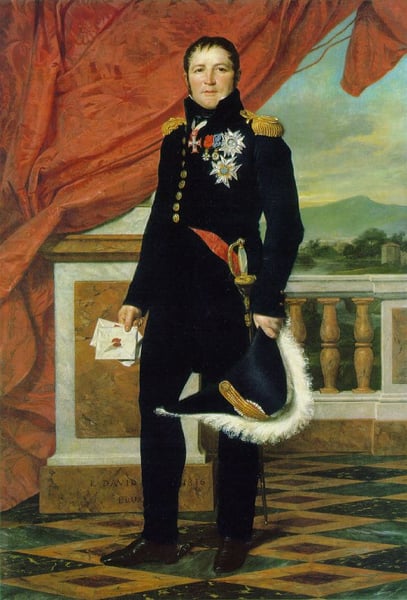
This portrait of Étienne Maurice Gérard by Jacques-Louis David is a quintessential example of Neoclassical portraiture, demonstrating the style’s core values of clarity, moral gravity, and idealized representation. Painted by the leading artist of the movement, the work reflects David’s ability to elevate a portrait beyond mere likeness into a statement of civic virtue and personal dignity.
The painting is significant for several reasons within the Neoclassical period:
-
Emphasis on Character Over Ornament: True to Neoclassical ideals, David subordinates decorative flourish to a focused, psychological portrayal. The sitter’s posture, expression, and attire are rendered with a sober precision that conveys discipline, stoicism, and intellect—qualities highly prized in the post-Revolutionary and Napoleonic eras. This approach aligns with the Neoclassical belief that art should instruct and ennoble.
-
Exemplar of David’s Later Portraiture: As David’s career progressed from revolutionary history paintings to official portraits under Napoleon, his portraits became vehicles for promoting the new order’s ideals. Gérard, a prominent general and statesman, is depicted not as a flamboyant aristocrat but as a composed, authoritative figure—a visual embodiment of merit and service. The portrait thus bridges personal identity and public role, a key Neoclassical concern.
-
Mastery of Form and Restraint: David’s controlled handling of line, light, and color—with a muted palette and sculptural clarity—reinforces the Neoclassical avoidance of Baroque drama. The composition is simple and direct, focusing the viewer’s attention on the sitter’s face and bearing. This restraint heightens the sense of timelessness and moral seriousness, making the portrait a model of the genre’s highest ambitions: to capture the essence of a person within universal, enduring values.
In short, the work is significant as a pure distillation of Neoclassical portraiture—where personal likeness serves a larger narrative of civic virtue, and where the artist’s rigorous technique speaks to the period’s reverence for reason, order, and historical legacy.
Visivamente simili
20 opere con composizione e palette affini
General Etienne Maurice Gerard
Jacques-Louis David
Leopold I
Franz Xaver Winterhalter
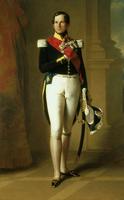
Portrait of Leopold I of Belgium
Franz Xaver Winterhalter
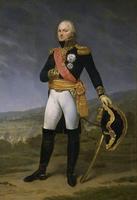
Portrait of General Claude Legrand
Antoine-Jean Gros
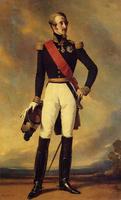
Louis-Charles-Philippe of Orleans Duke of Nemours
Franz Xaver Winterhalter
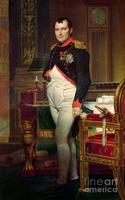
Napoleon Bonaparte in his Study at the Tuileries
Jacques-Louis David
Alexander I
Vladimir Borovikovsky
Louis Philippe I, King of the French
Franz Xaver Winterhalter
Field Marshal Barclay De Tolly
George Dawe
Portrait of Ferdinand-Philippe, Duke of Orleans
Jean Auguste Dominique Ingres
Thomas Graham, Lord Lynedoch
Thomas Lawrence
Napoleon Bonaparte
Kamal-ol-Molk
Louis Philippe D'Orléans
Charles-Philippe Lariviere
Portrait of Emperor of Russia Alexander I of Russia
George Dawe
Portrait of Russian emperor Nicholas I
George Dawe
Louis-Philippe I, King of France
Franz Xaver Winterhalter
Colonel Samuel Boyer Davis
Thomas Sully
Portrait of Napoléon Bonaparte, The First Council
Jean Auguste Dominique Ingres
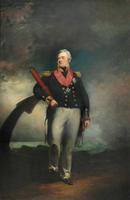
Admiral Lord Amelius Beauclerk (1771–1846)
John Jackson
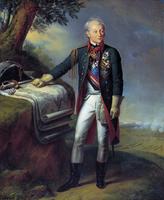
Russian Fieldmarshal A.V. Suvorov
Charles de Steuben