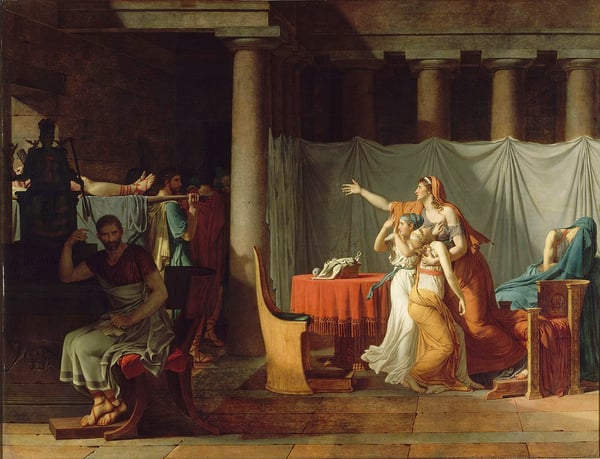
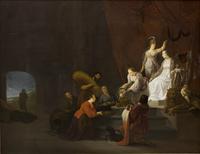
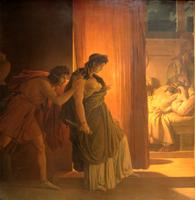
This painting exemplifies the core tenets of Neoclassicism through its moralistic subject and rigorous composition. As a history painting—the highest genre in the academic hierarchy—it serves a didactic purpose: illustrating civic virtue and sacrifice for the state. The work’s significance lies in its cool, rational depiction of stoicism in the face of personal tragedy, rejecting the emotional excess of Rococo. David’s composition, with its strong horizontal lines and frieze-like arrangement, emphasizes clarity, order, and the austere dignity of the Roman narrative. By privileging ethical clarity over sentiment, the painting becomes a visual manifesto of Neoclassical ideals, reinforcing the period’s return to classical references for moral and political inspiration.