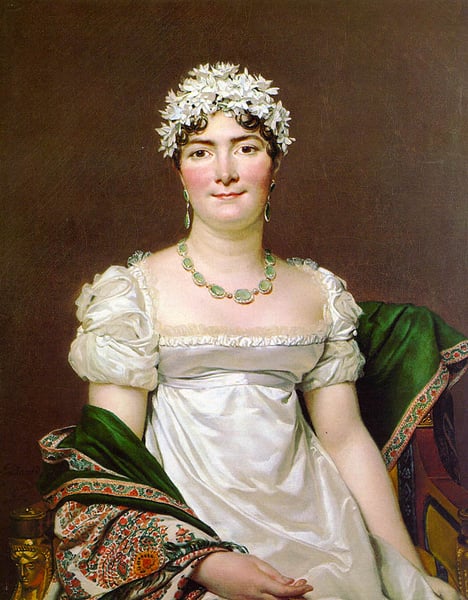
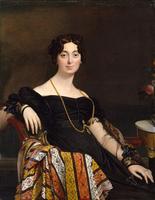
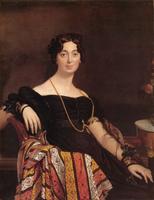
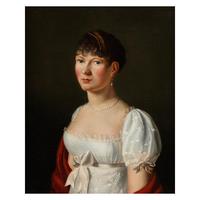
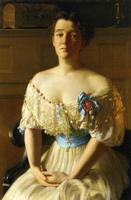
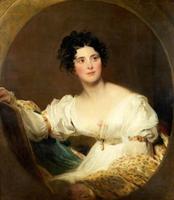
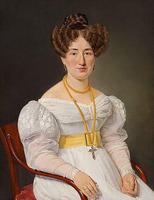
The significance of Jacques-Louis David's Portrait of Countess Daru lies in its embodiment of Neoclassical portraiture, a genre David helped define through his emphasis on clarity, restraint, and moral gravitas. As a leading Neoclassical artist (the style supplied), David rejected the ornate frivolity of Rococo, instead seeking to revive the idealized forms and civic virtues of classical antiquity. In this portrait, the sitter is presented with a serene, dignified composure—her pose, drapery, and setting stripped of excessive decoration to focus on intellectual character and timeless grace. The work exemplifies how Neoclassical portraiture served not merely as a likeness but as a statement of the sitter’s role in a rational, ordered society. David’s status as the preeminent painter of the Revolutionary and Napoleonic eras further elevates this piece, linking private identity to public ideals of virtue and duty. Without additional specific facts about the painting’s composition or history, its significance is best understood as a model of the Neoclassical portrait genre: disciplined, harmonious, and deeply resonant with Enlightenment values.