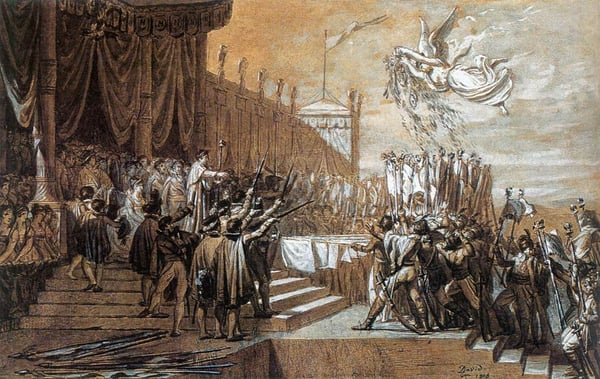
Study for the Distribution of the Eagle Standards
Ayrıntılar
Jacques-Louis David sanatçısının Study for the Distribution of the Eagle Standards eseri hakkında uzman analizi
Tarz: Neoclassicism · Tür: history painting
Based solely on the provided structured facts, here is an expert analysis of the artwork's significance:
Artwork: Study for the Distribution of the Eagle Standards
Artist: Jacques-Louis David
Style: Neoclassicism
Genre: History painting
Expert Analysis:
This preparatory work by Jacques-Louis David is a quintessential example of Neoclassical history painting, and its significance lies in how it embodies the core principles of the style while serving a specific political and moral purpose. As a study, it reveals David's rigorous process of composing a large-scale historical narrative, a genre that Neoclassical artists elevated above all others due to its capacity to instruct and inspire virtuous action.
Within the context of Neoclassicism, the artwork is significant for its likely emphasis on clarity, order, and moral clarity—hallmarks of the style. The "Distribution of the Eagle Standards" refers to a ceremony under Napoleon, whose reign David supported. The study would have been designed to translate a contemporary event into a timeless, classical tableau, reinforcing ideals of civic duty, loyalty, and heroic leadership. The composition likely employs balanced, frieze-like arrangements of figures, inspired by Roman reliefs, with the eagle standard serving as a central, symbolic focal point—much like the fasces or standards in ancient art.
As a history painting, its significance stems from its role as political propaganda elevated to high art. David, the leading Neoclassical painter of his era, used the genre to fuse the revolutionary spirit with imperial grandeur. The "study" stage is particularly important because it showcases his method of constructing a moral lesson through formal precision: every gesture and grouping would have been calculated to project the solemnity of an oath and the unity of the state. In this way, the work demonstrates how Neoclassicism was not merely a revival of antique forms but a deliberate, rhetorical tool to shape public virtue and historical memory.
Görsel olarak benzer
İlişkili kompozisyon ve renk paletine sahip 20 eser
Don Juan Tenorio
Carlos Saenz de Tejada
Scenes from American History
Daniel Chodowiecki
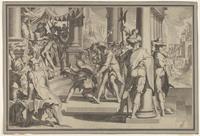
Allegory of Justice with a court scene depicting a man being pardoned by a judge
Willem van Swanenburg
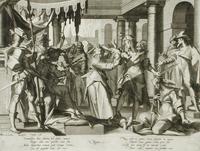
Judgment of Solomon
Willem van Swanenburg
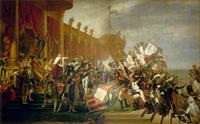
The Army Takes An Oath to the Emperor After the Distribution of Eagles
Jacques-Louis David
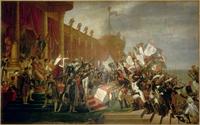
Oath of the Army to the Emperor
Jacques-Louis David
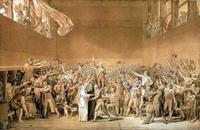
The Tennis Court Oath, 20th June 1789
Jacques-Louis David
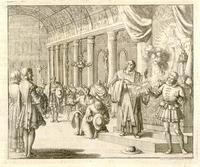
Torture of Waldensians, Forcing Them to Hold a Red Hot Iron Bar, AD 1214
Jan Luyken
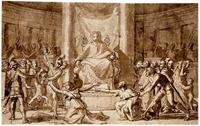
The Judgement of Solomon
Nicolas Poussin
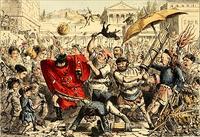
Appius Claudius Punished by the People
John Leech
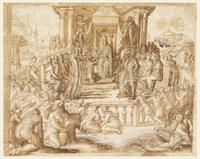
Allegory in Honor of Ranuccio Farnese
Francesco de' Rossi (Francesco Salviati), "Cecchino"
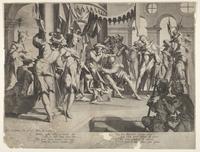
The Judge Bias, Shedding Tears
Willem van Swanenburg
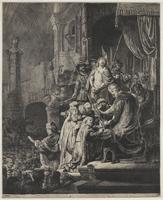
Christ before Pilate
Rembrandt
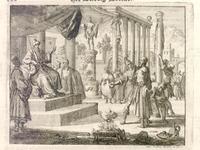
Torture of Tharacus, Probus, and Adronicus, Tarsus, AD 290
Jan Luyken
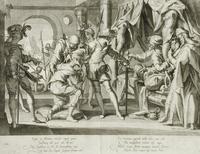
Count William III of Holland Permitting the Beheading of His Bailiff
Willem van Swanenburg
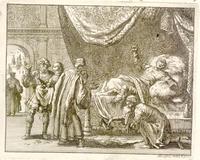
Honoric, King of the Vandals, Eaten by Worms and Lice, AD 477
Jan Luyken
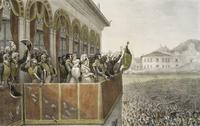
Acclamation of D. Pedro
Jean-Baptiste Debret
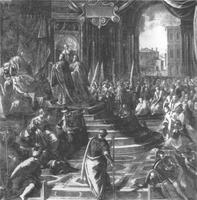
The Venetian ambassador to Barbarossa
Tintoretto
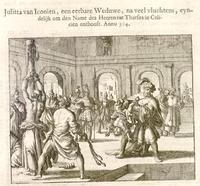
Jullieta Killed Along with Her Daughter, Tarsus, AD 304
Jan Luyken
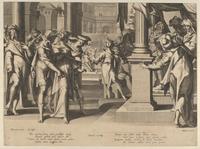
Susanna before Daniel
Willem van Swanenburg