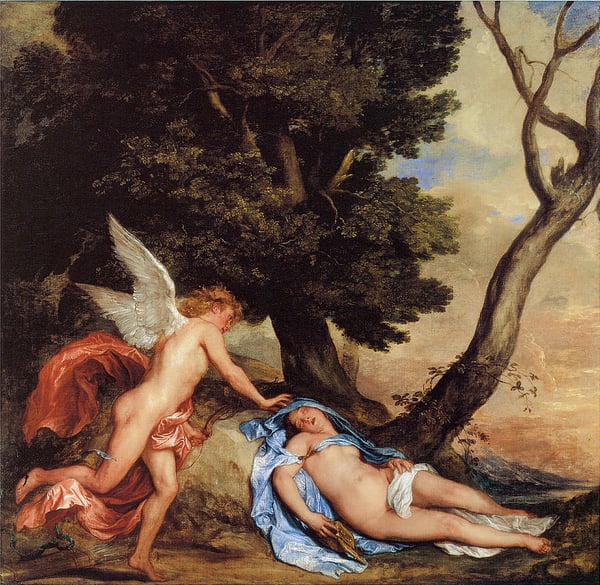
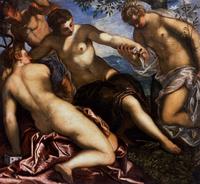
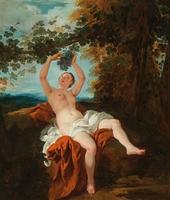
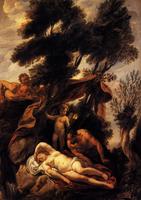
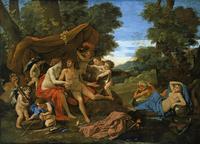
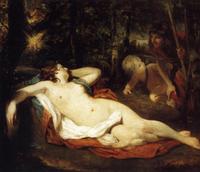
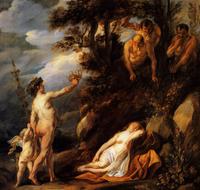
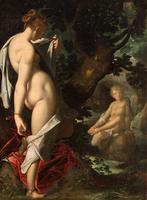
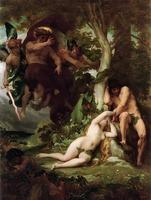
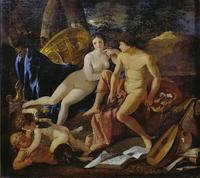
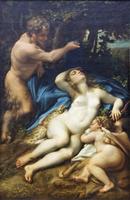
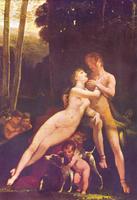
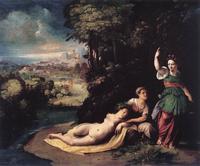
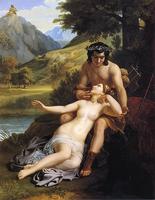
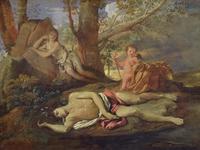
Anthony van Dyck's Cupid and Psyche is a compelling example of Baroque mythological painting, distinguished by its synthesis of emotional intensity and aristocratic elegance—hallmarks of van Dyck's mature style. As a Flemish Baroque master, van Dyck brings to the myth of Cupid and Psyche the period's characteristic dynamism and theatricality: the figures are captured in a moment of dramatic interaction, with flowing draperies, a diagonal composition, and a strong chiaroscuro that heightens the sensuous, psychological tension. The work is significant within the Baroque period because it moves beyond the static idealization of Renaissance mythological scenes toward a more human, intimate portrayal of love and longing. Van Dyck's handling of flesh and fabric, his refined color palette, and his ability to convey the vulnerability of the divine lovers exemplify how Baroque artists used mythological subjects to explore profound emotional states. This painting thus stands as a testament to van Dyck's unique contribution to Baroque painting—infusing the grand, often theatrical style with a lyrical grace that would influence generations of courtly and mythological painters.