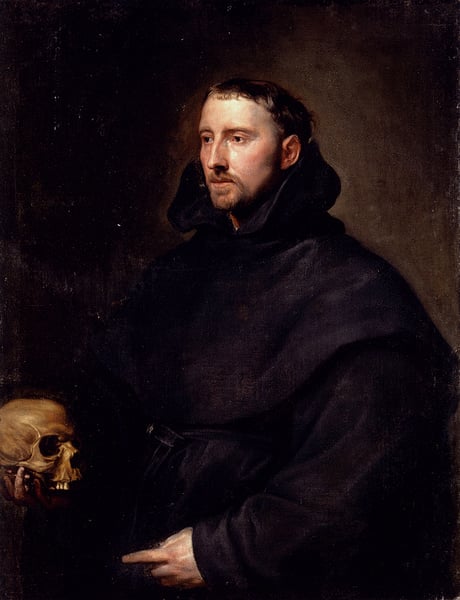
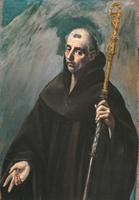
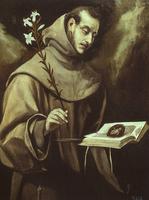
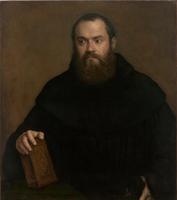
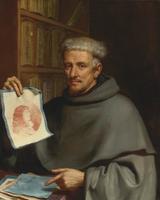
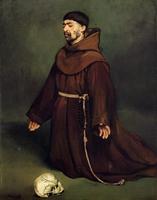
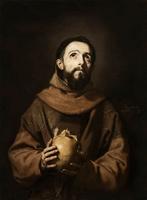
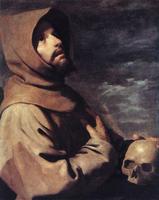
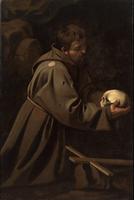
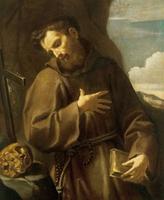
This artwork, Portrait Of A Monk Of The Benedictine Order, Holding A Skull by Anthony van Dyck, exemplifies the Baroque fusion of portraiture with moral and spiritual symbolism. Within the Baroque period—a style known for its drama, emotional intensity, and engagement with the viewer—van Dyck elevates the conventional portrait into a vanitas meditation. The inclusion of the skull, a classic memento mori (reminder of death), directly references the transience of earthly life, a theme deeply resonant in Counter-Reformation piety.
What makes this work significant is how van Dyck masterfully balances two Baroque priorities: the realistic, psychological depiction of an individual and the universal, allegorical message. The monk’s quiet, contemplative gaze and the tactile presence of the skull create a charged stillness—a hallmark of van Dyck’s portraiture, which often conveys inner life. By placing a Benedictine monk in such a setting, van Dyck not only documents a specific religious identity but also invites the viewer to reflect on mortality and devotion. This integration of genre (portrait) with moral commentary showcases the Baroque era’s confidence in using art as a vehicle for both representation and reflection, solidifying van Dyck’s reputation as a master of the psychological portrait.