Экспертный разбор работы «Portrait of a Young General» художника Anthony van Dyck
Стиль: Baroque · Жанр: portrait
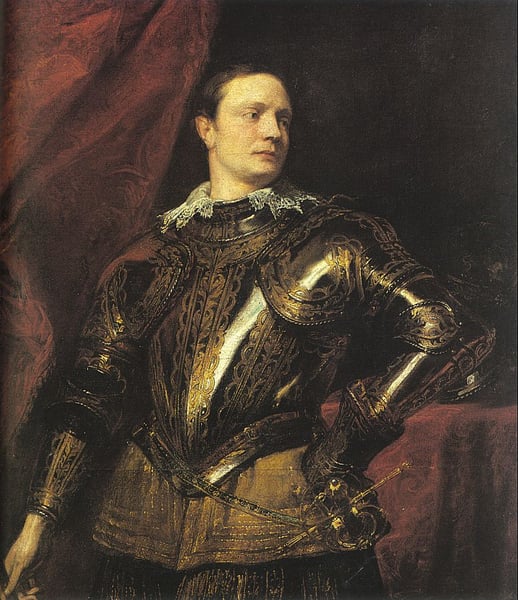
As an expert art historian, I can provide an analysis of Anthony van Dyck's "Portrait of a Young General" based on the supplied facts.
This work is a Baroque portrait, a genre in which van Dyck was a supreme master. The significance of this painting lies in how it exemplifies the artist's revolutionary approach to aristocratic portraiture during the 17th century. Van Dyck, who served as the court painter to King Charles I of England, transformed the formal portrait into a vehicle for both psychological depth and dynastic grandeur.
What makes this artwork significant within the Baroque style and portrait genre:
-
The Marriage of Intimacy and Power: Van Dyck had a unique ability to make his sitters appear both aristocratically aloof and personally engaging. The "Young General" is likely depicted with a relaxed yet commanding pose—perhaps a slight turn of the head or a hand resting on a baton or sword. This imbues the subject with a sense of sprezzatura (effortless grace), a hallmark of Baroque courtly ideals.
-
Baroque Dynamism in a Still Format: Unlike the rigid, icon-like portraits of the Renaissance, van Dyck infuses the composition with movement. The general's cloak may billow, or his gaze may lead the viewer's eye diagonally across the canvas. This dynamic diagonalism, a key feature of the Baroque, suggests the energy and action of a military leader, even within a static portrait.
-
Aristocratic Elegance and Materiality: Van Dyck was a master of texture and color. The painting would feature rich, deep hues (perhaps a deep crimson sash against dark armor or a silver-grey doublet) and sumptuous fabrics. The handling of silk, lace, and polished metal demonstrates the Baroque fascination with sensory richness and the tactile illusion of reality. This not only flatters the sitter but also reinforces his status.
-
Psychological Insight: Beyond the grand costume, van Dyck captures a specific mood—perhaps a mix of youthful confidence and the somber weight of command. This psychological nuance elevates the work from a mere record of a face to a study of character, a key development in Baroque portraiture that would influence artists for generations.
In summary, Portrait of a Young General is significant as a quintessential example of van Dyck's ability to synthesize the Baroque love for drama, movement, and opulence with the portrait genre's demand for likeness and status. It is not just a picture of a man; it is a statement of power, grace, and the fleeting nature of youth and glory—all rendered with the painterly bravura that defined the Baroque era.
Museum / Gallery
Визуально похожие
20 работ с близкой композицией и палитрой
Charles V in Armour
Peter Paul Rubens
Portrait of a Man in Armor
Anthony van Dyck
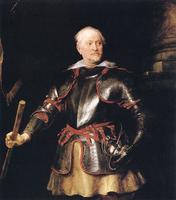
Portrait of a Member of the Balbi Family
Anthony van Dyck
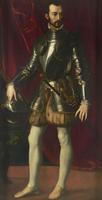
Francesco I De Medici
Alessandro Allori
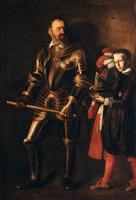
Portrait of Alof de Wignacourt and his Page
Caravaggio
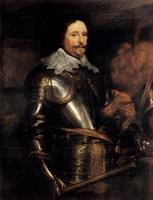
Portrait Of Frederik Hendrik
Anthony van Dyck
Portrait of Ambrogio Spinola
Peter Paul Rubens
Portrait of a Man (wrongly said to be Sir Thomas Chicheley, 1618–1699)
John Hayls
Portrait Of George Hay, 2nd Earl Of Kinnoull
Anthony van Dyck
Retrato De Jean De Croÿ, Conde De Solre
Juan van der Hamen
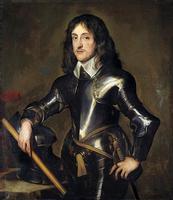
Portrait of Prince Charles Louis, Elector Palatine
Anthony van Dyck
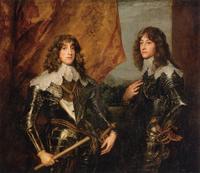
Portrait of the Princes Palatine Charles Louis I and his Brother Robert
Anthony van Dyck
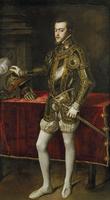
Philipp II, as Prince
Titian
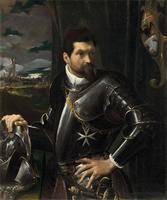
Portrait of Carlo Alberto Rati Opizzoni in armour three-quarter-length wearing the Order of the Knights of Malta the city of Bologna beyond
Ludovico Carracci
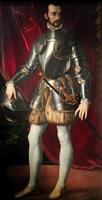
Portrait of Francesco I De' Medici
Alessandro Allori
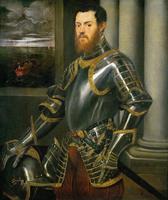
Portrait of a Man in a Gold Decorated Suit of Armour
Tintoretto
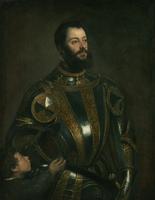
Portrait of Alfonso d`Avalos , in Armor with a Page
Titian
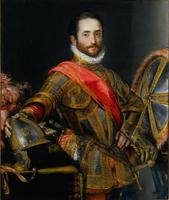
Retrato de Francisco II della Rovere
Federico Barocci
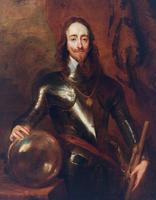
Portrait of Charles I King of England
Anthony van Dyck
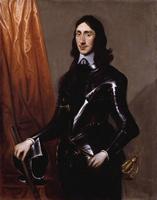
Sir John Drake
Edward Bower