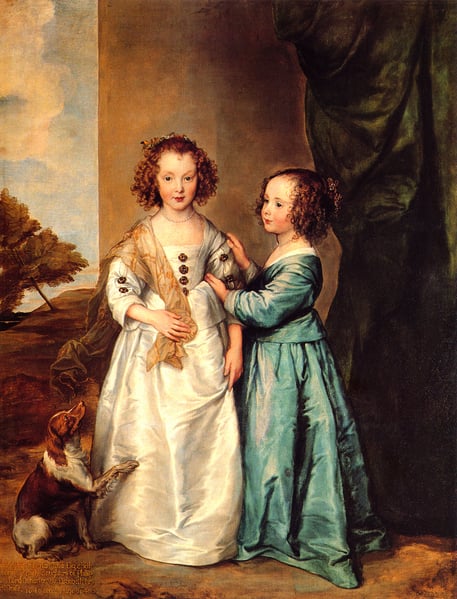
Portrait of Philadelphia and Elisabeth Cary
Details
Expertenanalyse zu Anthony van Dycks Portrait of Philadelphia and Elisabeth Cary
Stil: Baroque · Genre: portrait
This double portrait by Anthony van Dyck, titled Portrait of Philadelphia and Elisabeth Cary, is a masterful example of Baroque aristocratic portraiture. Painted during his most celebrated period as a court painter to King Charles I, the work exemplifies van Dyck's revolutionary approach to capturing both the social status and inner life of his sitters.
Composition and Baroque Flair: The painting is significant for its dynamic, yet graceful composition. Unlike static earlier portraits, van Dyck positions the two sisters in a relaxed, asymmetrical arrangement that suggests both intimacy and hierarchy. The interplay of their gazes—one looking outward, the other slightly averted—creates a psychological tension typical of the Baroque's interest in fleeting moments. The rich, flowing fabrics of their silk and satin gowns, rendered with van Dyck's signature loose brushwork, shimmer with light and shadow, emphasizing the tactile luxury of their attire.
Psychological Depth and Status: Van Dyck elevates the genre by combining flattering elegance with subtle individuality. Philadelphia and Elisabeth are depicted not merely as decorative figures, but as poised young women of noble bearing. Their confident, understated gestures and direct engagement with the viewer project the ideals of courtly sophistication. This ability to convey both aristocratic grace and human warmth made van Dyck the most sought-after portraitist of the English court, influencing generations of painters from Reynolds to Sargent.
Historical Significance: As a double portrait of members of the prominent Cary family, the painting also serves as a visual document of 17th-century English aristocracy. Van Dyck’s technique—especially his use of deep, resonant colors and soft, atmospheric lighting—perfectly encapsulates the Baroque fascination with drama and opulence. The work remains a key study of how portraiture can balance formal representation with fleeting, naturalistic charm, securing van Dyck’s legacy as the father of the English portrait tradition.
Museum / Gallery
Visuell ähnlich
20 Werke mit ähnlicher Komposition und Farbpalette
Margaretta Mabella Acworth (1727–1794)
Thomas Hudson
Mary, Wife of Sir Charles Scarburgh
John Hayls
Portret Van Willem III, Prins Van Oranje, En Maria, Prinses Van Oranje, Als Kinderen
Gerard van Honthorst
Portrait of a Young Lady
Frans van Mieris the Elder
Portrait of princesses Davydova and Rzhevskaya
Dmitry Levitzky
Portret Van Henrietta Françisca Prinses Van Hohenzollern
Gerard van Honthorst
Isabella,Viscountess Molyneux, Later Countess of Sefton
Thomas Gainsborough
Mary and Elizabeth Royall
John Singleton Copley
Queen Henrietta Maria and her dwarf Sir Jeffrey Hudson
Anthony van Dyck
Rosalind and Celia
James Archer
Portrait of Maria Cornelisz, Wife of Silvester van Tongeren (1680 - 1719)
Jan Weenix
The Painter's Daughters chasing a Butterfly
Thomas Gainsborough
Lady Borlase
Anthony van Dyck
Mrs Thomas Johnson and Her Daughter
Henry Pickering
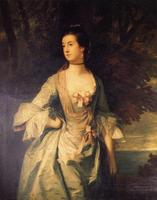
Mrs. Hugh Bonfoy
Joshua Reynolds
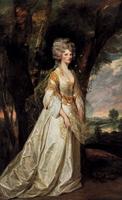
Lady Sunderlin
Joshua Reynolds
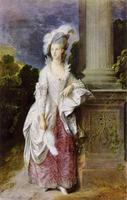
The Honorable Mrs. Graham
Thomas Gainsborough
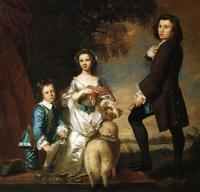
Thomas and Martha Neate, with Tutor
Joshua Reynolds
The return of the market
Jacob Ochtervelt
Mrs. Grace Dalyrimple Elliott
Thomas Gainsborough