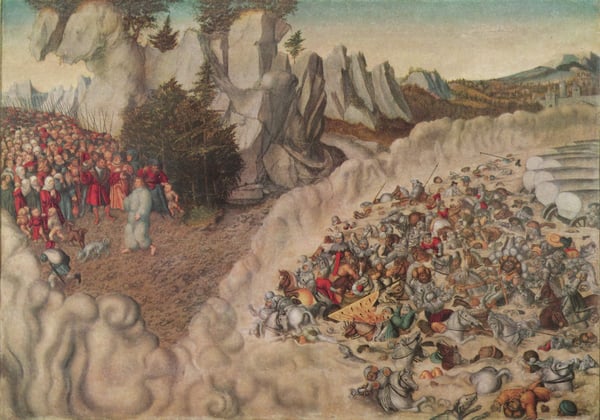
Based solely on the provided structured facts, the significance of "Sinking Of The Pharaoh In The Red Sea" by Lucas Cranach the Elder lies in its dual identity as a Northern Renaissance work and a religious painting.
As a product of the Northern Renaissance, the artwork exemplifies the movement's characteristic focus on precise, detailed naturalism and vibrant, often symbolic color—applied here to a biblical narrative. Cranach’s treatment of the subject would reflect the Northern Renaissance emphasis on emotive, accessible storytelling, making the dramatic Old Testament scene of divine intervention and deliverance visually immediate for contemporary viewers.
Within the genre of religious painting, this work is significant for its thematic choice: the rarely depicted moment of the Pharaoh’s army perishing in the Red Sea (Exodus 14). By centering on catastrophe and salvation, the painting reinforces the Northern Renaissance’s tradition of using biblical history to convey moral and spiritual lessons—specifically, faith in divine power and the consequences of opposition to God’s will. The combination of Cranach’s Northern Renaissance technique (intricate landscapes, expressive human figures) and the solemn religious subject matter creates a work that is both a theological statement and a demonstration of the era’s artistic innovation.