Expert Analysis: "Chahut" (1889–90) by Georges Seurat
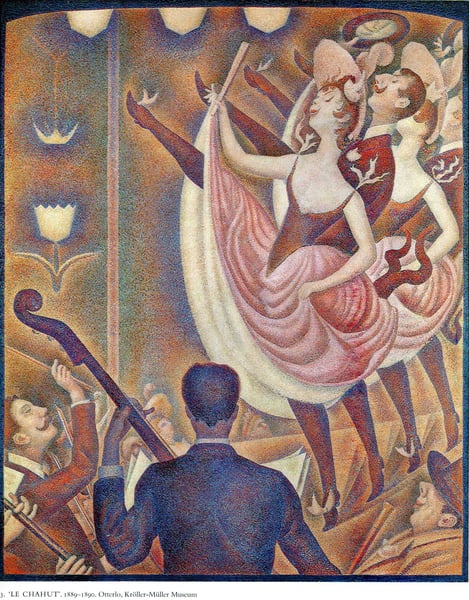
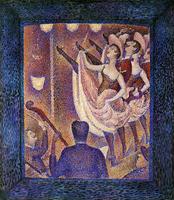
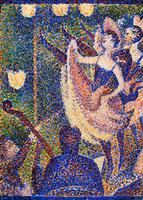
This work stands as a pivotal example of Neo-Impressionism and Pointillism, a technique Seurat pioneered. As a genre painting, it captures a lively Parisian cabaret scene—specifically the provocative "chahut" dance, known for its high-kicking cancan. What makes it significant within its style is Seurat’s rigorous application of scientific color theory: he builds the entire composition from tiny, distinct dots of pure pigment. This method creates an optical vibration—the viewer’s eye blends the colors at a distance—that heightens the scene’s energy and artifice.
The subject matter itself is crucial. Seurat elevates a lowbrow entertainment into a disciplined, almost geometric study of modern life. The dancers’ exaggerated poses, the upward-thrust legs, and the diagonal lines of the architecture produce a dynamic tension that contrasts with the painstaking, static technique. This tension embodies Neo-Impressionism’s ambition: to reconcile the fleeting, kinetic spirit of modernity with a scientific, almost mathematical approach to painting.
Ultimately, Chahut is significant because it pushes Pointillism beyond still landscapes or calm figures, proving that the method can capture movement, humor, and social commentary. It marks a transition from Impressionist spontaneity to a more structured, analytical modernism.