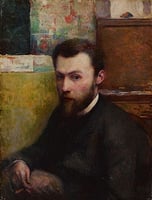
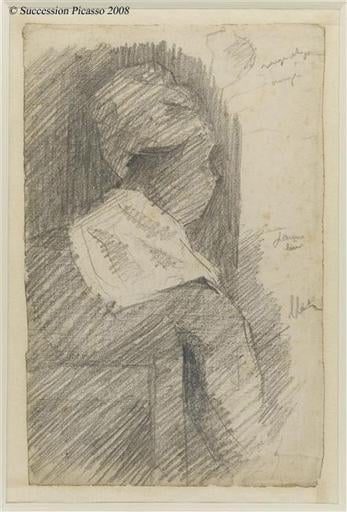
Female from back (black woman)
Dettagli
Analisi esperta di Female from back (black woman) di Georges Seurat
Stile: Impressionism · Genere: sketch and study
Expert Analysis: Female from back (black woman) by Georges Seurat
While Georges Seurat is best known as the founder of Neo-Impressionism (Pointillism), this work belongs to his early period and is firmly rooted in the broader Impressionist movement's approach to sketch and study. The artwork is significant for several reasons:
1. Mastery of tonal drawing and conté crayon technique
Seurat's drawing style here is revolutionary. He abandons line in favor of subtle gradations of light and shadow, using the texture of the paper and the pressure of the crayon to create volume. The figure emerges from a dense, velvety darkness, her back rendered through the play of light across her shoulders and spine. This method—sometimes called “irradiation” or “luminosity through contrast”—prefigures his later pointillist color theory but applied to monochrome.
2. Unconventional subject matter
Depicting a Black woman from behind is a rare and striking choice for a 19th-century European artist. Seurat avoids exoticism or ethnographic stereotype; instead, he treats the figure with the same formal dignity and anonymity he would give any model. The pose—seen from the back, facing away—emphasizes sculptural form over narrative, inviting the viewer to focus on shape, texture, and atmosphere rather than identity. This aligns with Impressionism’s interest in everyday life and fleeting moments, but here the moment is timeless and introspective.
3. The sketch as a finished work
Although classified as a sketch and study, this drawing is a complete artistic statement. Seurat elevates the preparatory study to an autonomous genre, demonstrating that a simple view of a woman’s back can carry as much expressive power as a large-scale painting. The work foreshadows his later Une Baignade, Asnières and A Sunday on La Grande Jatte in its careful orchestration of light, shadow, and silhouette.
Significance within the period:
Seurat’s conté drawings, including this one, represent a crucial bridge between Impressionism’s concern with light and atmosphere and the more systematic, scientific approach of Neo-Impressionism. Here, the artist is already thinking in terms of contrasts and harmonies—not yet of dots of color, but of granules of black and white. The work stands as a testament to Seurat’s belief that even the simplest study can reveal profound optical truths, and it remains a powerful example of how Impressionism expanded the boundaries of what could be considered a finished, significant artwork.
Museum / Gallery
Visivamente simili
20 opere con composizione e palette affini
Peasant Woman, Head
Vincent van Gogh
Vente de Charite
Theophile Steinlen
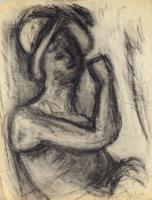
Femme Au Chapeau
Bela Czobel
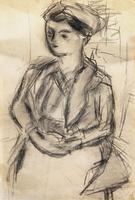
Czóbel Béla Nő Kalapban , Szén Papír, 60x40cm
Bela Czobel
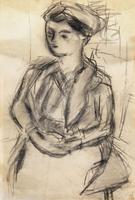
Czóbel Béla Women.
Bela Czobel
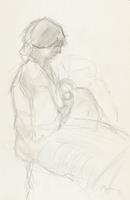
Berény Róbert, Nő
Berény Róbert
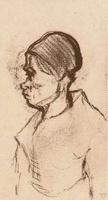
Peasant Woman, Head
Vincent van Gogh
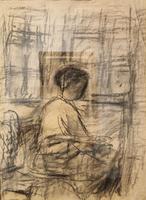
Béla Czóbel, In the Room
Bela Czobel
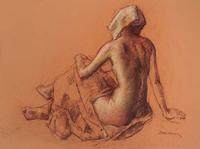
Pastel
Robert Brackman
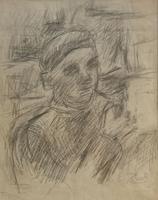
Béla Czóbel, Self Portrait,
Bela Czobel
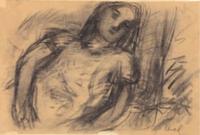
Femme Assoupie
Bela Czobel
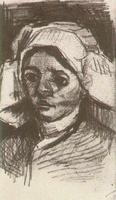
Peasant Woman, Head
Vincent van Gogh
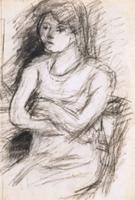
Czobel Bela Lány
Bela Czobel
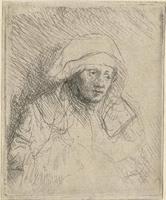
Sick woman with a large white headdress (Saskia)
Rembrandt
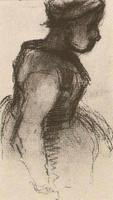
Peasant Girl, Half-Figure
Vincent van Gogh
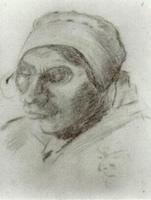
Peasant Woman, Head
Vincent van Gogh
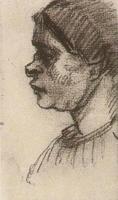
Peasant Woman, Head
Vincent van Gogh
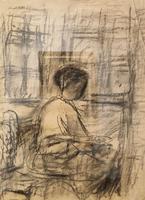
Modok Mária, Szobában 1961
Modok Mária
Head of a Woman
Vincent van Gogh
Femme Assise
Bela Czobel