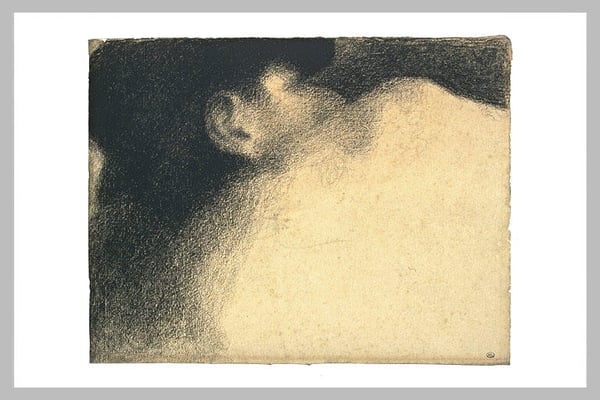
Georges Seurat の Sleeping Woman の専門的な分析
スタイル:Pointillism · ジャンル:genre painting
Georges Seurat's Sleeping Woman is a masterful example of his groundbreaking Pointillist technique applied to the intimate realm of genre painting. In this work, Seurat moves away from the monumental scale of his famous Sunday afternoon scenes to focus on a quiet, private moment—a woman at rest. The significance lies in how he adapts his rigorous method of tiny, separate dots of pure color to render the delicate interplay of light, shadow, and texture in an everyday setting. Rather than blending pigments on a palette, Seurat uses optical mixing: the viewer's eye fuses the dots from a distance to create a luminous, softly glowing surface that mimics the drowsy stillness of the subject. This approach transforms a simple genre scene into a study of perception and atmosphere, demonstrating that Pointillism could capture not only bright sunlight but also the subtle, hushed tones of interior life. The work thus stands as a crucial piece within Seurat's oeuvre, showing the versatility of his scientific color theory when applied to the serene poetry of ordinary existence.
視覚的に類似
構図やパレットが近い作品 20 件
Tête de profil
Jean Fautrier
Modok Mária , Női Portré , ,
Modok Mária
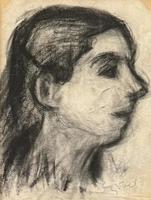
Bela Czobel, Women Face
Bela Czobel
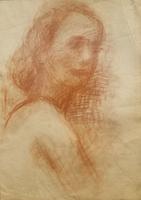
Modok Mária, Női Arkép
Modok Mária
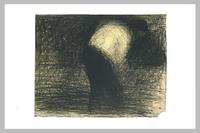
At work the land: man's face in profile, leaning forward
Georges Seurat
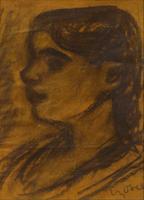
Mimi
Bela Czobel
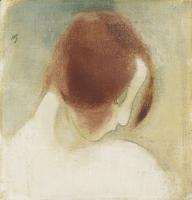
The Red Haired Girl II
Helene Schjerfbeck
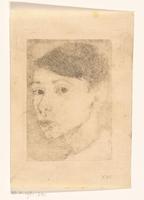
Self Portrait
Jan Mankes
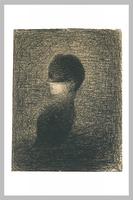
Voilette
Georges Seurat
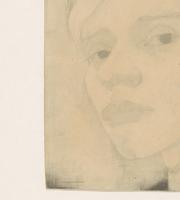
Self-portrait, three-quarters to the left
Jan Mankes
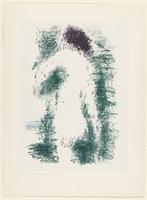
Green Nude
Andre Masson
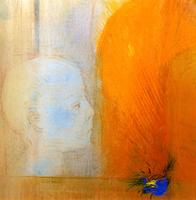
The Child
Odilon Redon
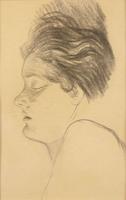
Femme Endormie
Theophile Steinlen
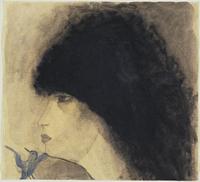
Girl's Head
Marie Laurencin
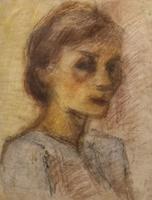
Modok Mária, Önarckép
Modok Mária
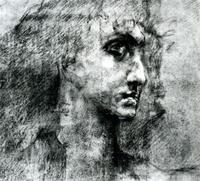
Head of angel
Mikhail Vrubel
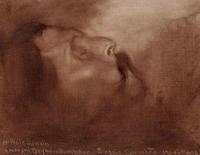
Albert Samain Post Mortem
Eugene Carriere
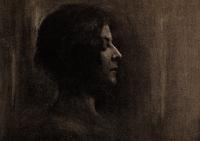
Severity
Robert Demachy
Untitled
Zdzislaw Beksinski
Portrait
George Bouzianis