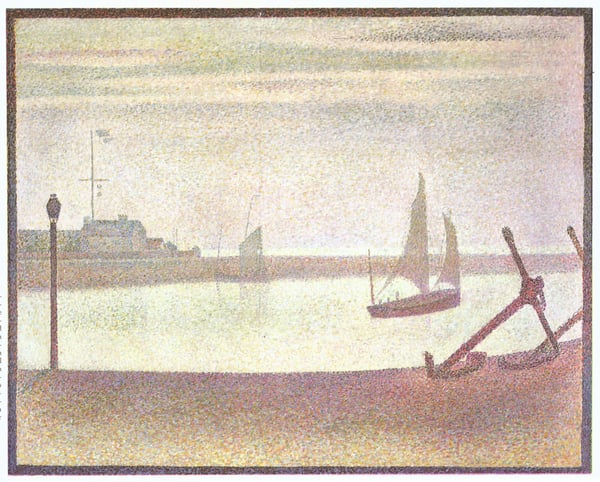
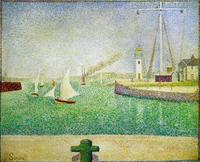
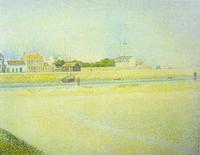
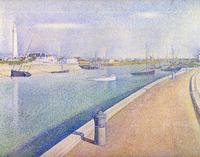
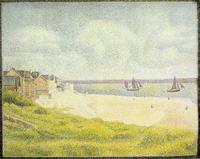
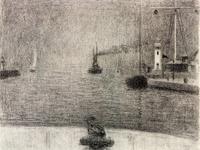
"The Channel at Gravelines, Evening" is a quintessential example of Georges Seurat's mature Pointillist (or Neo-Impressionist) technique, applied here to a cityscape genre that captures the quiet, atmospheric transition of twilight over a coastal channel. The work's significance lies in Seurat’s rigorous application of optical color theory: instead of mixing paints on a palette, he placed tiny, distinct dots of pure pigment—such as blue, orange, and violet—side by side so that the viewer's eye optically blends them. This method, combined with the evening light, allowed Seurat to explore how different wavelengths of color affect the perception of calm water, sky, and architecture. The composition, with its horizontal bands of sea, shore, and sky, demonstrates his ability to structure a quiet, modern harbor scene through systematic, almost scientific color division, making the painting a key milestone in the evolution from Impressionism’s spontaneity toward a more deliberate, analytical modernism.