Expert analysis of Georges Seurat’s The Circus
Style: Pointillism, Neo-Impressionism · Genre: genre painting
Expert Analysis: The Circus by Georges Seurat (1891)
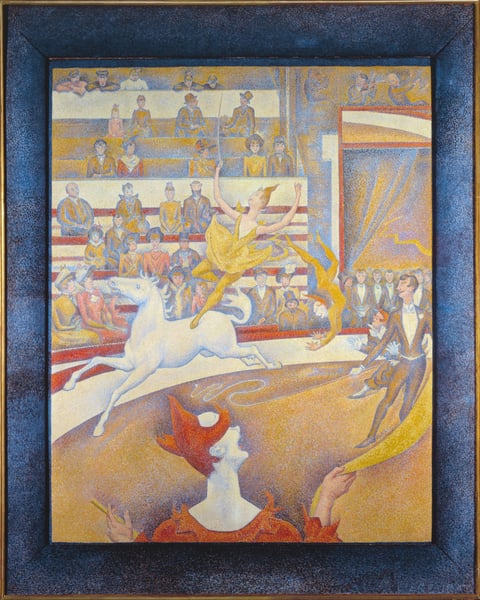
Georges Seurat’s The Circus stands as a poignant culmination of his pioneering contributions to Neo-Impressionism and the Pointillist technique. Executed in his signature method of applying small, distinct dots of pure color, the painting captures a vibrant circus scene—a quintessential genre painting that elevates popular entertainment into a subject of rigorous artistic theory.
Significance within Pointillism and Neo-Impressionism: Seurat’s The Circus is a masterful demonstration of his systematic approach to color and light. The canvas is built from countless individual points of unmixed pigment, which, when viewed from a distance, optically blend to form luminous, shimmering forms. This method was rooted in contemporary color theory (notably Michel Eugène Chevreul’s laws of simultaneous contrast) and represents the apex of Neo-Impressionism’s scientific ambition. The work highlights Seurat’s ability to control the viewer’s perception through precise dot placement—creating both the static geometry of the circus ring and the dynamic energy of performers, all while maintaining a remarkable sense of harmony.
As a Genre Painting: The Circus belongs to the rich tradition of genre painting, depicting scenes of everyday life. However, Seurat transforms this casual subject into a formal exercise. The composition is carefully structured: the curved lines of the ring, the repeated arcs of the spectators’ hats, and the vertical thrust of the acrobats create a rhythmic, almost musical order. This fusion of modern leisure with classical compositional balance underscores the artist’s desire to bring intellectual rigor to popular culture, making the ordinary extraordinary through pure technique.
Legacy and Final Work: The Circus is especially significant because it was Seurat’s last major painting, left unfinished at his sudden death in 1891. It marks the final evolution of his style, moving toward more expressive and simplified forms—a hint of the Post-Impressionist directions that would follow. The work thus serves as a bridge between the strict optical science of Pointillism and the more subjective, symbolic art of artists like Matisse and Van Gogh, solidifying Seurat’s role as a transformative figure in modern art.
Museum / Gallery
Visually similar
20 works with related composition and palette
Equestrienne
Ernst Ludwig Kirchner
At the Circus Fernando, the rider
Henri de Toulouse-Lautrec
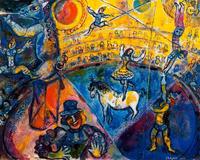
The circus
Marc Chagall
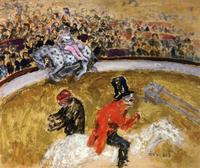
At the Circus
Pierre Bonnard
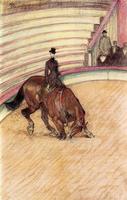
At the Circus Dressage
Henri de Toulouse-Lautrec
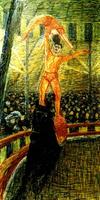
Circus
Eugène Jansson
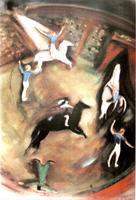
In circus
Margareta Sterian
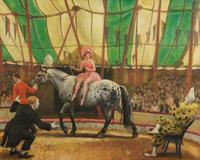
The Trick Act
Laura Knight
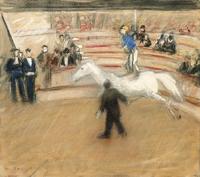
The Circus
Max Slevogt
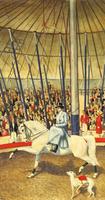
Circus Rider
Werner Peiner
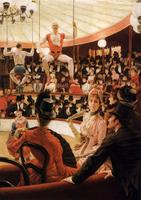
Women of Paris: The Circus Lover
James Tissot
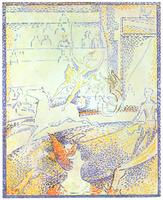
Study for 'The Circus'
Georges Seurat
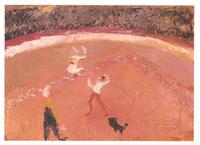
Salto mortale in circus
August Macke
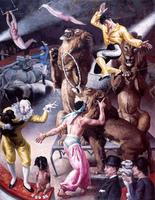
The Last Act
Laura Knight
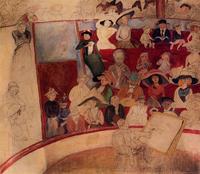
The Circus
Jules Pascin
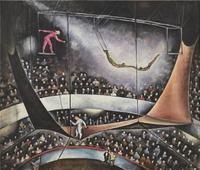
The Flying Trapeze
Alexander Calder
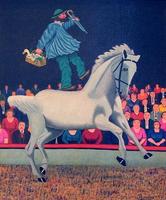
The White Horse
Camille Bombois
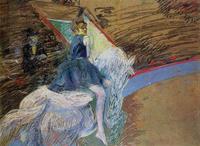
At the Cirque Fernando Rider on a White Horse
Henri de Toulouse-Lautrec
Stuffed Jumbo (fragment)
Sue Coe
Parade
Marc Chagall