Expertenanalyse zu Francisco de Zurbarans Brother Alonso de Ocana
Stil: Baroque · Genre: religious painting
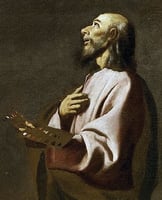
Artwork Analysis: Brother Alonso de Ocaña by Francisco de Zurbarán
Context and Style
Francisco de Zurbarán (1598–1664) was a master of the Spanish Baroque, a period defined by dramatic lighting, emotional depth, and a commitment to naturalistic detail. Brother Alonso de Ocaña exemplifies Zurbarán’s signature approach to religious painting: a fusion of stark realism with profound spirituality. The work belongs to a series of portraits of monks and saints that Zurbarán produced for monasteries and convents, showcasing his ability to render the sacred through the ordinary.
Artistic Description
The painting presents Brother Alonso, a Franciscan monk, in a moment of quiet contemplation. Dressed in the coarse brown habit of his order, he stands against a dark, undefined background—a hallmark of Zurbarán’s tenebrist style, where intense illumination focuses the viewer’s attention on the figure. The monk’s face is lined and weathered, yet his eyes are uplifted, suggesting mystical rapture. His hands are clasped; one holds a crucifix, the other presses against his chest, emphasizing internal devotion. Zurbarán’s meticulous attention to texture—the rough wool of the habit, the soft skin, the glint of light on the cross—heightens the painting’s physical presence while directing the gaze toward the spiritual.
Significance within Baroque Religious Painting
This work is significant for several reasons:
-
Defining Spanish Baroque Naturalism: Unlike the theatrical exuberance of Italian Baroque, Spanish Baroque often favored an austere, meditative realism. Zurbarán’s Brother Alonso de Ocaña epitomizes this: the monk is not idealized but presented as a humble, real individual, making his faith tangible and relatable.
-
Psychological and Spiritual Depth: The painting captures a specific psychological state—the moment of divine communion. Zurbarán achieves this through subtle use of light, which seems to emanate from within the figure, and through the monk’s subtle expression of yearning and peace. This interiority was a major achievement of the period.
-
Monastic and Counter-Reformation Ideals: Painted during the Catholic Counter-Reformation, the work reinforces the value of monastic poverty, prayer, and personal devotion. Zurbarán’s unflinching depiction of Brother Alonso’s humble appearance—his bald head, rough hands, and simple garment—underscores the ideal of sanctity found in everyday life.
-
Technical Mastery: Zurbarán’s control of chiaroscuro is exceptional. The stark contrast between the illuminated figure and the dark background creates a sense of isolation and heightened focus, drawing the viewer into the monk’s solitary prayer. This method became a hallmark of Spanish Baroque religious painting, influencing later artists such as Velázquez and even modern realists.
Conclusion
Brother Alonso de Ocaña is a quintessential example of Zurbarán’s genius: a quiet, powerful meditation on faith that elevates the ordinary into the sacred. Its significance lies in its radical naturalism, emotional restraint, and ability to convey the profound interior life of a simple monk, making it a key work of Spanish Baroque religious art.
Museum / Gallery
Visuell ähnlich
20 Werke mit ähnlicher Komposition und Farbpalette
Portrait of Bishop Benedetto Ganassoni
Pietro Longhi
Saint Leander of Seville
Bartolome Esteban Murillo
St. Leander and St. Bonaventure
Bartolome Esteban Murillo
San Ambrosio
Francesco Ribalta
St Bonaventura Receiving the Host from the Hands of An Angel
Francisco Herrera
Sant'Orso consecrates the cathedral of Ravenna
Vincenzo Camuccini
St. Isidore of Seville
Bartolome Esteban Murillo
The Pontifical mass
Le Nain brothers
Francis Xavier landing in China
Joseph-Marie Vien
St. Carmel
Francisco de Zurbaran
RAFAEL DE LA VARA DE LA MADRID
Juan José Rosales
San Ignacio de Loyola
Claudio Coello
San Agostino
Palma il Giovane
St Augustine
Maarten de Vos
St. Gregory the Great
Francisco Goya
St. Pierre Pascal, Bishop of Jaen
Francisco de Zurbaran
Apparition of the Virgin to St. Lawrence
El Greco
The communion of St. Teresa
Juan Martín Cabezalero
San Carlo in Gloria
Giulio Cesare Procaccini
Portrait of Cardinal Guido Bentivoglio
Anthony van Dyck