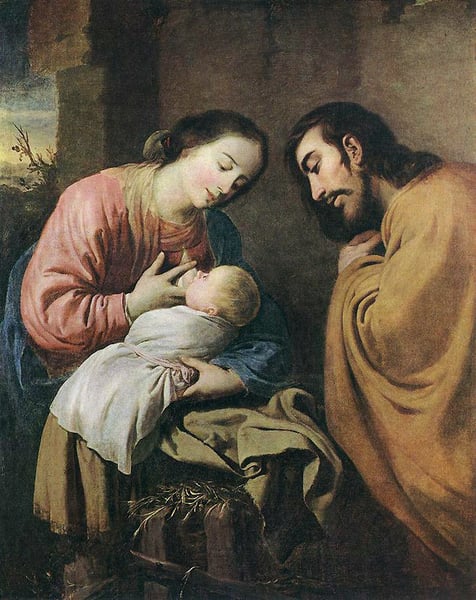
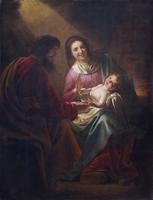
As a Baroque religious painting, Francisco de Zurbarán's Rest on the Flight to Egypt exemplifies the period's core aims: intense emotional immediacy and a powerful, accessible spirituality. The work's significance lies in how it uses Baroque stylistic tools—specifically stark chiaroscuro (tenebrism) and a deeply naturalistic, almost sculptural treatment of form—to transform a familiar biblical narrative into a moment of intimate, contemplative quietude. Unlike more dramatic or crowded depictions of the Flight, Zurbarán focuses on a hushed pause, directing the viewer's eye to the tender, earthly reality of the Holy Family. This concentration on still, solemn grace, characteristic of Zurbarán’s devotional works, heightens the painting's religious impact by making the divine feel palpable and human, a key achievement within the Baroque era's mission to inspire faith through art.