Analisi esperta di Saint Lucy di Francisco de Zurbaran
Stile: Baroque · Genere: religious painting
Analysis of "Saint Lucy" by Francisco de Zurbarán
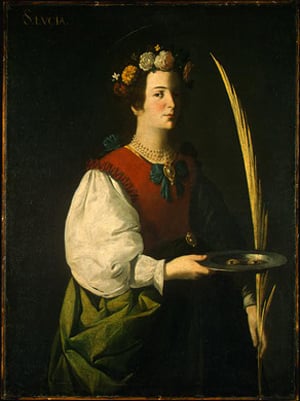
As a masterpiece of the Spanish Baroque, Francisco de Zurbarán’s Saint Lucy exemplifies the era’s profound synthesis of spiritual intensity and naturalistic precision—hallmarks of the Counter-Reformation’s visual strategies. Painted within the context of 17th-century Seville, the work reflects Zurbarán’s signature tenebrism and sculptural chiaroscuro, which isolate the saint against a dark, undefined background to focus solely on her devout presence.
The painting’s significance lies in its restrained, yet potent, religious symbolism. Saint Lucy, a virgin martyr, is traditionally identified by her attribute of a platter holding her own eyes—a reference to her torture and her status as patroness of the blind. Zurbarán presents her in simple, voluminous drapery, her face illuminated with serene composure, embodying both physical suffering and spiritual transcendence. The stark lighting and muted palette strip away anecdotal clutter, directing the viewer’s contemplation to the miracle of faith.
In the broader Baroque period, Zurbarán distinguished himself from the dramatic motion of contemporaries like Caravaggio by favoring stillness and iconic frontality. This painting stands as a quintessential example of Spanish religious painting, where humble materiality—the texture of fabric, the gleam of the metal platter—serves as a conduit for the divine. It reflects the Counter-Reformation’s demand for accessible, emotionally resonant devotional imagery that reinforces Catholic doctrine through visceral realism and unwavering piety.
Visivamente simili
20 opere con composizione e palette affini
Saint Lucy
Francisco de Zurbaran
Saint Lucy
Francisco de Zurbaran
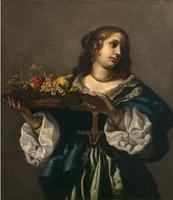
Young woman holding a fruit dish
Onorio Marinari
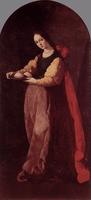
St. Agatha
Francisco de Zurbaran
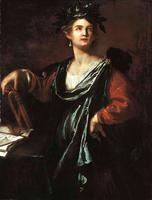
Clio, the Muse of History
Artemisia Gentileschi
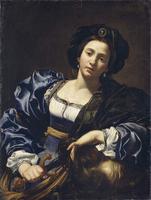
Judith with the Head of Holophernes
Simon Vouet
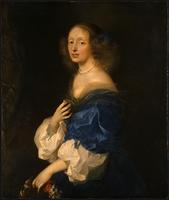
Portrait of Ebba Sparre
Sebastien Bourdon
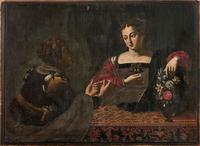
Martha reproaching Mary for her vanity, also known as The Conversion of Mary Magdalene
Caravaggio

Portrait of Christina, Queen of Sweden (1626–1689), half-length, seated, holding a scepter
Sebastien Bourdon
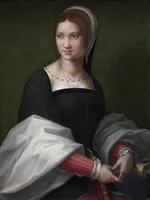
Portrait of a Woman
Andrea del Sarto
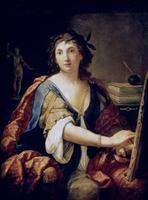
Self-Portrait as Allegory of Painting
Elisabetta Sirani
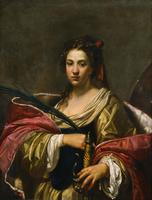
St. Catherine
Simon Vouet
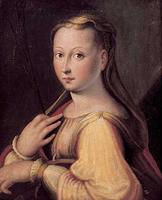
Saint Catherine of Alexandria (presumed self-portrait)
Barbara Longhi
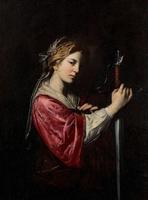
Santa Caterina d'Alessandria (probably portrait of his wife, Caterina Rossa)
Giovanni Ricca
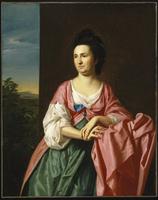
Mrs.William Eppes
John Singleton Copley
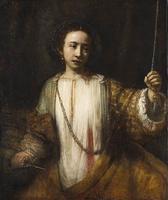
Lucretia
Rembrandt
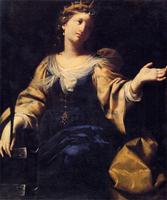
Santa Catalina De Alejandría
Lorenzo Pasinelli
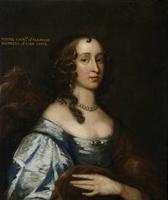
Jemima Crewe (1625–1674?), 1st Countess of Sandwich
John Hayls
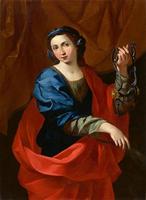
Allegory of Temperance
Ginevra Cantofoli
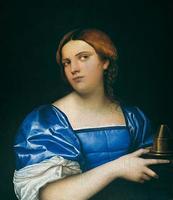
Portrait of a Young Woman as a Wise Virgin
Sebastiano del Piombo