Expertenanalyse zu Francisco de Zurbarans St. Anthony of Padua
Stil: Baroque · Genre: religious painting
Expert Analysis: St. Anthony of Padua by Francisco de Zurbarán
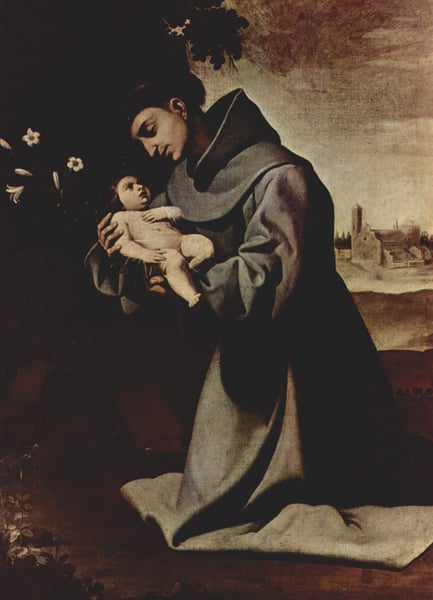
Francisco de Zurbarán’s St. Anthony of Padua stands as a quintessential example of Spanish Baroque religious painting, distinguished by its austere spirituality, masterful tenebrism, and intimate devotional power. Created during the height of the Counter-Reformation, the work reflects the Church’s emphasis on direct, emotional engagement with saintly figures as models of faith.
Stylistic Significance within the Baroque Zurbarán’s approach is markedly different from the dramatic motion of his Italian contemporary Caravaggio or the exuberance of Flemish painters. Instead, he employs a quiet, almost sculptural stillness. The composition is centered on the saint, with minimal background or anecdotal detail—a hallmark of Zurbarán’s “monastic” Baroque. The stark chiaroscuro (strong contrasts of light and shadow) isolates St. Anthony in a pool of divine light, drawing the viewer’s eye to his serene face and the symbolic objects he holds. The light source is not naturalistic but spiritual, illuminating the saint as if touched by heavenly grace.
Iconography and Devotional Content St. Anthony of Padua is typically depicted with the Christ Child, and Zurbarán follows this tradition, but with a striking psychological depth. The saint’s gentle, downward gaze and clasped hands convey a state of profound meditation rather than ecstatic vision. The Franciscan habit, rendered with meticulous attention to its folds and textures, grounds the figure in a palpable, humble reality. The child Christ, appearing in a soft glow, is not a separate narrative element but an extension of the saint’s inner contemplation. This intimacy aligns perfectly with the Counter-Reformation goal of making saints relatable and accessible to the faithful.
What Makes It Significant
- Zurbarán’s Signature Realism: The painter’s ability to render tactile surfaces—the coarse wool of the habit, the translucent light on the saint’s skin—creates an almost hyperreal presence. This verisimilitude was intended to inspire pious meditation, as if the viewer were in the presence of the holy figure.
- Emotional Restraint: Unlike many Baroque depictions of saints in dramatic poses, Zurbarán’s figures often exhibit a calm, inward-focused spirituality. This restraint is a defining feature of the Spanish school, emphasizing the virtue of contemplative prayer over theatrical emotion.
- Theological Precision: The painting avoids anecdotal clutter; every element serves a devotional purpose. The book (symbol of the saint’s preaching and wisdom) and the lily (symbol of purity) are placed with geometric clarity, reinforcing the saint’s role as a model of Franciscan simplicity and doctrine.
In summary, St. Anthony of Padua is significant as a masterwork of the Spanish Baroque’s “mystical realism.” It demonstrates Zurbarán’s genius in merging photographic naturalism with transcendent spirituality, creating an image that is at once deeply human and fiercely divine—a visual sermon perfectly attuned to the religious fervor of its era.
Museum / Gallery
Visuell ähnlich
20 Werke mit ähnlicher Komposition und Farbpalette
Saint Anthony of Padua with the Infant Christ'
Francisco de Zurbaran
Saint Anthony of Padua with child
Francisco Herrera
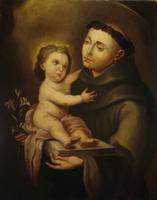
St. Anthony of Padua and the Christ Child
Luca Giordano
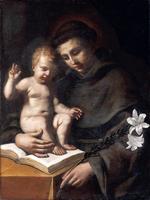
St Anthony of Padua with the Infant Christ
Guercino
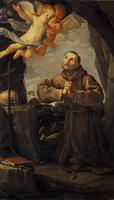
St Francis in prayer with Two Angels
Guido Reni
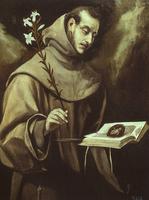
St. Antony of Padua
El Greco
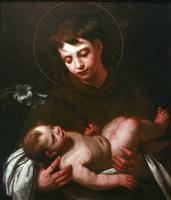
Saint Antony of Padua holding Baby Jesus
Bernardo Strozzi
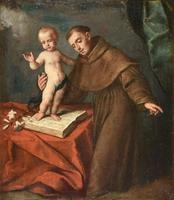
9ee28a85fc2026b6352afbf9d136d404 (1)
Ludovico Carracci
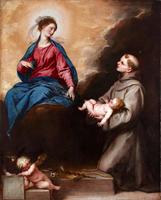
Vision of St. Anthony of Padua
Alonzo Cano
San Francesco in meditazione
Ludovico Carracci
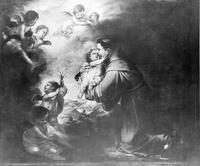
Saint Anthony Of Padua Adore The Child
Bartolome Esteban Murillo
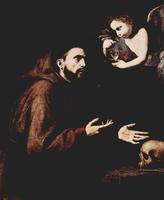
Vision of St. Francis of Assisi
Jusepe de Ribera
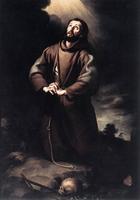
St. Francis of Assisi at Prayer
Bartolome Esteban Murillo
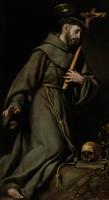
San Francisco de Asís
Claudio Coello
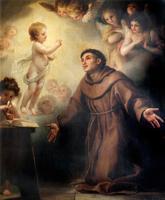
The Infant Christ Appearing to Saint Anthony of Padua
Anton Raphael Mengs
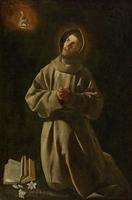
Apparition of Jesus Child to St. Anthony of Padua
Francisco de Zurbaran
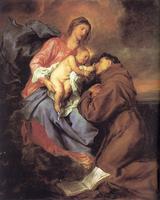
The Vision of St Anthony
Anthony van Dyck
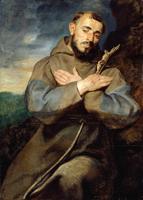
Saint Francis
Peter Paul Rubens
Garland With The Vision Of Saint Anthony Of Padua
Juan van der Hamen
The Dream of St. Anthony of Padua
Elisabetta Sirani