Francisco de Zurbaran の St. Francis in Meditation の専門的な分析
スタイル:Baroque · ジャンル:religious painting
Expert Analysis of "St. Francis in Meditation" by Francisco de Zurbarán
Style and Period Context (Baroque)
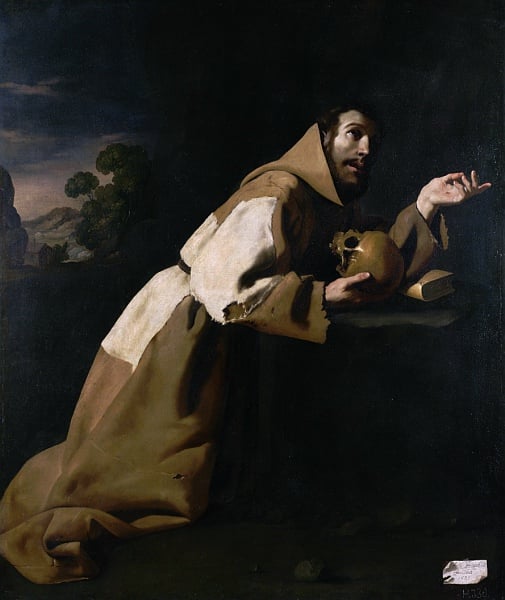
As a Baroque religious painting, Zurbarán’s work exemplifies the dramatic intensity and spiritual immediacy that defined 17th-century Spanish Counter-Reformation art. The Baroque style is characterized by stark chiaroscuro, powerful naturalism, and an emotional directness meant to inspire devout contemplation. Here, Zurbarán uses a deep, almost monochromatic palette and strong tenebrism—the saint’s face and hands emerge from a dark, undefined background, focusing the viewer’s gaze on the moment of private prayer. The meticulous rendering of the coarse fabric of Francis’s habit and the skull he holds underscores the Baroque concern with tactile realism as a vehicle for transcendent meaning.
Significance within the Genre
This painting is a masterful distillation of the Baroque’s core religious mission: to make the divine tangible and the act of meditation viscerally present. Unlike more theatrical Baroque compositions (e.g., Caravaggio’s dramatic gestures), Zurbarán achieves intensity through stillness and inwardness. St. Francis is shown kneeling, clutching a skull (a memento mori), his face half-veiled in shadow. The lack of narrative action forces the viewer into the saint’s own silent dialogue with mortality and faith. This restraint amplifies the work’s spiritual gravitas, making it a quintessential example of Spanish Baroque’s preference for quiet, ascetic piety over extroverted drama.
Key Elements of Significance
- Psychological Depth: The saint’s lowered gaze and clasped hands convey profound humility and absorption, reflecting the Counter-Reformation ideal of personal, introspective prayer.
- Symbolic Still Life: The skull, a recurring motif in Zurbarán’s work, anchors the vanitas theme in a religious context—mortality becomes the threshold to eternal contemplation.
- Light as Divine Presence: The single, oblique light source illuminates Francis’s face and the skull, symbolizing divine grace breaking into the darkness of human existence, a hallmark of Baroque chiaroscuro.
Legacy in Art History
“St. Francis in Meditation” is significant for its radical simplification of Baroque conventions. Where many artists of the period pursued dynamism and spectacle, Zurbarán achieves monumentality through minimalism. This painting profoundly influenced later meditative and abstractionist tendencies, prefiguring the stripped-down spirituality of artists like Georges de La Tour. Within Zurbarán’s own oeuvre, it stands as the purest expression of his religious vision—a silent, luminous encounter between the soul and eternity, rendered with the unflinching realism and symbolic power that define Spanish Baroque at its most austere yet emotionally resonant.
Museum / Gallery
視覚的に類似
構図やパレットが近い作品 20 件
St. Francis Kneeling
Francisco de Zurbaran
Saint Francis in Prayer
Caravaggio
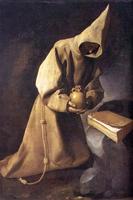
Meditation of St. Francis
Francisco de Zurbaran
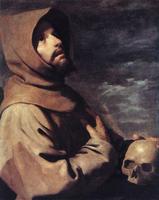
St. Francis
Francisco de Zurbaran
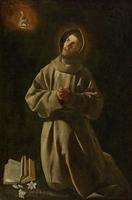
Apparition of Jesus Child to St. Anthony of Padua
Francisco de Zurbaran
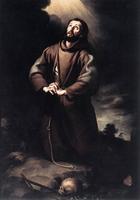
St. Francis of Assisi at Prayer
Bartolome Esteban Murillo
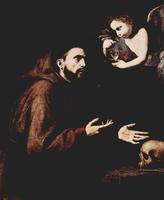
Vision of St. Francis of Assisi
Jusepe de Ribera
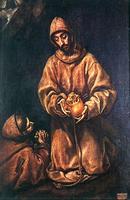
St. Francis and Brother Rufus
El Greco
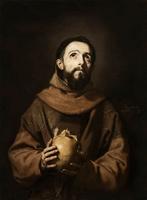
St. Francis of Assisi
Jusepe de Ribera
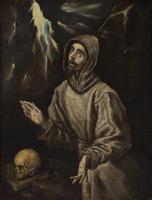
The Ecstasy of St. Francis of Assisi
El Greco
St Francis in prayer with Two Angels
Guido Reni
Saint Francis deadened with an angel musician
Guido Reni
Saint Jacob
Francisco de Zurbaran
San Francisco de Asís
Claudio Coello
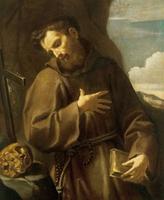
San Francesco in meditazione
Ludovico Carracci
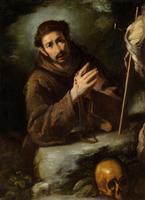
Saint Francis in Prayer
Bernardo Strozzi
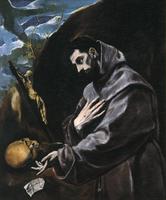
St. Francis praying
El Greco
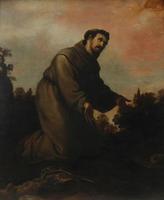
Saint Francis of Assisi
Francisco Herrera
St. Francis Supported by an Angel
Orazio Gentileschi
St. Bruno
Gaspar de Crayer