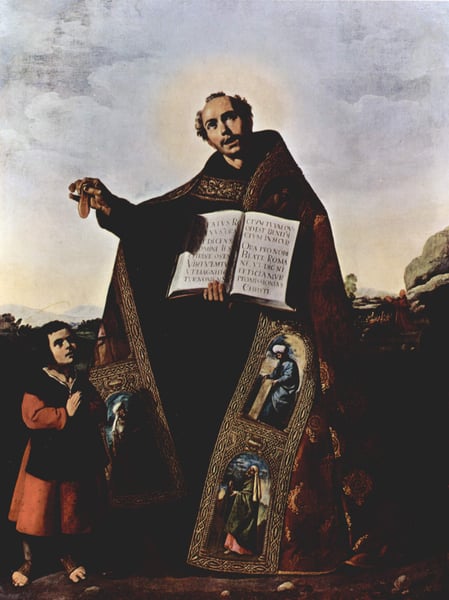
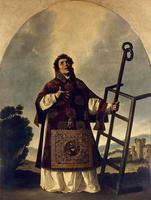
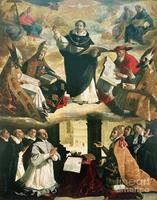
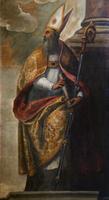
As a religious painting from the Baroque period, St. Romanus and St. Barulas of Antioch by Francisco de Zurbarán derives its significance from its embodiment of the style’s core artistic and spiritual aims. The Baroque emphasis on dramatic illumination (chiaroscuro) and intense naturalism serves to heighten the devotional impact, making the holy figures appear both immediate and transcendent. Zurbarán’s treatment of the two saints—their solemn expressions, the careful rendering of their garments and attributes—anchors the viewer in a moment of quiet, sacred dialogue. This work is a prime example of how Baroque religious art uses formal elements to provoke emotional response and underscore the Counter-Reformation’s call for a direct, personal connection with the divine.