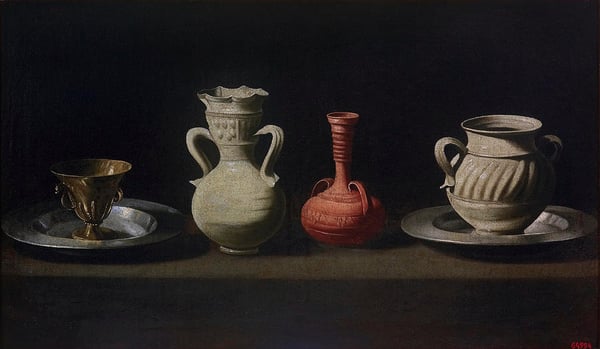
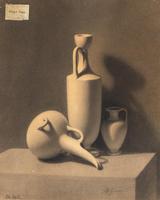
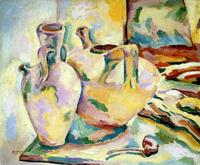
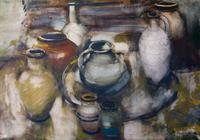
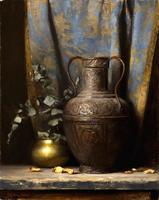
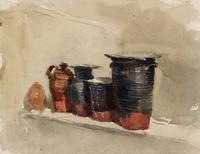
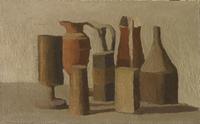
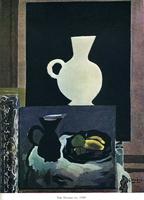
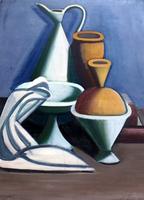
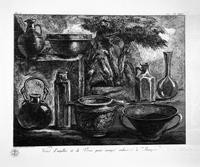
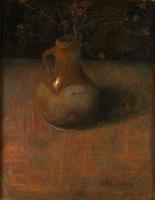
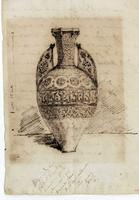
Zurbarán’s Still Life is a masterful example of Spanish Baroque austerity, redefining the genre through its solemn restraint and spiritual intensity. The work’s significance lies in its departure from the lavish, decorative still lifes common in Northern Baroque traditions; instead, Zurbarán employs a stark, almost minimalist composition—typically a few humble objects (such as lemons, a cup, or a basket) set against a dark, undefined background. This arrangement, illuminated by a sharp, directional light (tenebrism), charges everyday objects with a quiet, devotional presence, echoing the religious contemplations central to Counter-Reformation Spain. The precise, almost tactile rendering of textures—the waxy rind of fruit, the gleam of ceramic—showcases the Baroque obsession with mimesis, while the isolated, timeless quality of the objects transforms the mundane into a meditative still life, bridging secular and sacred realms.