Analyse experte de The Lucca Madonna de Jan van Eyck
Style : Northern Renaissance · Genre : religious painting
Expert Analysis: "The Lucca Madonna" by Jan van Eyck
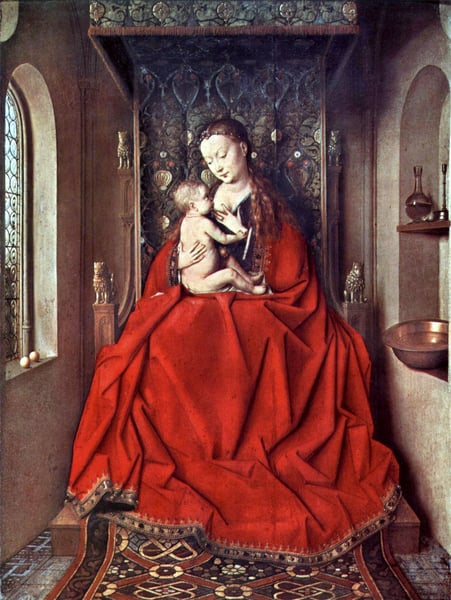
As a masterpiece of the Northern Renaissance, Jan van Eyck’s The Lucca Madonna (c. 1436) exemplifies the revolutionary naturalism and symbolic complexity that define early Netherlandish painting. This small oil-on-panel work, a devotional image of the Virgin Mary nursing the Christ Child, transcends its religious genre through van Eyck’s unparalleled technical virtuosity and layered iconography.
Significance within the Northern Renaissance:
- Oil technique and optical realism: Van Eyck’s mastery of translucent oil glazes creates an almost luminous surface, capturing subtle textures—from the soft folds of Mary’s crimson robe to the gleaming brass candlestick and the polished wooden floor. The meticulous rendering of light reflecting off the glass of water on the windowsill demonstrates a scientific observation of optics that was groundbreaking for its time.
- Sacred interior as domestic space: Unlike the gold-ground icons of the International Gothic, van Eyck sets the holy figures in a believable, intimate chamber. The throne is adorned with small carved lions (alluding to the Seat of Wisdom of King Solomon), while the window offers a glimpse of a Flemish cityscape—bridging the divine and the everyday.
- Symbolism in seemingly mundane details: Every object carries theological meaning. The three figures in the window’s stained glass (likely the Trinity) reinforce Mary’s role as the Throne of Wisdom (Sedes Sapientiae). The carafe and basin on the shelf refer to her purity, and the fruit on the windowsill (symbols of the Fall and Redemption) foreshadow Christ’s sacrifice.
- Monumentality within a small scale: Despite its modest size (65.5 × 49.5 cm), the composition feels grand. Mary’s imposing, pyramidal form fills the frame, while her direct gaze and the nursing Christ Child create an intimate, humanized bond—a hallmark of the Northern Renaissance’s emphasis on empathetic devotion.
Van Eyck’s integration of advanced oil painting, meticulous observation, and theological depth makes The Lucca Madonna a seminal work that not only influenced generations of Northern artists but also redefined the potential of religious painting as a window into both the physical world and the divine.
Museum / Gallery
Visuellement similaire
20 œuvres à la composition et à la palette proches
Virgin Enthroned with Child and Angel
Hans Memling
Virgin and Child Enthroned
Hans Memling
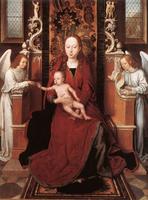
Virgin and Child Enthroned with Two Angels
Hans Memling
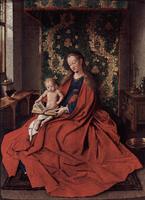
The Ince Hall Madonna (The Virgin and Child Reading)
Jan van Eyck
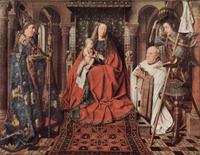
Madonna and Child with Canon Joris van der Paele
Jan van Eyck
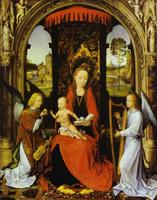
Madonna and Child with Angels
Hans Memling
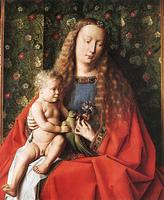
The Madonna of Canon van der Paele (detail)
Jan van Eyck
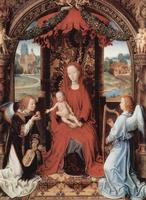
Madonna and Child Enthroned with Two Angels
Hans Memling
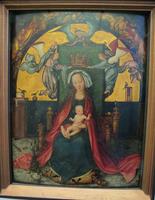
Madonna Col Bambino
Hans Holbein the Elder
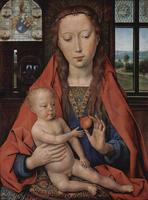
Madonna and Child, from The Diptych of Maerten van Nieuwenhove
Hans Memling
The Virgin and Child with Saints and Donor
Gerard David
Mary with the Sleeping Christ Child
Hans Holbein the Elder
Virgin and Child Enthroned
Carlo Crivelli
Virgin and Child with Angels
Lucas van Leyden
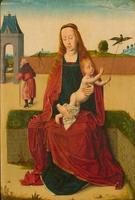
Madonna and Child on a grass bench
Dirk Bouts
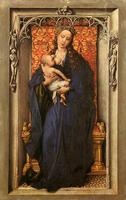
Madonna and Child
Rogier van der Weyden
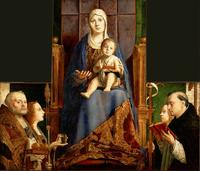
San Cassiano Altarpiece
Antonello da Messina
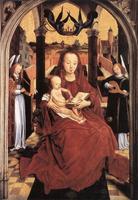
Virgin and Child Enthroned with two Musical Angels
Hans Memling
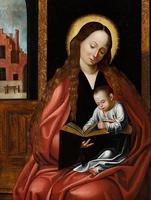
MARIA MIT DEM LESENDEN JESUSKIND
Frans Pourbus the Elder
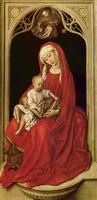
Madonna and Child
Rogier van der Weyden