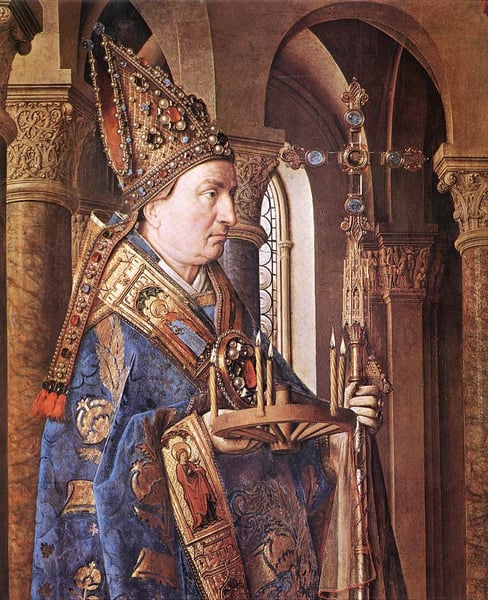
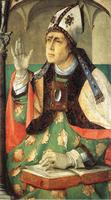
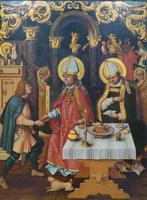
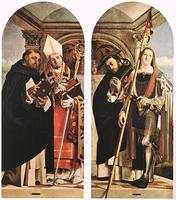
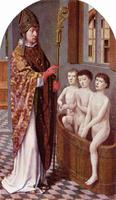
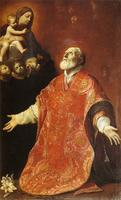
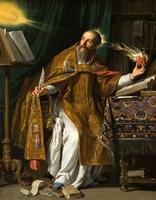
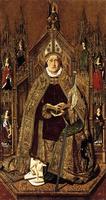
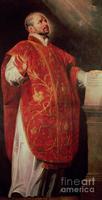
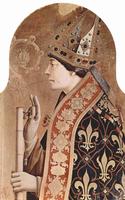
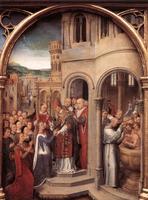
Based solely on the provided structured facts, this artwork is a detail from Jan van Eyck’s The Madonna of Canon van der Paele, a religious painting of the Northern Renaissance. Its significance within this style and period lies in how it epitomizes the Northern Renaissance’s revolutionary approach to religious imagery.
As a Northern Renaissance work, the painting—even in this detail—demonstrates the period’s hallmark shift toward hyper-realistic, almost tactile naturalism. Jan van Eyck’s mastery of oil glazes allows for an unprecedented rendering of light, texture, and surface, from the sheen of fabrics to the soft modeling of flesh. This detail likely showcases the meticulous attention to symbolic objects and individualized portraiture (such as the canon’s specific features), which imbues a sacred scene with profound earthly specificity. By grounding the divine in a precisely observed, tangible world, van Eyck elevates both the devotional function and the artistic innovation of the piece, making it a cornerstone of Northern Renaissance religious painting.