Экспертный разбор работы «Study of rocks» художника Theodore Rousseau
Стиль: Realism · Жанр: landscape
Expert Analysis of "Study of Rocks" by Théodore Rousseau
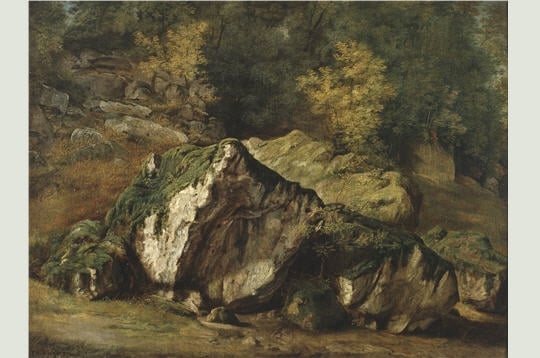
Théodore Rousseau’s Study of Rocks stands as a quintessential example of the Realist movement’s devotion to direct, unidealized observation of nature. Painted during a period when academic landscape conventions still favored classical composition and mythological narrative, Rousseau instead turned his attention to the raw, unglamorous specifics of the natural world.
Significance within Realism and the Barbizon School
-
Emphasis on the Mundane and Geological: Unlike traditional landscapes that sought picturesque harmony, Rousseau zeroes in on a seemingly random cluster of rocks. This choice elevates a humble, ordinary subject to the level of serious artistic study. The work embodies the Realist credo that everyday nature—even a barren rock formation—deserves the same meticulous attention as a grand historical scene.
-
Textural and Atmospheric Fidelity: Rousseau’s brushwork captures the tactile roughness of stone, the interplay of light and shadow across uneven surfaces, and the subtle weathering that reveals time’s passage. The painting forgoes dramatic skies or sweeping vistas to focus on how light falls on one particular cluster of rocks, recording transient atmospheric effects that would later influence the Impressionists.
-
Precursor to plein-air Observation: As a leading figure of the Barbizon School, Rousseau often worked directly from nature in the Forest of Fontainebleau. Study of Rocks likely emerged from such outdoor sessions. Its title—"study"—itself reflects the artist’s commitment to empirical truth over polished studio finish, a radical stance that challenged the academic hierarchy of genres.
Why This Work Matters in Art History
-
It exemplifies Realism’s shift from idealized nature to scientific, objective seeing. Rousseau’s focus on the geological structure of rocks anticipates the later interests of artists like Gustave Courbet in material substance, and even the Impressionist fascination with light effects on solid forms.
-
The painting demonstrates that a "minor" subject—a pile of rocks—can bear the full weight of artistic significance when rendered with sincerity and technical mastery. For Rousseau, the truth of the rock’s surface, its cracks and moss, was more profound than any allegorical addition.
In sum, Study of Rocks is significant because it champions the Realist ideal: that the visible world, in its most ordinary and overlooked details, contains its own profound beauty and truth—a radical and enduring contribution to the history of landscape painting.
Визуально похожие
20 работ с близкой композицией и палитрой
Rocky Cliff
Asher Brown Durand

View in the Neighbourhood of Oranienbaum
Aleksey Savrasov

Autumn Landscape (Mount Chocorua)
Thomas Cole
4 in the Forest of Fontainebleau
Richard Parkes Bonington

Catskill Waterfall
John Frederick Kensett

Near Conway, North Wales
Alexander Helwig Wyant

View on the Island of Valaam
Ivan Shishkin

Stones in the forest. Valaam
Ivan Shishkin
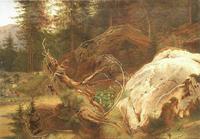
Stones in the a forest
Ivan Shishkin
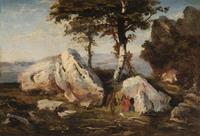
The apparition
Gabriele Smargiassi
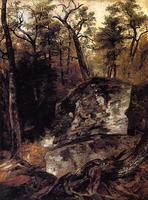
Guard House, Catskill Mountains
Asher Brown Durand

Landscape with Rocks and Stream
Johann Hermann Carmiencke

Forest landscape Sun
Theodore Rousseau
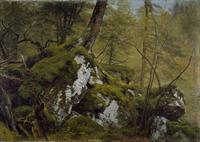
Study of a Wood Interior
Asher Brown Durand

Ferns and Rocks on an Embankment
Albert Bierstadt

The Dell
Thomas Moran

View of Valaam Island. Kukko
Ivan Shishkin
Kaaterskill Landscape
Asher Brown Durand

Study of Ferns
Mary Josephine Walters
Liensfiord, Norway: Calm
Francis Danby