Analisi esperta di The countryside at sunrise di Theodore Rousseau
Stile: Realism · Genere: landscape
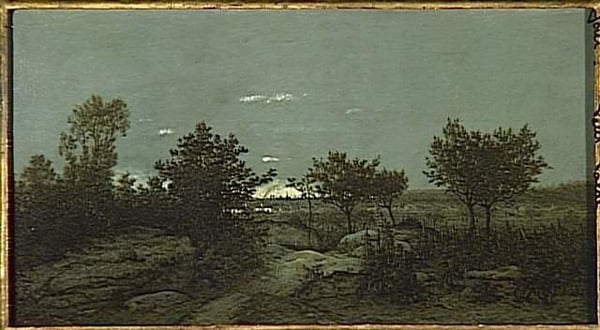
Expert Analysis of "The Countryside at Sunrise" by Théodore Rousseau
Théodore Rousseau’s The Countryside at Sunrise is a quintessential example of Realist landscape painting, deeply rooted in the artist’s pioneering role within the Barbizon School. Painted during the mid-19th century, the work exemplifies the Realist commitment to depicting the natural world with unembellished truth, rejecting the idealized, heroic landscapes of Romanticism and Neoclassicism in favor of direct observation and emotional sincerity.
Significance within Realism:
Rousseau’s treatment of the scene is noteworthy for its atmospheric immediacy. The painting captures the transient, soft glow of early morning—the pale gold of sunrise spreading across fields and sky. This focus on the specific time of day and the nuanced shift of light reflects the Realist emphasis on empirical perception over studio convention. The composition likely avoids dramatic focal points, instead presenting a broad, horizontal view of the countryside that feels intimate and unheroic. The subdued palette and meticulous rendering of mist, dew, and distant trees underscore Rousseau’s belief that even the most ordinary rural vista held profound, authentic beauty.
Influence on Landscape Painting:
As a leader of the Barbizon School, Rousseau championed plein air painting, directly observing the landscapes of the Forest of Fontainebleau and its surroundings. The Countryside at Sunrise demonstrates his mastery of tonal harmony and his ability to evoke a specific mood—an enveloping stillness punctuated by the promise of daylight. This work, like much of his output, challenged the academic hierarchy of genres by elevating landscape to a vehicle for serious artistic expression. It also foreshadowed the Impressionists’ later obsession with light and transient effects, though Rousseau’s approach remains grounded in a sturdy, tactile realism.
Cultural and Artistic Context:
In an era rapidly transformed by industrialization, Rousseau’s depiction of unspoiled rural mornings offered a contemplative counterpoint. The painting’s significance lies not in grand narrative or symbolism, but in its quiet celebration of the quotidian—a humble field awakening to the sun. This focus on the poetic within the mundane is central to Realism’s legacy and marks Rousseau as a crucial bridge between Romantic emotionality and the objective eye of later modernist movements.
Visivamente simili
20 opere con composizione e palette affini
Mountain landscape near Fontainebleau
Theodore Rousseau
Landscape with wood procurers
Anthonie Jacobus van Wijngaerdt
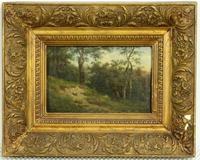
Two children on a hill in the woods
Anthonie Jacobus van Wijngaerdt
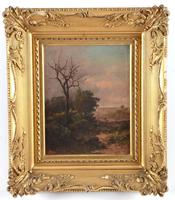
Maremma
Guido Agostini
Woodland Vista
Ralph Blakelock
A riverbank with lush trees and large puffy clouds on a blue sky
Jacques d'Arthois
Indian Encampment at Twilight
Ralph Blakelock
Dutch Landscape
Salomon van Ruysdael
Cows in the mare
Theodore Rousseau
Moonlight (Night Scene)
Ralph Blakelock
The Way through the Wood
John Crome
Solitude
Ralph Blakelock
Landscape
Stefan Luchian
The pond
Theodore Rousseau
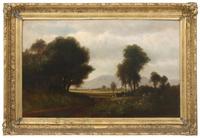
Moat Mountain, North Conway
Benjamin Champney
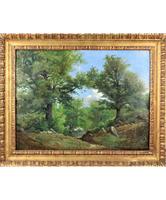
Barbizon landscape
Léon-Victor Dupré
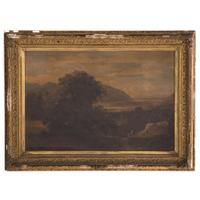
Extensive Landscape
Johann Hermann Carmiencke
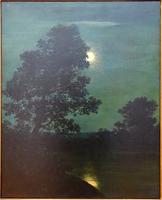
Moonlight on the Brook
Ralph Blakelock
Пейзаж
Apollinary Goravsky
View in the Woods at Sunset
Louwrens Hanedoes